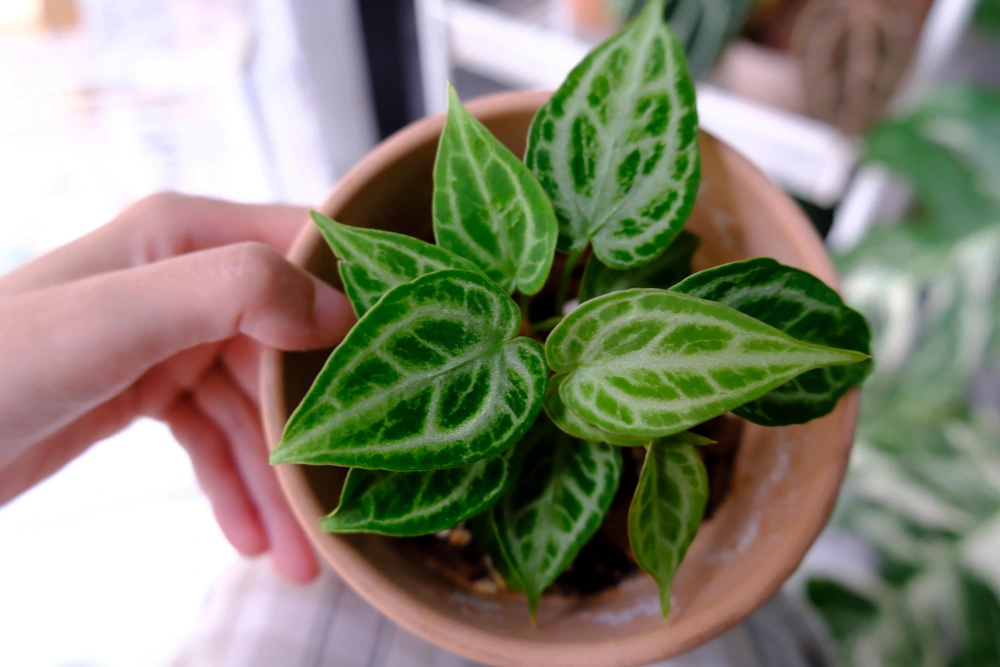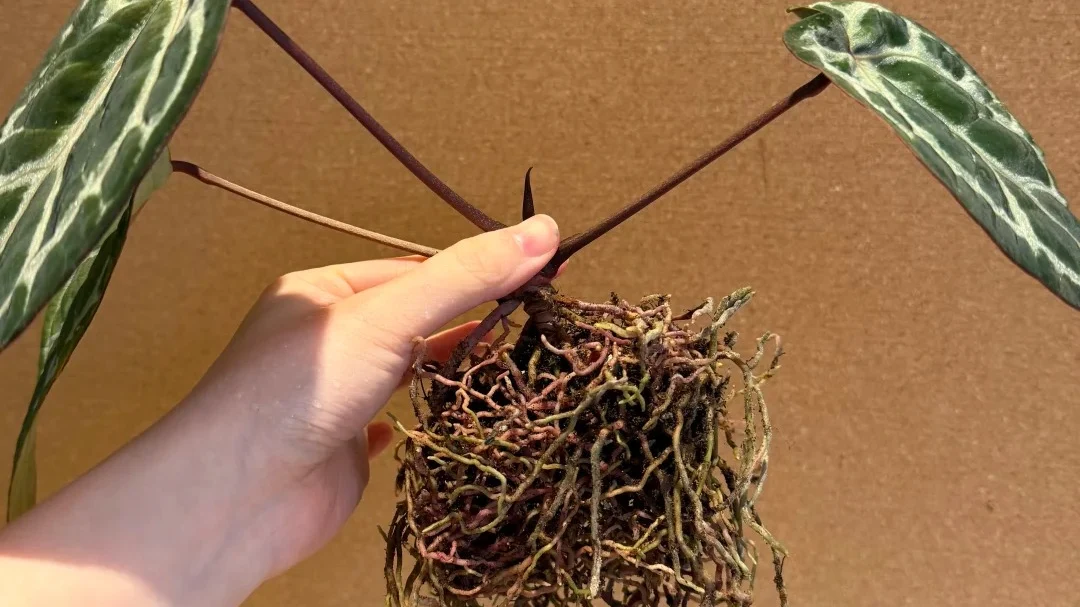
There is more than one way to propagate Anthurium, but not every method makes sense for every plant. In real home growing, the most useful methods are usually division and stem or node propagation. Growing Anthurium from seed is possible too, but it is slower, less practical, and usually something people try later rather than first.
For me, the bigger question is never just “How do you propagate Anthurium?” It is “What kind of Anthurium do you have right now, and is it actually in the right condition to be propagated at all?” A clumping plant with multiple growth points is a very different situation from a tall, stretched plant with visible nodes, and both are easier to work with than a weak plant that is still trying to establish itself. This guide is meant to help you understand the main options first, so you can tell which method actually fits your plant before moving on to the detailed steps.
The 3 Main Ways to Propagate Anthurium
In simple terms, Anthurium propagation usually falls into three categories: division, stem or node propagation, and growing from seed. They are all real methods, but they do not fit every plant equally well. For most indoor growers, division and stem-based propagation are the methods that come up most often in real life.
1. Division
Division is the simplest method when an Anthurium has already formed multiple crowns, basal shoots, or clearly separate growth points with roots of their own. In that case, you are not really forcing the plant to make a new growing point from scratch. You are separating parts that are already partly independent.
This is usually the most beginner-friendly method because the plant already has a head start. If each section has roots and an active growth point, recovery is often smoother than with more aggressive propagation methods.
2. Stem or Node Propagation
This method works by using part of the stem rather than separating an already clumping plant. It includes things like top cuts, stem cuttings with nodes, or older sections of stem that still have viable nodes. For many Anthuriums, this becomes relevant when the plant has grown taller, developed visible internodes, or started producing aerial roots along the stem.
This is often the most useful option for plants that are getting leggy or top-heavy, but it also requires a little more judgment. Not every Anthurium has enough usable stem to cut, and not every plant is in strong enough condition to handle it well.
3. Growing Anthurium From Seed
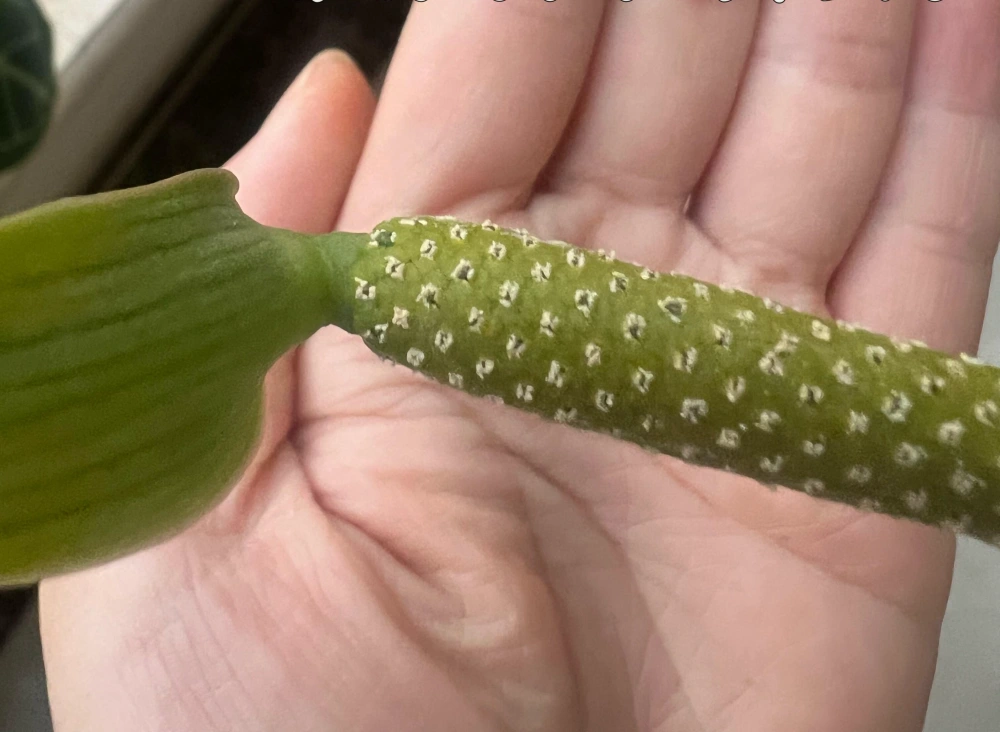
Anthurium can also be grown from seed, but this only becomes possible after a mature plant has flowered, been pollinated, and produced berries with viable seed inside. This is a real propagation method, but for most home growers, it is the least practical one to start with.
Seed growing takes more time, more patience, and more uncertainty. It can be rewarding, but it is very different from simply dividing a plant or rooting a top cut. That is why most indoor growers usually think about seed propagation later, not first.
Which Propagation Method Actually Fits Your Plant?
This is the part that matters most. Anthurium propagation is not just about choosing a method you like. It is about looking at the plant in front of you and asking what kind of structure it already has. In my experience, that matters much more than memorizing propagation terms.
If your Anthurium has multiple crowns or pups at the base
This is usually the clearest case for division. If the plant has already formed separate growth points and at least some roots are attached to each section, division is usually the most natural way to propagate it. You are working with growth that already exists, not forcing the plant to rebuild from a single cut point.
If your Anthurium has a long stem with visible nodes
This is where stem or node propagation starts making more sense. A taller plant with clear stem length, visible nodes, or aerial roots gives you more to work with than a compact plant with one tight crown. In that case, a top cut or node-based propagation method is often more practical than trying to divide something that is not really clumping.
If your Anthurium is mature enough to flower and set fruit
That is the situation where seed propagation becomes possible. But possible is not the same as practical. A flowering plant still has to be successfully pollinated and actually produce viable seed, and from there the process is slower and less predictable than division or stem propagation. That is why I see seed growing as a real method, but not the first one most home growers should build around.
If the plant is weak, newly rooted, or still settling in
This is usually the point where I would not propagate at all yet. A plant that is freshly imported, recently repotted, struggling with weak roots, or barely holding its current leaves is usually not in the best condition to be cut or divided. In those situations, getting the plant stable matters more than trying to multiply it.
That is usually the easiest way I think about it. If the plant is clumping, division is often the most natural option. If it has real stem length and workable nodes, stem propagation starts making more sense. If it has actually flowered, been pollinated, and set fruit, then seed becomes possible. Everything else comes down to whether the plant is strong enough to handle the stress.
Division: The Easiest Method When the Plant Is Ready
For most home growers, division is usually the easiest and least stressful way to propagate Anthurium — but only when the plant is actually ready for it. This is the important part. A plant looking full in the pot is not always the same thing as a plant that can truly be divided. Sometimes it is still just one main crown with a tight root mass, and splitting it at that stage usually creates more stress than benefit.
What I want to see before calling a plant a good division candidate is more than one real growth point, ideally with at least some roots attached to each section. Basal pups, separate crowns, or clumps that already feel partly independent are the clearest signs. In that situation, division is usually much more straightforward than cutting stem sections and hoping they activate later. The plant has already done part of the work for you.
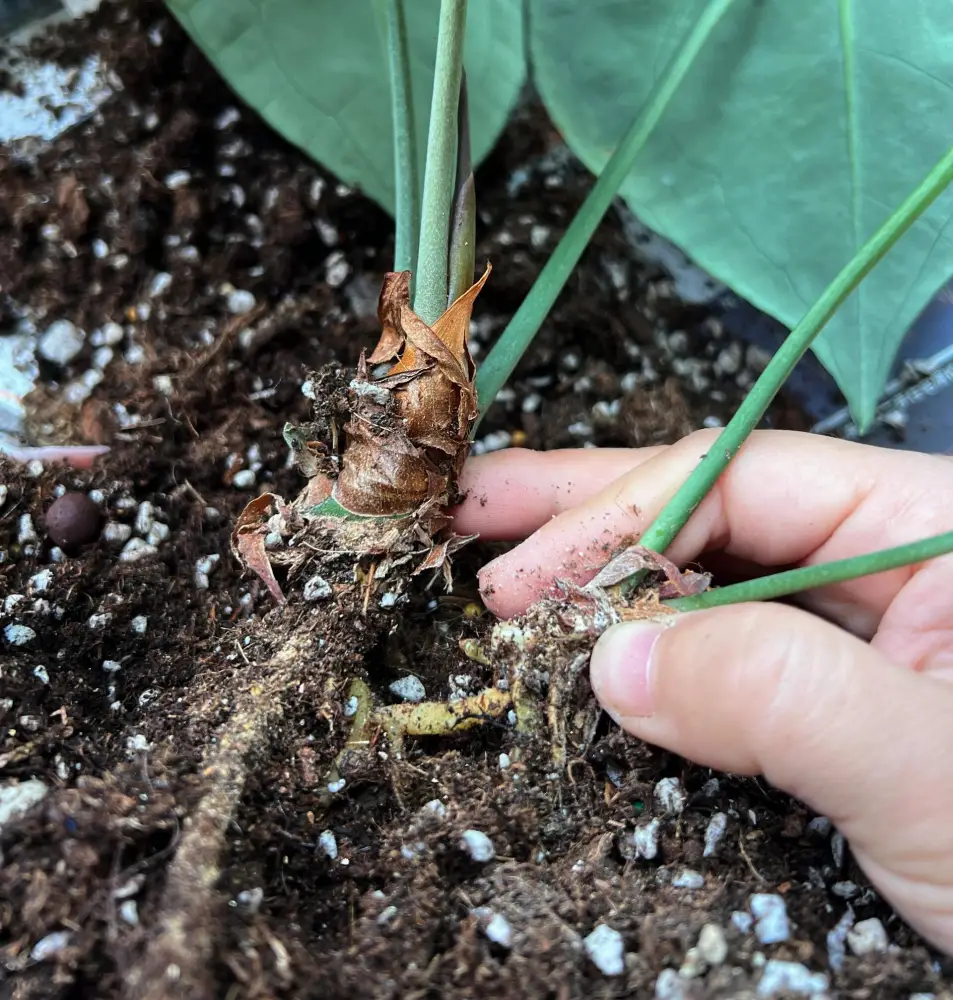
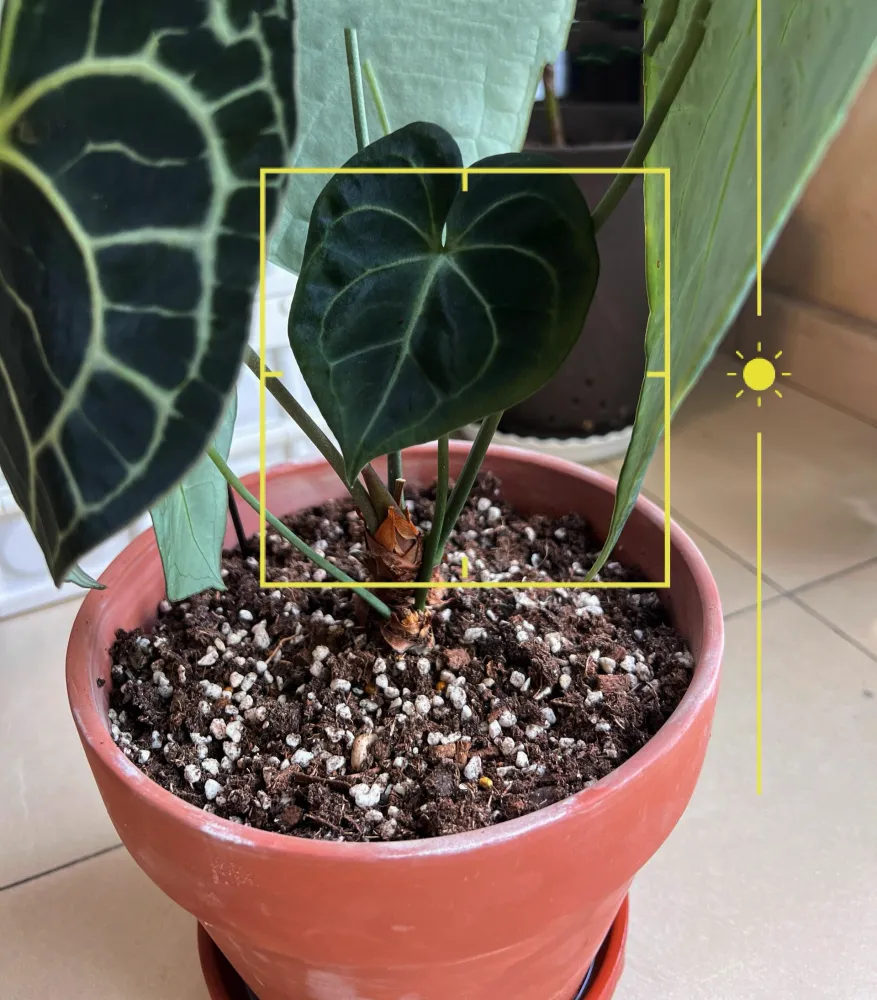
This is also why division tends to be the most beginner-friendly propagation method. You are not asking a bare node to wake up from scratch, and you are not relying on a fresh top cut to root before it declines. If each division already has roots and active growth, recovery is usually smoother and easier to manage in normal indoor conditions.
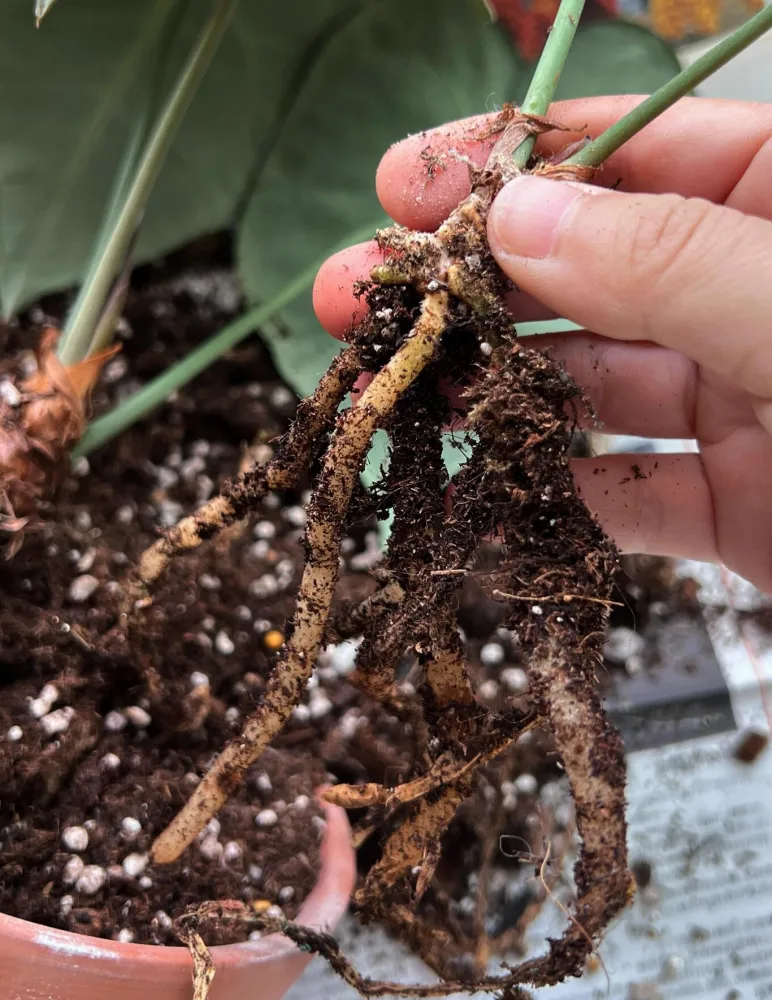
That said, I still would not rush it. If the plant is weak, recently repotted, or only just starting to establish itself, I would rather wait than divide too early. In my experience, Anthurium usually responds better when division happens from a position of strength, not as a desperate attempt to multiply a plant that is not growing well yet.
Stem and Node Propagation: Best for Taller or Leggier Plants
This method usually makes the most sense when an Anthurium has started to develop visible stem length, especially if the plant is getting tall, leaning, or producing nodes and aerial roots along the stem. At that stage, the plant has more usable structure to work with than a compact Anthurium that still sits as one tight crown at the base.
What matters here is not just that the plant looks stretched. It is whether there are viable nodes that could actually support new growth. A plant with clear stem sections, spacing between leaves, and visible root points usually gives you much more flexibility than one that still has no real stem to cut. That is why stem and node propagation is often the more logical option for older, leggier plants rather than fuller clumping ones.
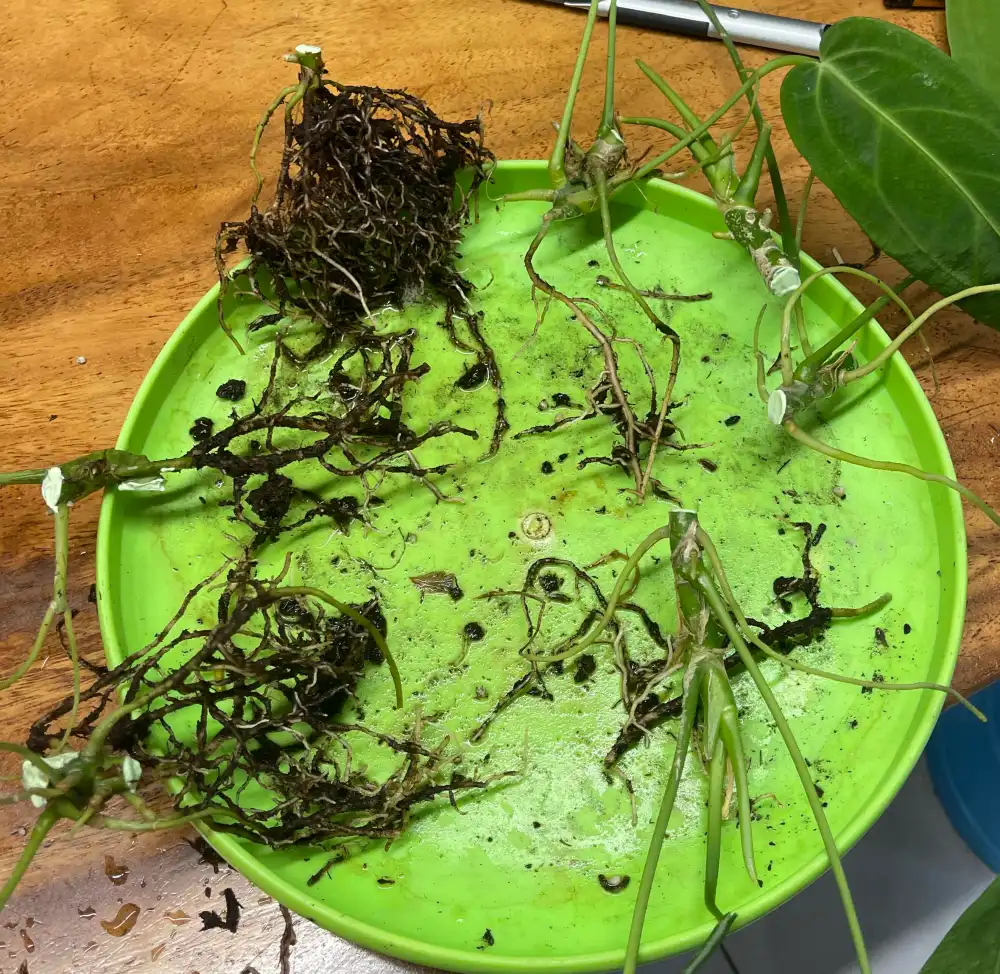
This method is also useful because it can do two things at once. It can give you a way to make new plants, but it can also help reset the shape of a plant that has become awkward, top-heavy, or bare lower down. In that sense, it is not always just about multiplication. Sometimes it is also about improving the structure of the plant you already have.
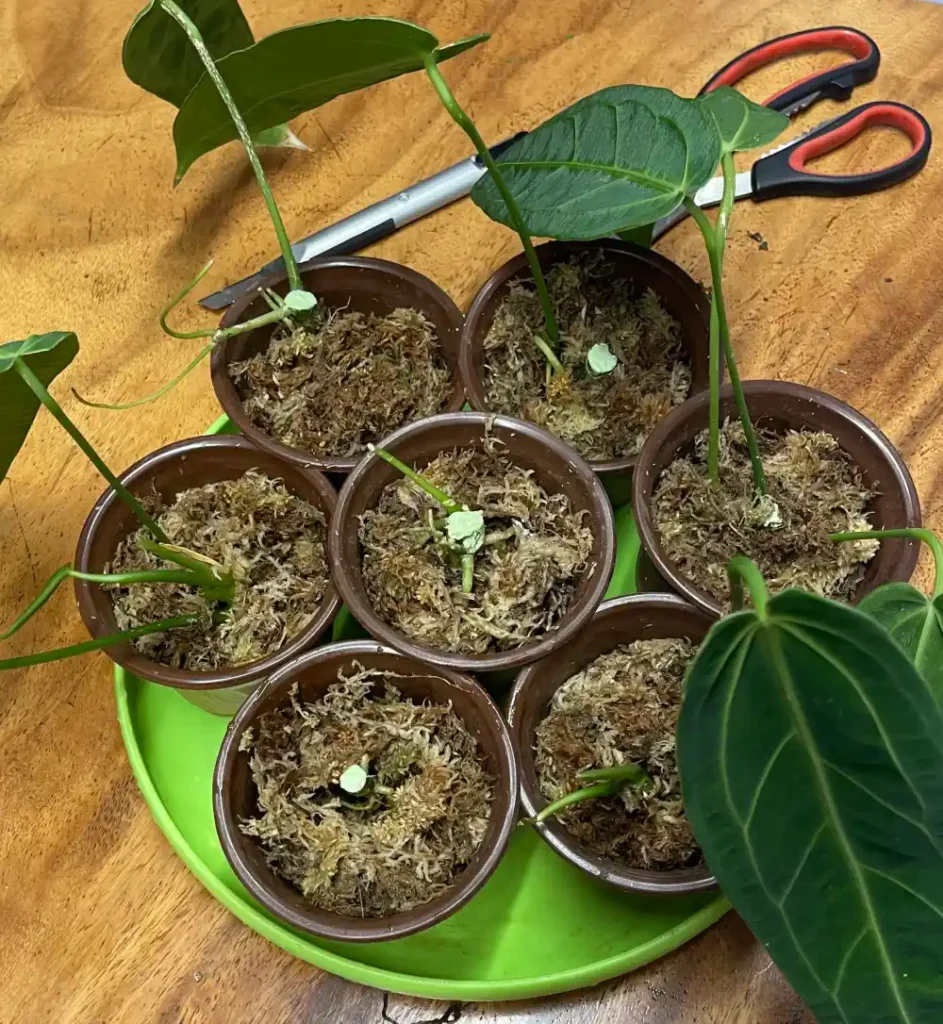
For me, this is the method that becomes useful once a plant has clearly outgrown its compact stage. Until there is enough real stem to work with, it is usually more of a theoretical option than a practical one. That is why I see stem and node propagation as very useful, but usually later than division, not earlier.
Growing Anthurium From Seed: Possible, but Slower and Less Practical
Anthurium can be grown from seed, but for most indoor growers, this is usually the least practical propagation method to start with. It only becomes an option after a mature plant has flowered, been successfully pollinated, and produced berries with viable seed inside. So while seed growing is absolutely real, it is very different from dividing a clumping plant or working with a stem that already has usable nodes.
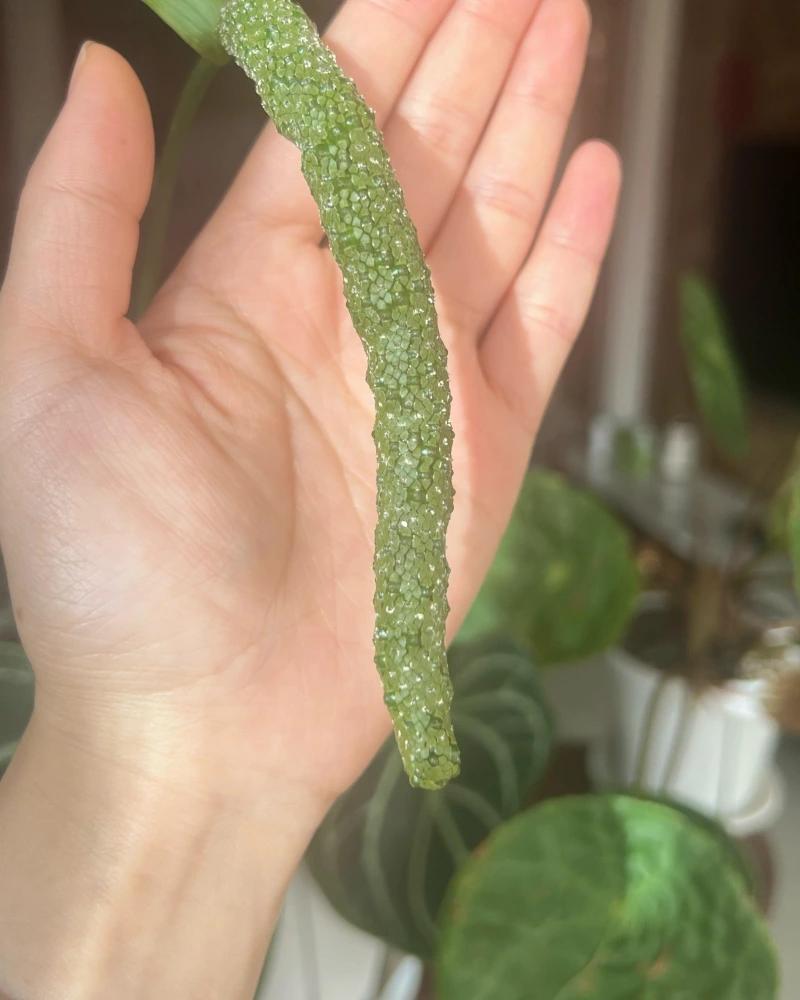
It is slower from the beginning. You need a plant mature enough to flower, pollination has to actually work, and the berries still need time to develop. Even after that, Anthurium seed is not something most people can treat casually or store for long. In a normal home setup, that makes seed propagation much less immediate and much less forgiving than the other two methods.
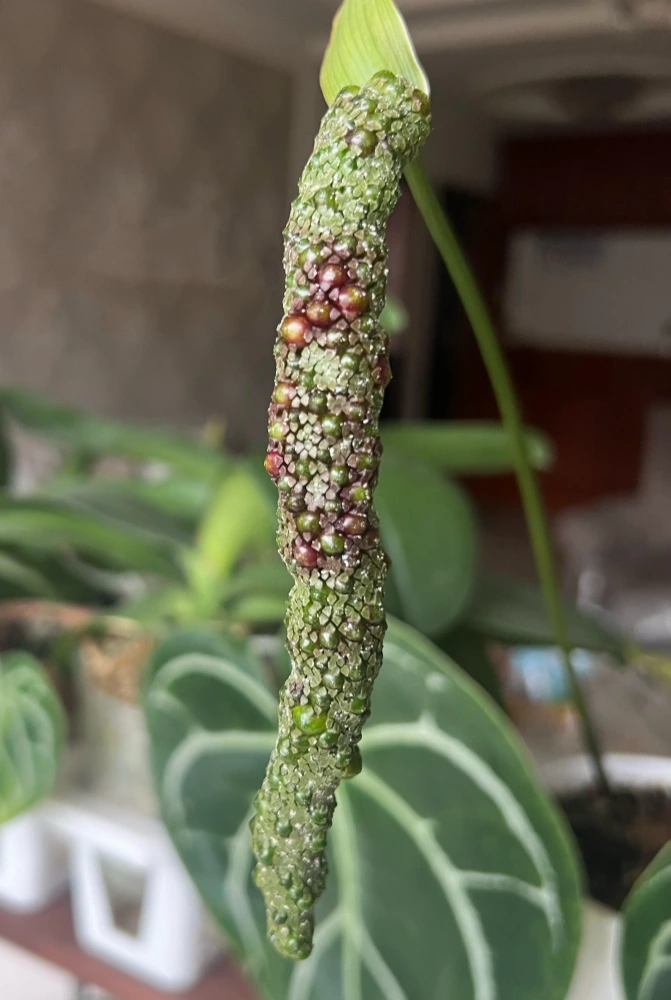
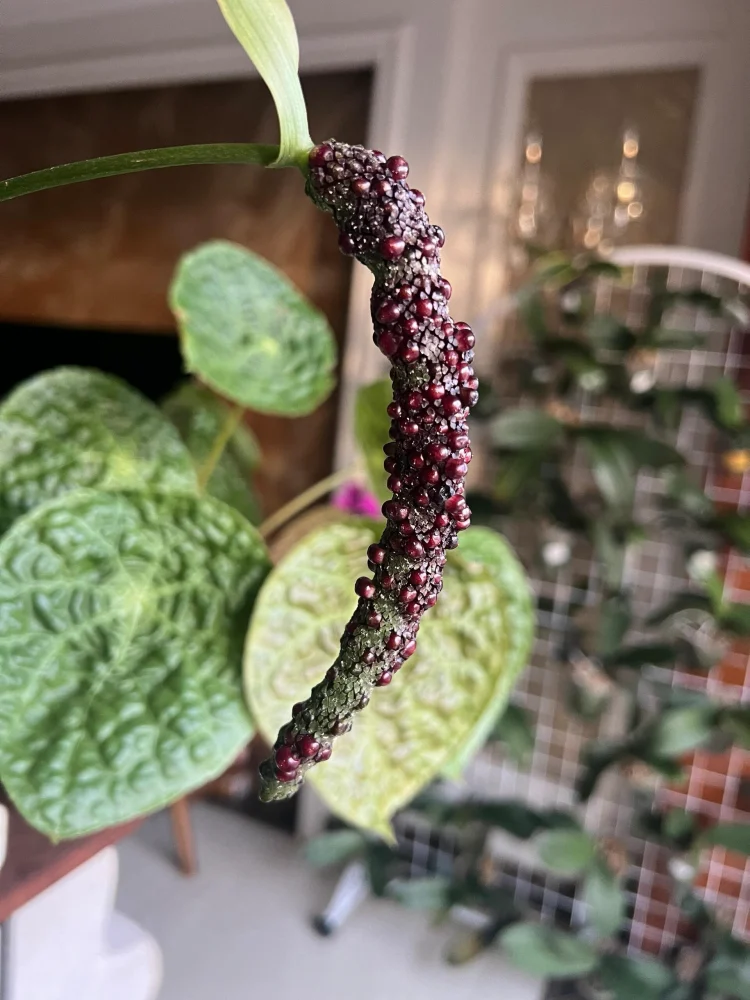
It is also less predictable. With division, you already know what kind of plant you are separating. With stem propagation, you are still working from the same plant. Seed growing is different, especially with hybrids, because seedlings may not grow exactly like the parent plant. That can be part of the appeal, but it also means this method is usually better suited to growers who enjoy the process itself and are willing to wait longer for results.
So yes, Anthurium can be propagated from seed, but I would not present it as the main route for most people growing indoors. In real life, it is more of a slower, more advanced option than the method most home growers reach for first.
When I Would Not Propagate an Anthurium Yet
Not every Anthurium that can be propagated is actually ready to be propagated. In my experience, timing matters just as much as method. Even a good propagation technique becomes a bad idea if the plant is already stressed, weakly rooted, or still trying to recover from a watering rhythm that has kept the mix too wet or too dry for too long.
I would usually hold off if the plant is newly imported, freshly repotted, weakly rooted, or not growing with real confidence yet. A plant that is still adjusting to a new environment often looks stable before it actually is. The leaves may still be holding up, but the roots may not be strong enough yet to handle division or cutting without a setback.
I also would not rush to propagate a plant that is stalling, declining, or only just maintaining itself. If the Anthurium is dropping older leaves, sitting in wet mix with weak roots, or barely pushing new growth, I would see that as a sign to stabilize it first rather than multiply it. Propagation works much better when the plant has energy to spare, not when it is already under pressure.
Season matters too, especially indoors. In a home with weaker winter light, cooler windows, and slower root activity, propagation usually moves more slowly and feels less forgiving. I am much more comfortable doing it when the plant is actively growing and the overall conditions are helping recovery instead of working against it.
I also would not rush to propagate a plant that is technically alive but not really moving forward. If it is dropping older leaves, sitting in tired wet mix, or barely pushing any new growth, I would treat that as a stability problem first, not a propagation opportunity. Anthurium usually handles propagation much better when it has energy to spare.
Most of the Time, the Plant Decides
For me, Anthurium propagation usually goes best when I stop thinking about methods in the abstract and pay attention to what the plant is already giving me. A clumping plant points in one direction. A taller plant with real stem structure points in another. A weak plant usually points to “not yet.”
That is why I rarely start with “Which method do I want to try?” I start with “Is this plant actually ready, and what kind of propagation does its structure make realistic?” Once that part is clear, the right method is usually much easier to choose.
FAQ
Still figuring out what works for your Anthurium?
Light, watering, humidity, soil, and root health all shape how an Anthurium grows indoors. If you’re still comparing care routines or trying to build a setup that actually works at home, my main Anthurium care page brings the most useful guides together in one place.
Go to Care Hub →