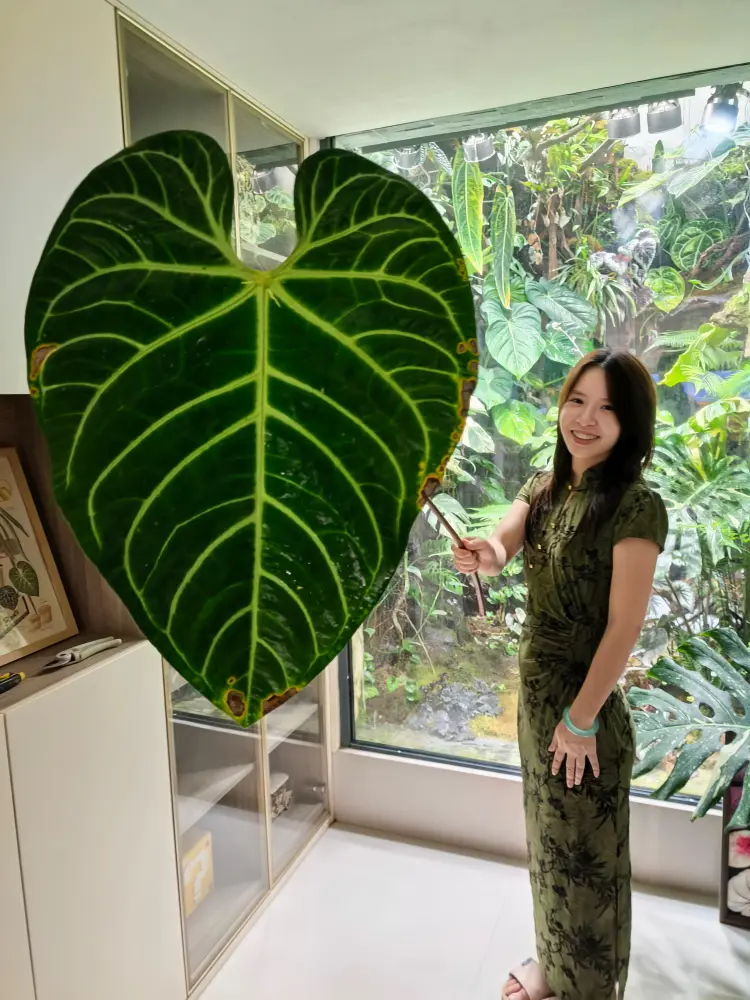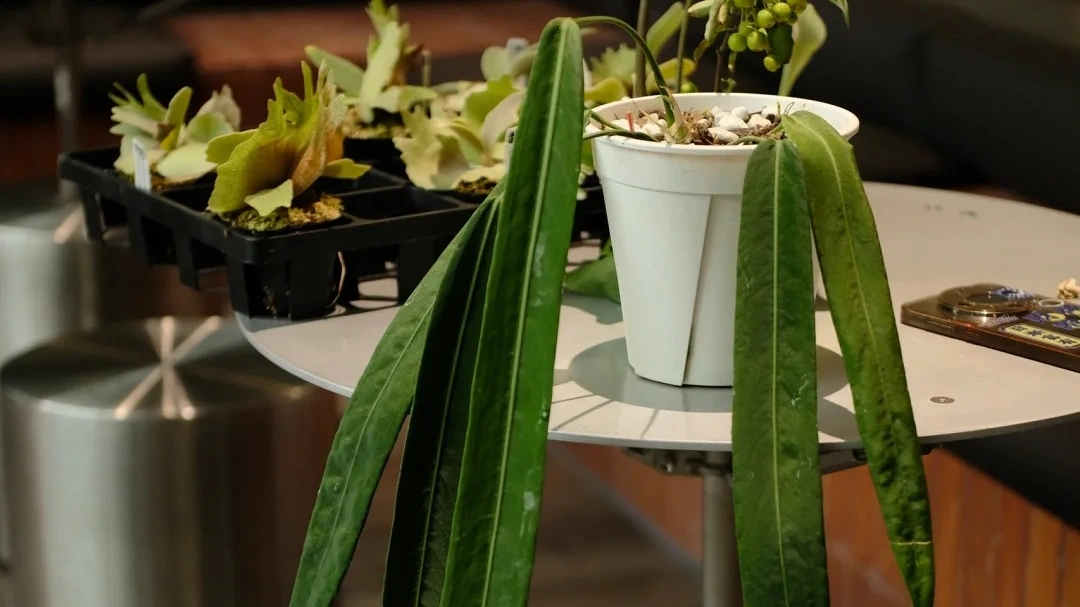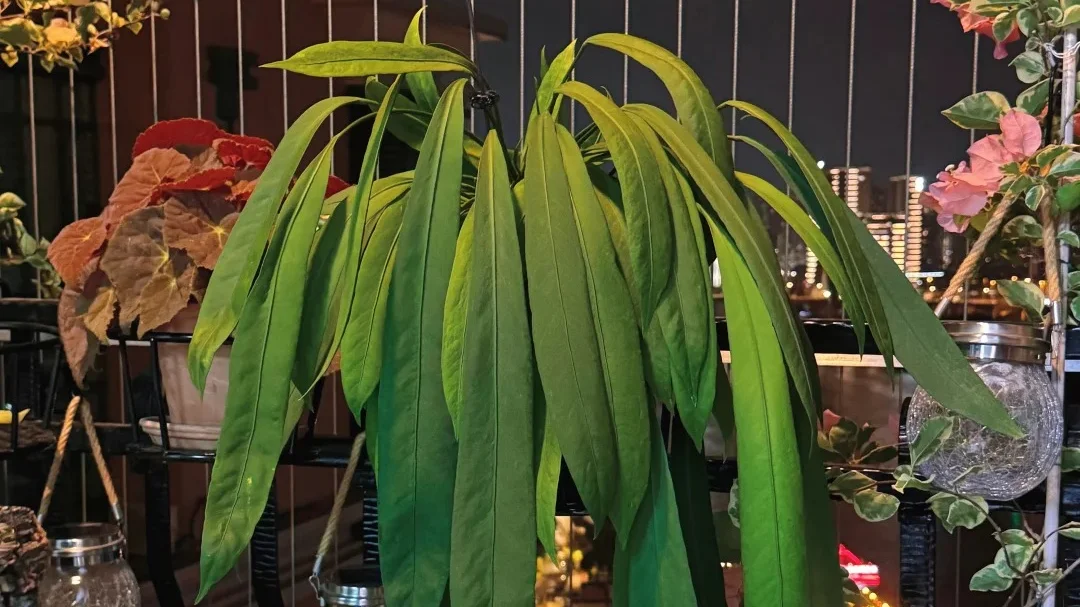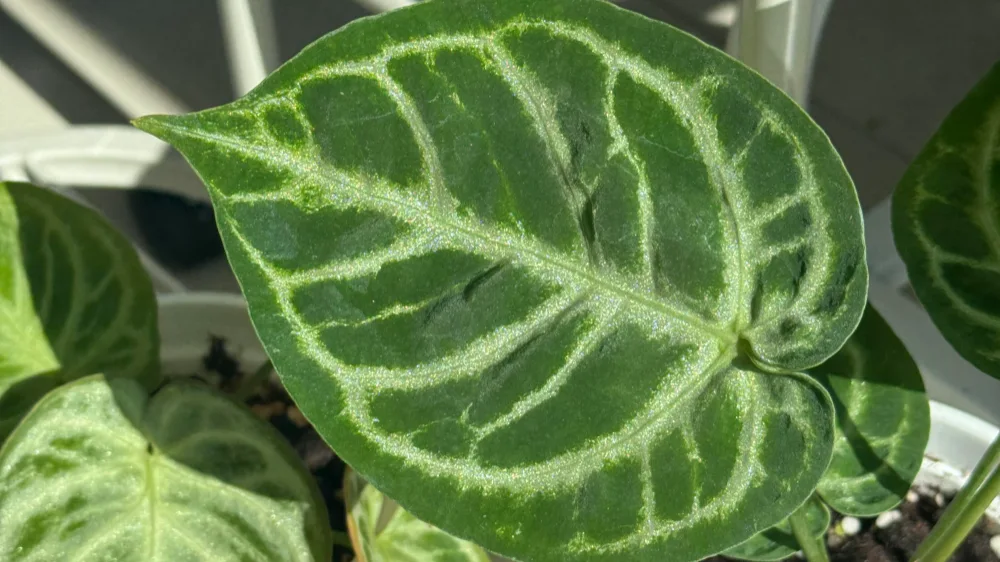
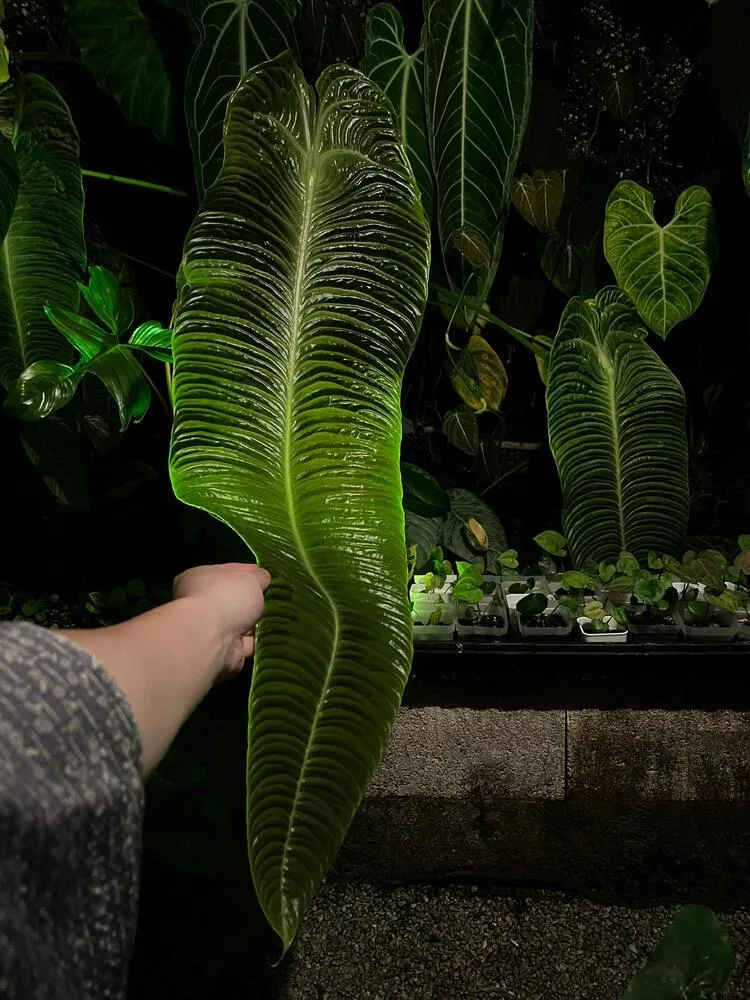
I’ve been growing my Anthurium veitchii for about three years now, and the biggest change has not just been the size. It started with leaves around 15 cm long, then gradually reached 50 cm, and now the largest leaves are already pushing toward 120 cm. Watching that progression at home makes you understand why so many growers get obsessed with this plant. A mature King Anthurium does not just look bigger than it did before — it becomes a completely different presence in the room.
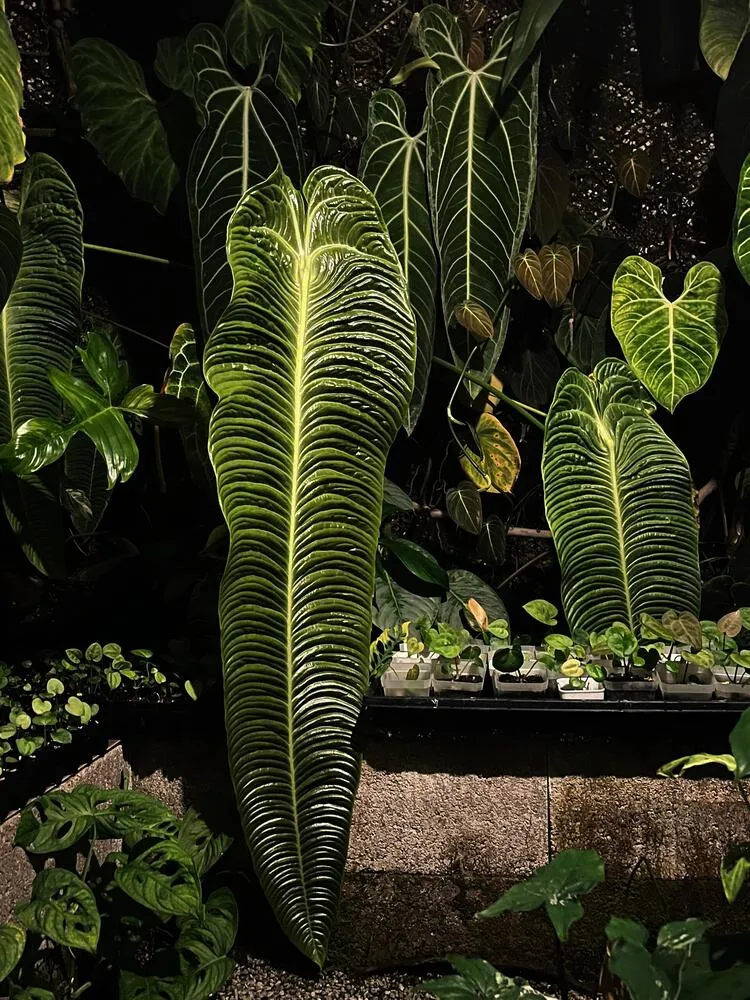
What keeps me interested is not only the length of the leaves, but the way the whole texture changes as the plant matures. The veins become denser, the corrugation gets stronger, and the leaf surface starts to carry that heavy, sculptural look that makes people stop and stare. But my favorite stage is still when a new leaf has not fully hardened off yet. At that point, it has a softer visual texture that is hard to describe unless you grow foliage plants yourself — glossy, fluid, almost like liquid glass.
Why King Anthurium Becomes So Impressive as It Matures
One of the most interesting things about Anthurium veitchii is that it does not show its full charm when it is young. Small plants can already look attractive, but they usually do not have the same impact. As the plant matures and the leaves get longer, it starts to feel much more dramatic indoors. That is when veitchii begins to look less like a promising young plant and more like the kind of foliage specimen people actually remember.
What makes that shift so satisfying is not just the size. As the leaves lengthen, the corrugation becomes stronger, the veins look denser, and the leaf margins usually develop a more obvious wave. New leaves before hardening off add another kind of beauty too, with a softer, glossier texture that I still find one of the most enjoyable parts of growing this plant. Not every veitchii has to look exactly the same to be beautiful, but this is the stage where the plant really starts showing why people stay attached to it long term.
How My Veitchii Changed Over 3 Years
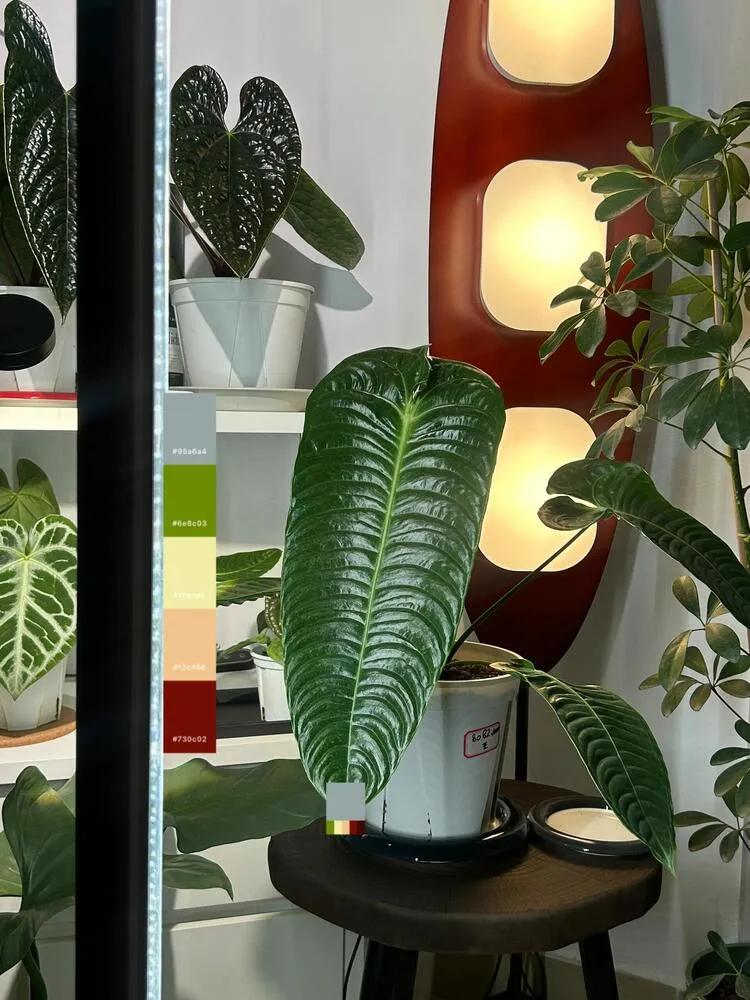
When I first got this Anthurium veitchii, the leaves were only around 15 cm long. At that stage, it already had the basic shape of a King Anthurium, but the overall look was still very juvenile. The leaves were much narrower, the corrugation was lighter, and the plant did not yet have the heavy presence that makes mature veitchii so impressive.
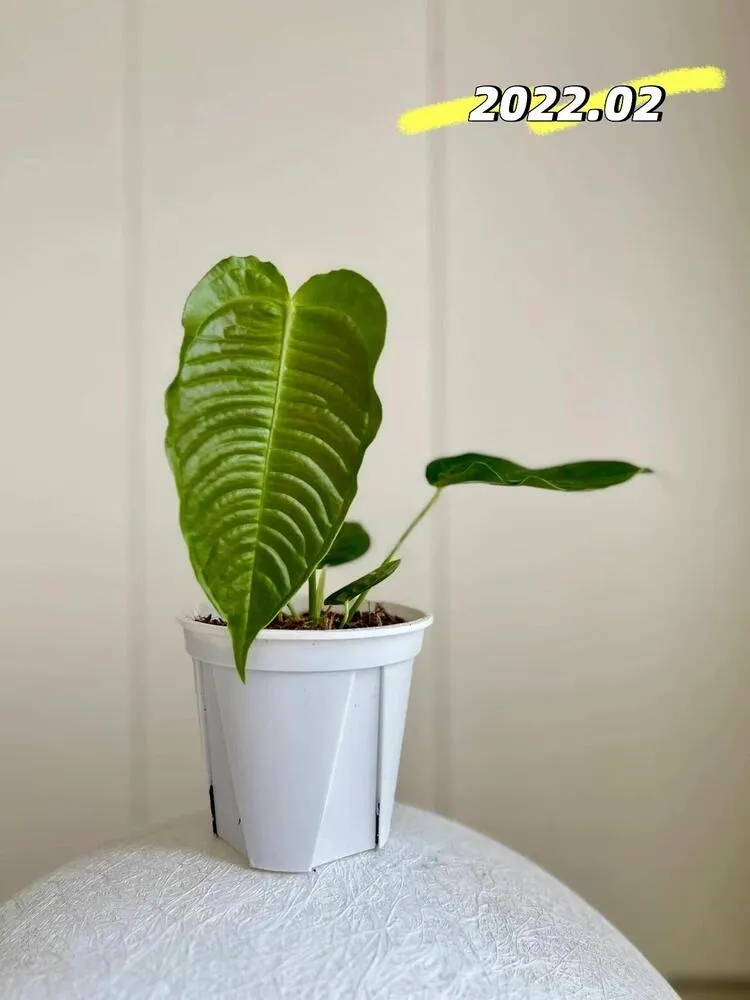
As it grew to around 50 cm, that was when I started feeling the plant was becoming much more recognizable. The leaves were no longer just long — they began to show stronger texture. The veins looked more defined, the surface started holding more structure, and the leaf margins developed a clearer wave. It still was not a huge plant yet, but it had already moved past the “small collector plant” stage and started looking more like a true foliage specimen.
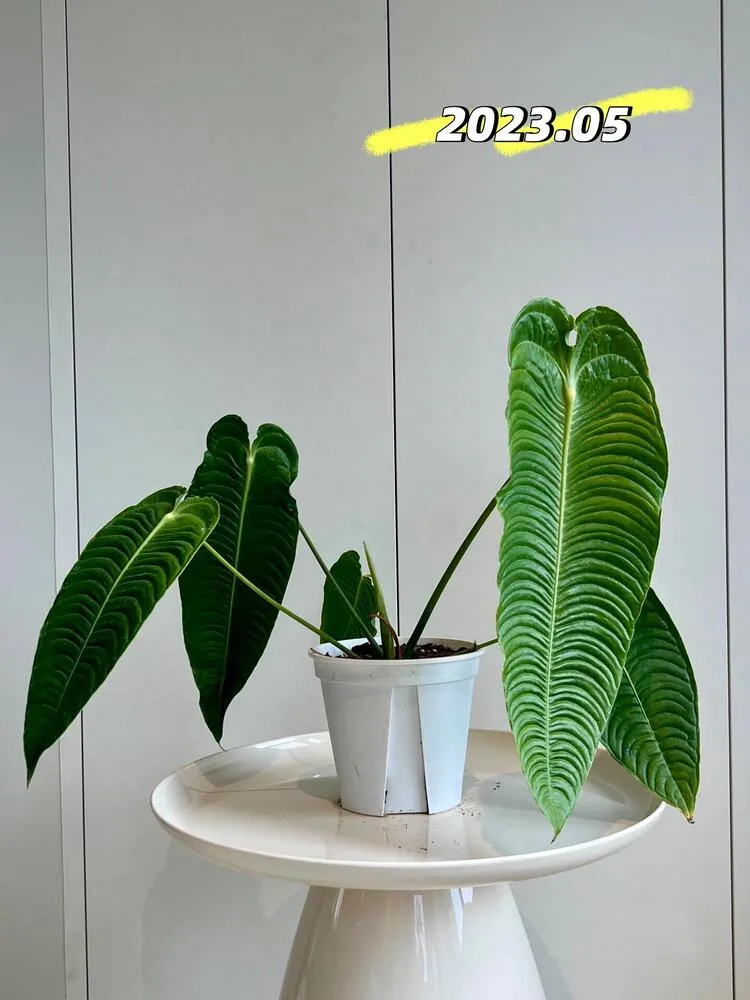
The biggest visual jump came after that. Once the leaves pushed beyond 50 cm and eventually reached around 120 cm, the whole plant changed again. The leaves became much more dramatic in proportion, and the corrugation looked denser and deeper. The waviness along the edges also became more obvious, which gave the plant that mature, sculptural look people usually associate with a well-grown King Anthurium.
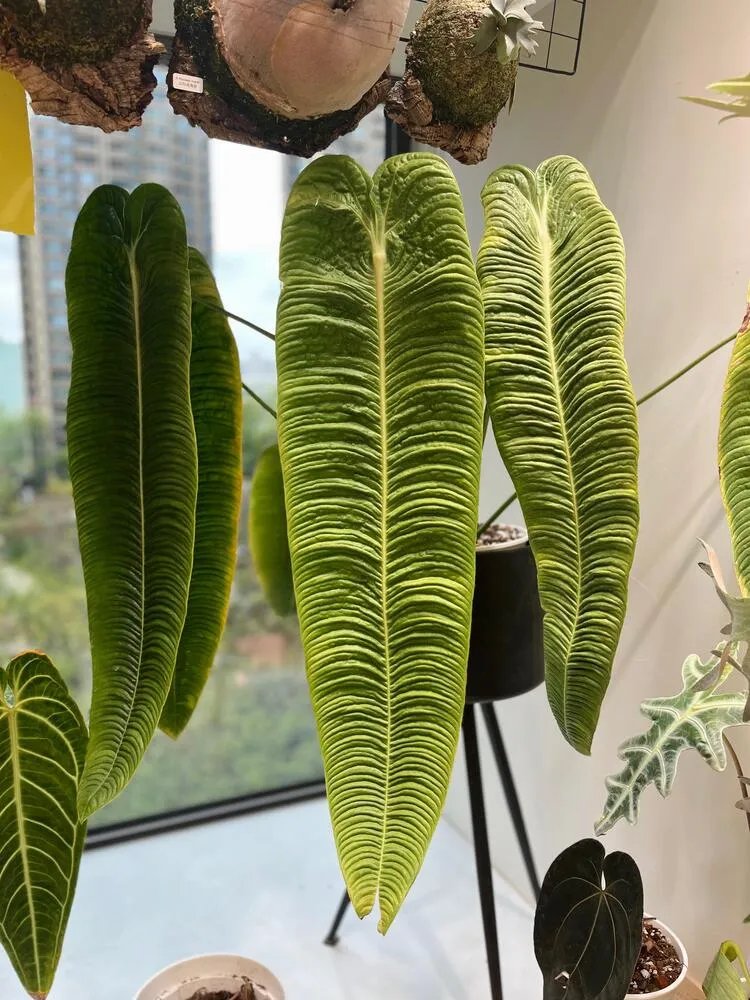
By that stage, it no longer felt like a rare aroid in a pot. It felt like a true giant foliage plant in the house.
What Actually Helped It Size Up in My Home
Over the past three years, I gradually realized that Anthurium veitchii does not size up from one single “secret.” What really made the difference in my home was a combination of conditions that kept the plant moving instead of stalling. It was never just about keeping it alive. It was about giving it enough support to keep pushing larger leaves, stronger corrugation, and better overall form.
Bright Light Made a Bigger Difference Than Many People Expect
I do not grow my veitchii in a dim corner. In my experience, it responds much better to bright, stable light than many growers assume. Mine handles around 10,000 lux with about 8 hours of supplemental light, and that level has helped it keep producing stronger, larger leaves over time.
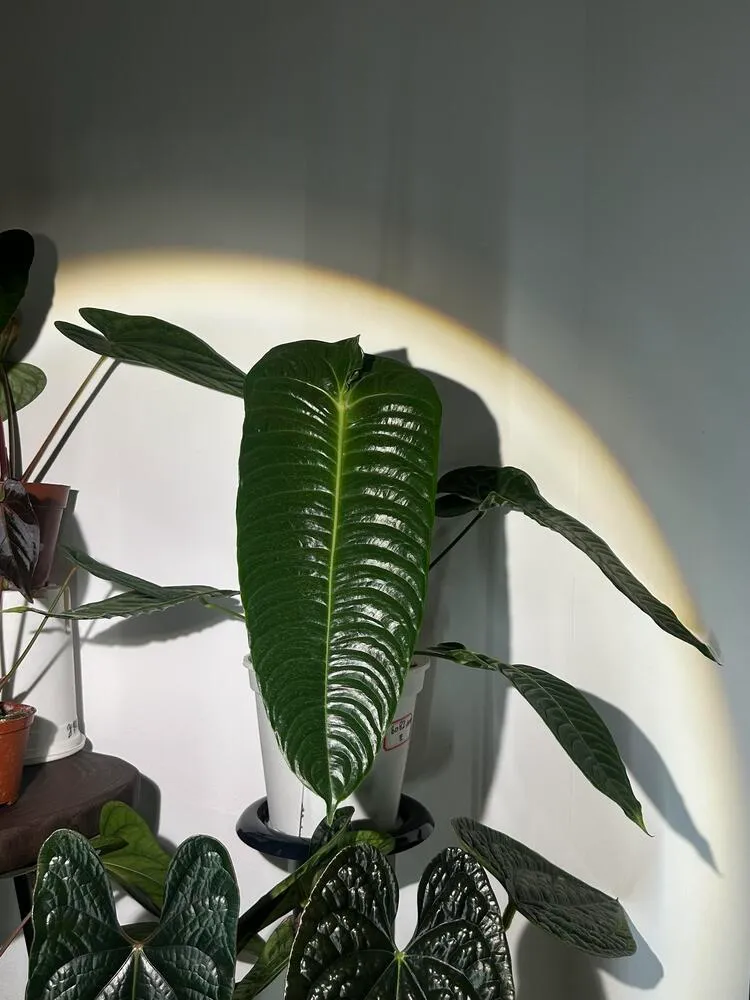
I think one reason some plants stay narrow or unimpressive is simply that they are grown too dark for too long. They may survive, but the leaves often do not develop the same size, structure, or mature presence. For me, giving more light was not about pushing the plant aggressively. It was about giving it enough energy to actually grow into itself. Keeping it too dark for too long is one of the easiest ways to keep it juvenile.
I Stopped Letting the Mix Go Too Dry
Another thing that helped a lot was changing how I watered it. I do not like using a strict “dry out completely, then drench” routine for this plant. In my own growing, that approach slowed things down too much. By the time the pot gets fully dry, some of the finer roots are already stressed, and that is not something I want during active growth.
What worked better for me was a more even rhythm: letting the mix dry partway, then watering thoroughly again before it becomes bone dry. Especially when the plant is pushing a new leaf, that steadier moisture level seems to support better expansion and stronger growth. Letting the pot go bone dry may feel safer, but it often slows the plant down.
The Potting Mix Had to Hold Moisture Without Turning Heavy
That watering style only works if the mix has the right balance. My veitchii grows in a mix of peat, large perlite, coconut husk, pine bark, peanut shell, base fertilizer, and slow-release fertilizer. I am not claiming this is the perfect formula for everyone, but it works well for the kind of growth I want.
What matters most to me is that the mix can do two things at the same time: hold enough moisture to keep the roots active, while still staying airy enough that the pot does not turn dense and stale. For a plant like veitchii, I think that balance matters much more than choosing an extreme mix that is either too chunky or too wet. A mix that goes too far in either direction usually makes steady growth harder, not easier.
Humidity Helped, but Airflow Was Just as Important
Veitchii is more forgiving than some velvet anthuriums, especially because it has that thicker, leathery leaf texture. But I still do not think humidity is something you can ignore. When the air stays too dry for too long, the plant may still live, but aerial roots slow down, new growth is less satisfying, and the plant just does not seem to push forward as confidently.
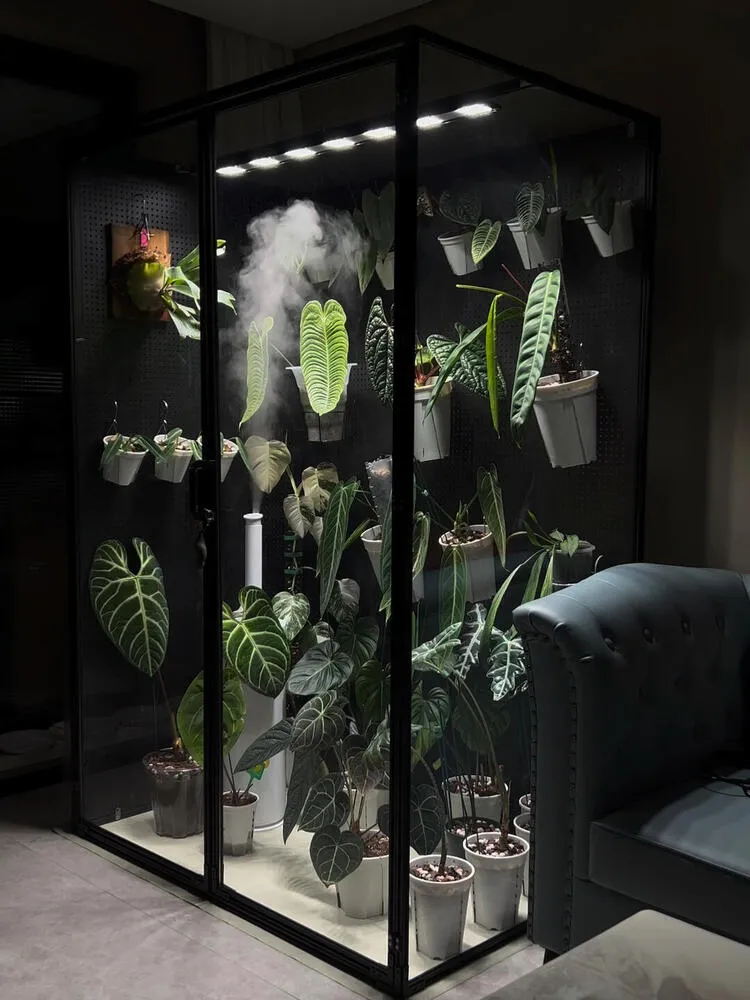
At the same time, I do not think high humidity alone solves much if the air is stagnant. I use timed fans, and that has been important for keeping the plant comfortable under warmer, wetter conditions. Once you start giving more water, more warmth, and more humidity, airflow becomes part of what keeps all of that working safely together. High humidity without airflow is not the same as a healthy growing environment.
Warm, Stable Conditions Kept Growth Moving
Temperature also made a real difference. My veitchii grows best when conditions stay warm and steady, with the most comfortable range sitting around the mid-20s °C. It can tolerate hotter weather, but steady warmth seems more useful than extreme heat.
When temperatures are right, the whole plant seems more active. The roots stay engaged, water use makes more sense, and new leaves move faster. In cooler periods, even if the plant still looks healthy, the pace slows down noticeably. For me, warmth was not just a background factor. It was part of what kept the plant from slipping into a stalled, half-growing state. A healthy-looking plant can still stay stuck for months if the overall environment is too cool or too inconsistent.
If I had to rank the biggest factors, I would put light first, watering rhythm second, and overall warmth and stability third.
In the end, what helped my veitchii size up was not one dramatic trick. It was bright light, moisture that stayed more consistent, an airy but moisture-holding mix, warm conditions, and enough airflow to support all of it. That combination is what turned it from a small plant with potential into a plant that actually kept getting bigger.
What I Think People Often Get Wrong With Veitchii
A lot of Anthurium veitchii disappointment does not come from dramatic mistakes. More often, it comes from expecting a young plant to look mature too soon, or mistaking survival for real development.
Expecting a Young Plant to Look Mature Too Soon
This is one of the easiest traps to fall into. A small veitchii can already be attractive, but it usually does not show the full corrugation, wave, or presence that people associate with a mature King Anthurium. When growers compare a juvenile plant to photos of fully mature specimens, it is easy to assume something is wrong when the plant is simply still young.
Confusing Survival With Real Growth
This is probably the biggest misunderstanding underneath everything else. A plant can stay alive for a long time in mediocre conditions, and that can make the setup seem “good enough.” But with veitchii, survival and development are not the same thing. If the goal is a true King Anthurium with size, texture, and presence, the plant needs conditions that support momentum, not just maintenance.
Is Veitchii Actually Easy to Grow Indoors?
I would not call Anthurium veitchii difficult in the same way as many velvet anthuriums, but I also would not call it effortless. In a normal indoor setup, it is often easier to keep alive than people expect. The harder part is getting it to look truly impressive instead of just staying alive as a long, slightly awkward juvenile plant.
I think veitchii suits growers who have bright light, decent airflow, stable warmth, and enough space, and who do not mind waiting for a plant to grow into its best form. It makes much less sense for someone with very low light, limited space, or the expectation that a small plant should already look mature.
So overall, I would say veitchii is manageable indoors, but not forgiving of weak conditions if your goal is a big, well-formed plant. The real divide is not whether it can survive in your home. It is whether your setup can keep it moving forward.
Why I Still Think Veitchii Is Worth the Space
What still keeps me interested in Anthurium veitchii is that it never really becomes static. Even after the leaves get large, the plant keeps changing in texture, proportion, and overall character. That is part of what makes it feel more rewarding than a plant that only looks good at one stage.
It is not the most compact anthurium, and it is not the fastest way to get a dramatic result indoors. But if you have the space and the patience to let it develop properly, it gives back in a way very few foliage plants do. For me, that is what makes veitchii worth keeping long term.
FAQ
Still comparing Anthurium varieties?
If you’re trying to figure out which anthuriums are actually worth growing indoors, my Anthurium varieties hub is a better place to compare leaf texture, growth habits, and overall difficulty side by side.
Explore Anthurium Varieties →