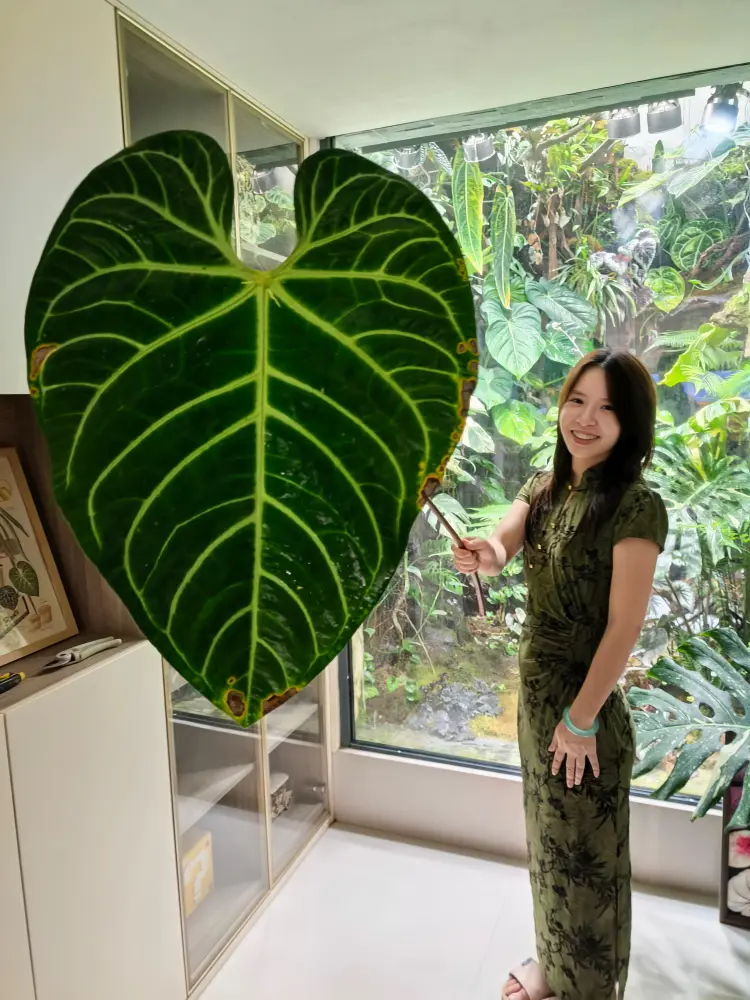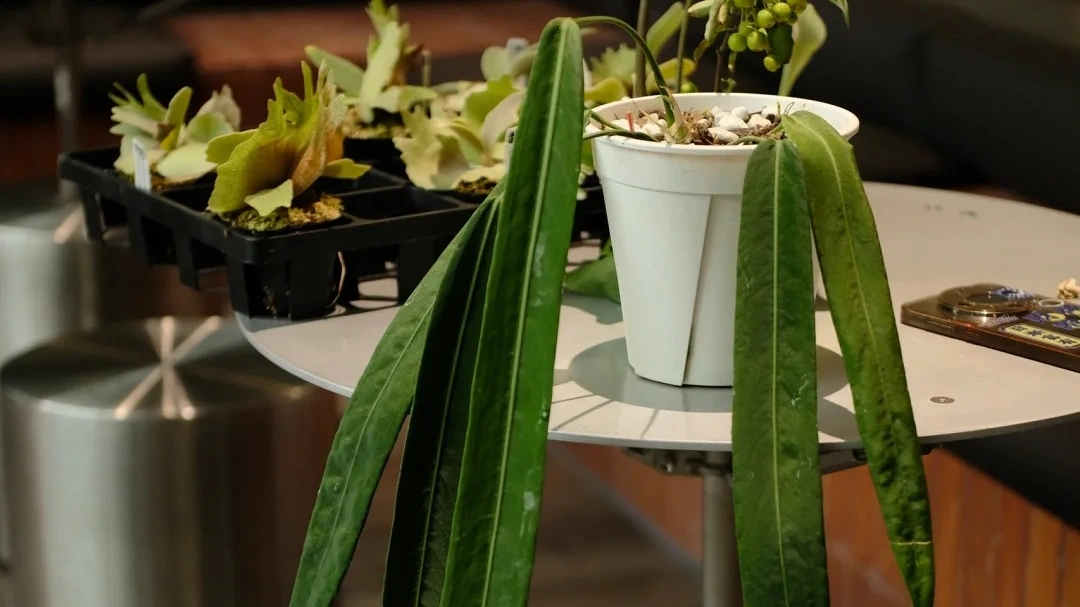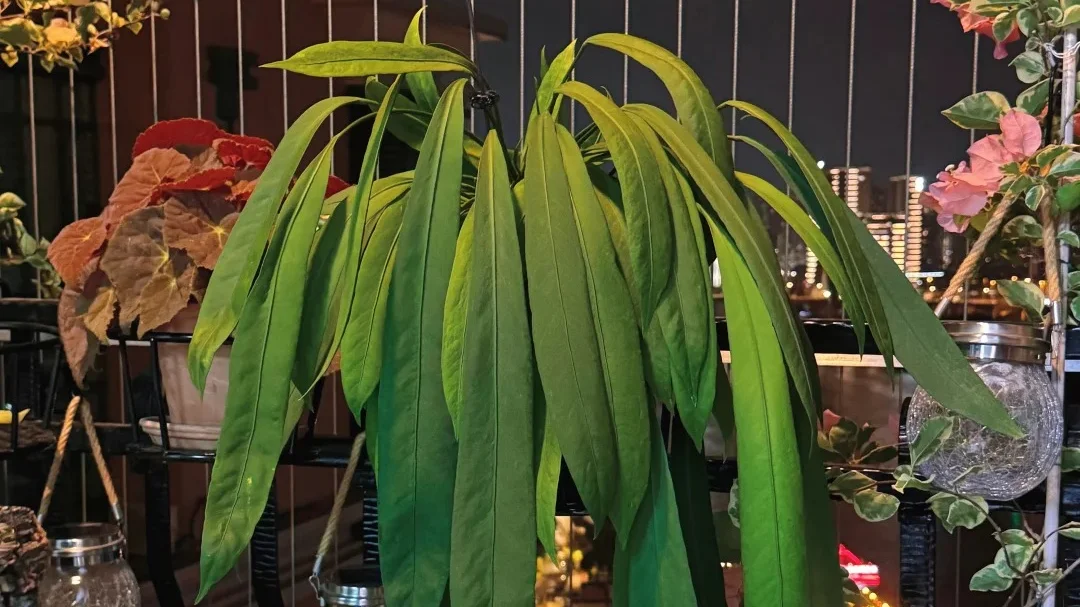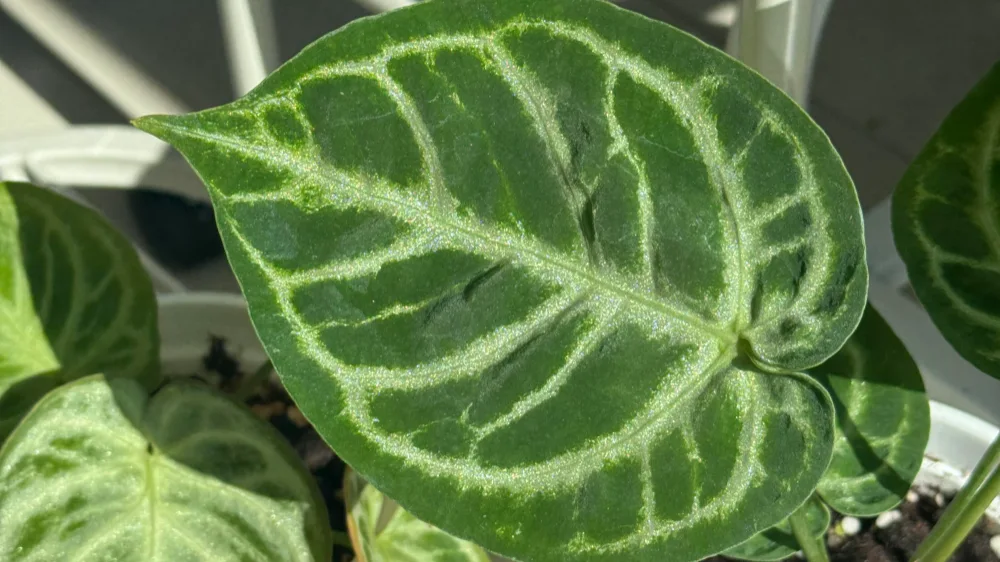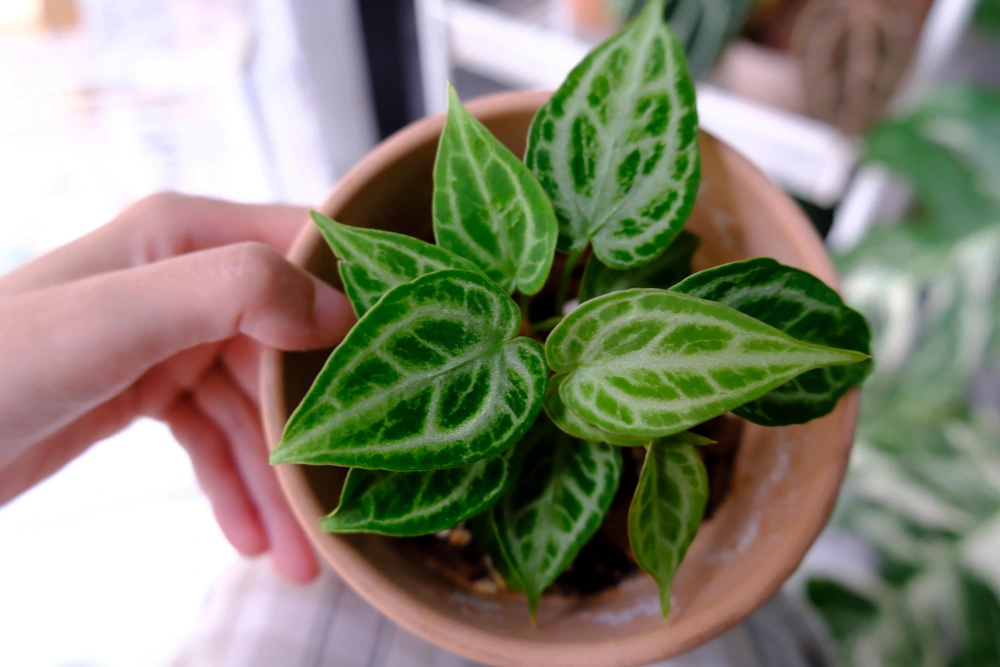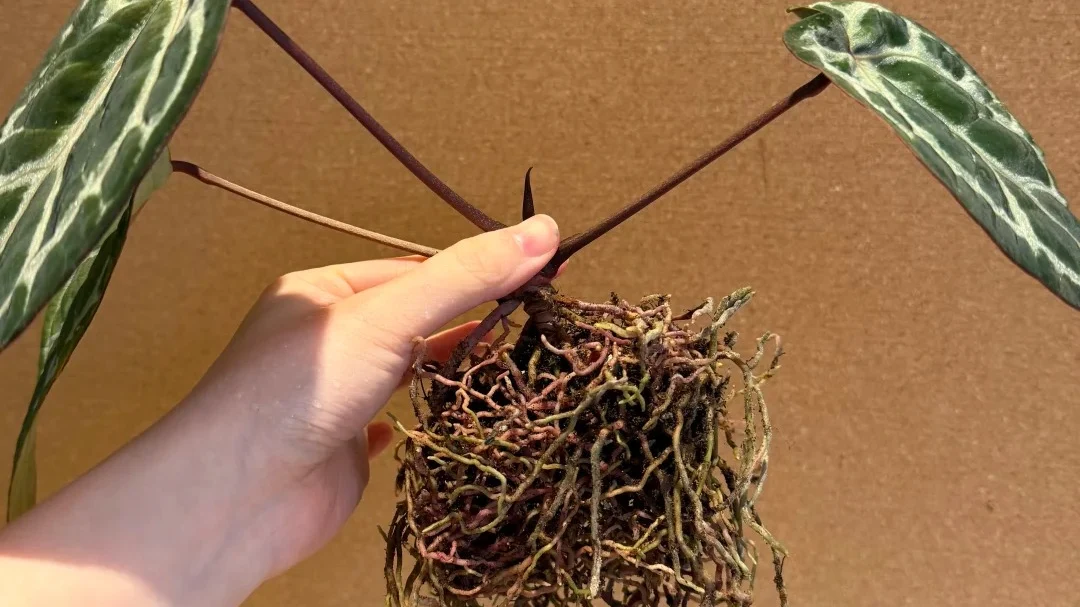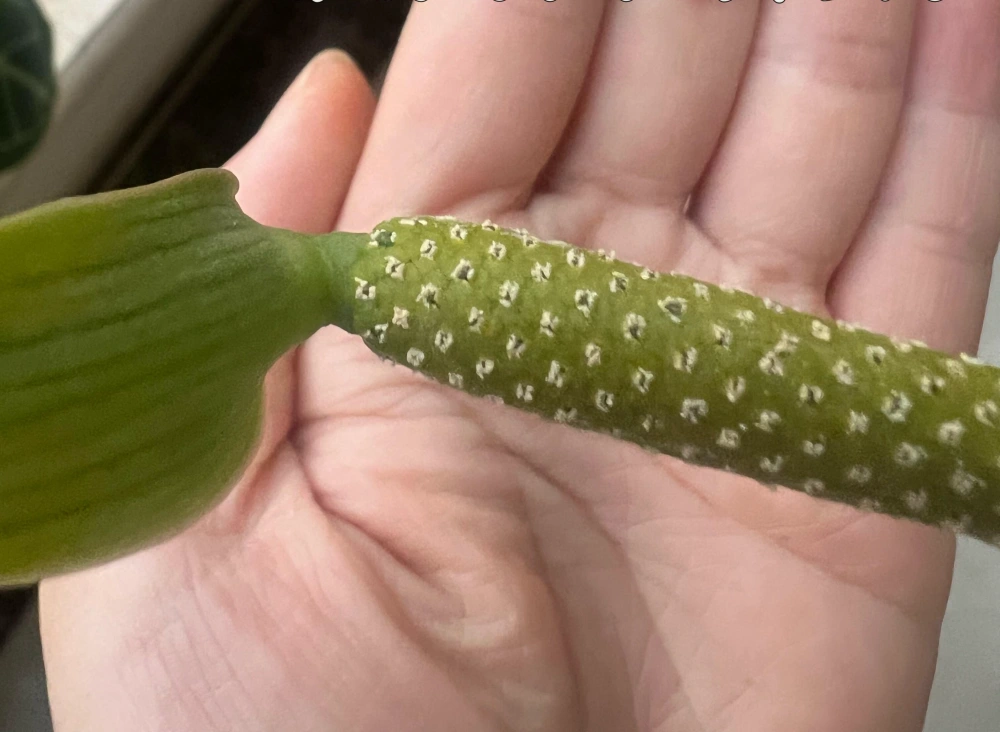
A lot of people know that anthuriums prefer bright indirect light, but that phrase is often too vague to be truly helpful in a real home. The harder part is figuring out whether a particular window, shelf, or corner actually gives the plant enough usable light to grow steadily indoors. The same spot can behave very differently depending on the season, how far the plant sits from the window, and whether supplemental light is involved. In this guide, I’ll focus on what that looks like in real indoor conditions — how much light most anthuriums actually need, how to tell when natural light is enough, and when it makes more sense to use a grow light instead of stretching a weak setup too far.
Start Here: Do You Have Usable Natural Light or Not?
Before getting into lux ranges or grow light setups, it helps to start with a much simpler question: does your home actually give your anthurium usable natural light or not? That one distinction already explains a lot. Some indoor setups make anthurium care much easier from the start, while others keep the plant alive without really giving it the conditions to grow well.
You Have Usable Natural Light
South-facing, southeast-facing, and southwest-facing windows usually make indoor anthurium growing much easier. If the area near the window stays bright for a meaningful part of the day, you are already working with a much stronger setup. In many homes, good natural light is less about having direct sun all day and more about having a reliably bright zone near the window for several hours.
In that kind of setup, most of the plant’s basic light needs can often be covered by natural light alone. At that point, the real question is placement: how close the plant sits to the window, whether the light turns too harsh at certain times of day, and whether the plant is staying in a bright zone long enough to grow well. A good window setup does not guarantee perfect growth, but it gives you a much better starting point.
You Do Not Have Enough Natural Light
Some rooms look perfectly fine to human eyes and still do not provide enough light for steady anthurium growth. This is especially common in north-facing rooms, homes with short and grey winter days, or setups where the plant sits too far from the window to receive much usable light. In those conditions, the plant may stay alive for a while, but growth often becomes slower, weaker, and more uneven over time.
If your plant is several feet from the window and the room stays dim for most of the day, the problem is probably not your care routine. It is simply lack of usable light. Some homes do not really have a reliable window spot for anthuriums year-round, especially in winter. When that is the case, a grow light is usually more helpful than endlessly shifting the plant around and hoping one slightly different corner will fix the problem.
How Much Light Do Anthuriums Actually Need?
I do not treat lux numbers as absolute laws, but I do find them more useful than vague phrases. For many indoor anthuriums, around 5,000 to 8,000 lux for 6 to 8 hours a day is a solid practical range to work from. That level is usually enough to support steady growth without pushing the plant into the kind of harsh exposure that starts causing stress.
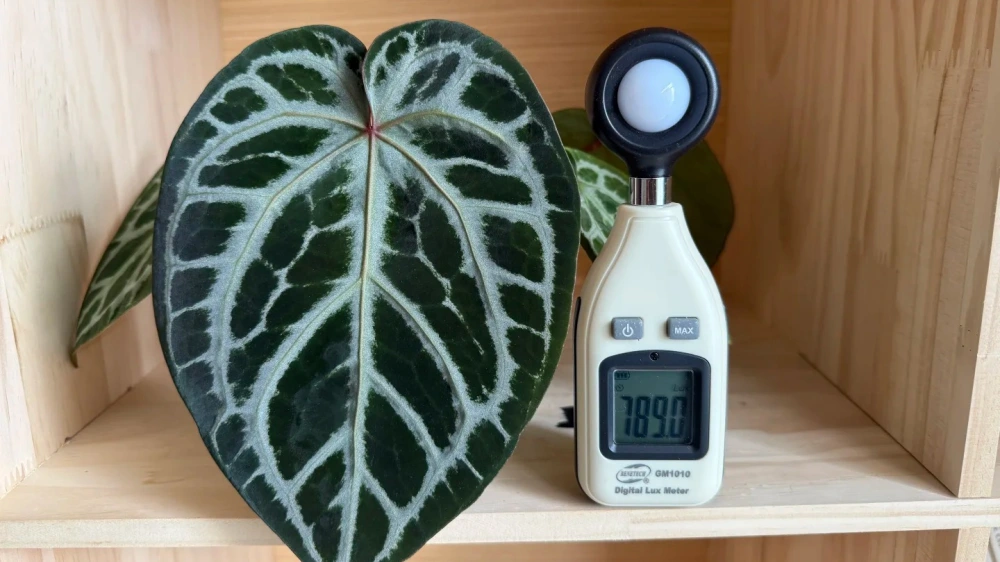
Just as important, though, is remembering that the number alone does not tell the whole story. Duration matters too. A plant that gets one short bright burst and then spends the rest of the day in weak light often behaves very differently from one that receives a steady, usable level of light for several hours. What matters most is not the peak number for a few minutes, but whether the plant gets enough light overall to keep growing well indoors.
I also would not use this range as a rigid rule for every species, size, or stage of growth. Some anthuriums can handle a little more light, while others react faster when the setup becomes too harsh. Smaller plants, recently rooted plants, or already stressed plants usually do better with a gentler setup than a mature, well-established plant. The goal is not to chase the highest number possible. It is to give the plant enough light to grow well without turning the leaves into the part that takes all the stress.
Different Anthuriums Do Not All React to Light the Same Way
This is one of those things that becomes obvious once you grow more than a few types side by side. Velvet-leaf anthuriums often show stress sooner under harsh direct sun, while thicker-leaf types can sometimes handle slightly stronger light a little better. Younger plants also tend to react more quickly to sudden changes in light than well-established mature ones. So even when I use the same lux range as a starting point, I still watch how each plant responds rather than assuming they will all behave the same way.
What Bright Indirect Light Actually Looks Like Indoors
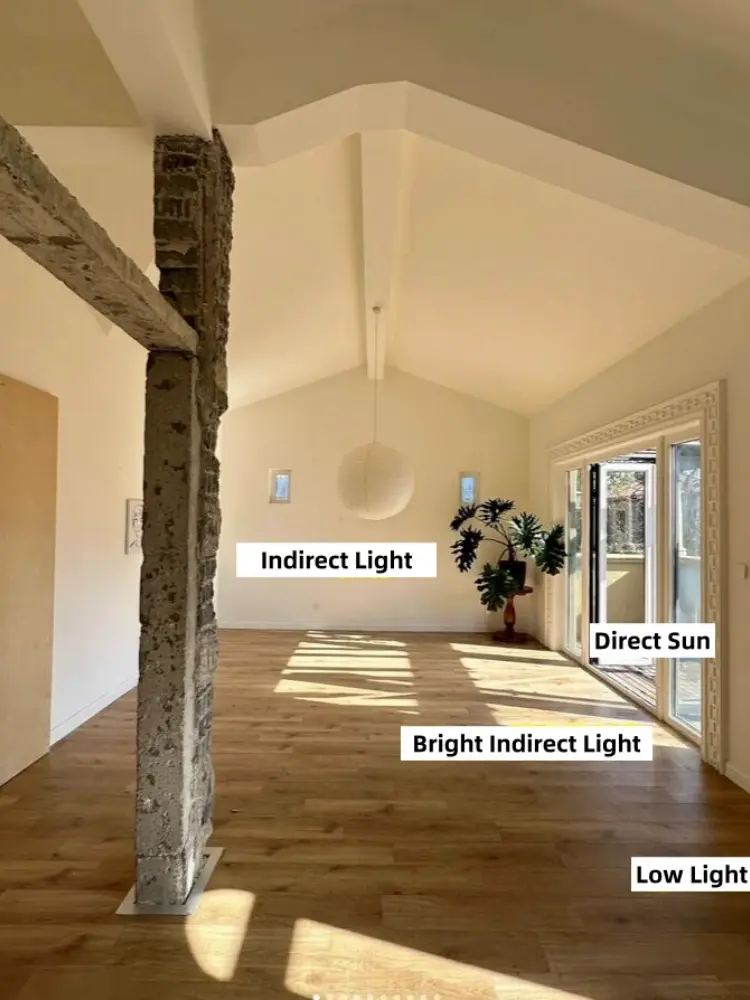
“Bright indirect light” sounds simple on paper, but indoors it often causes more confusion than clarity. What matters is not the label itself, but how the light actually behaves in the room. In most homes, the difference between direct sun, bright indirect light, and a spot that only seems bright to human eyes becomes much clearer once you stop thinking in care-guide terms and start looking at where the light really lands.
Direct Sun
Direct sun is not just a bright room. It is the part of the room where the sun is actually hitting the plant. You can usually tell because the light feels much more intense, and the leaf or nearby surface casts a sharp, defined shadow. In that kind of spot, the plant is not simply near a window — it is in the path of the sun itself.
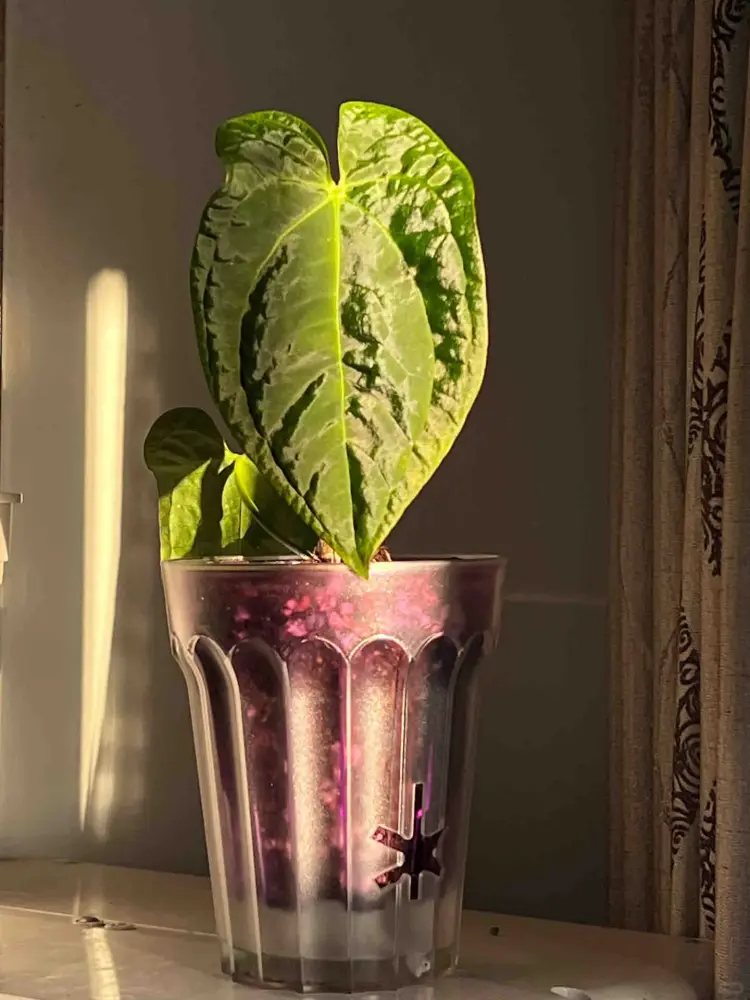
Some anthuriums can tolerate a little gentle morning sun, especially if the exposure is short and the plant is well adjusted to the spot. But strong midday or afternoon sun is often too much, especially in summer or behind hot glass. For most anthuriums, long exposure to harsh direct sun is not the safest default, particularly for velvet-leaf types or plants that are already stressed.
Bright Indirect Light
Bright indirect light is often the most useful and realistic target indoors. The plant is not being hit directly by the sun, but the area around it still stays clearly bright for a good part of the day. This usually means a spot close to a large window, where there is plenty of ambient daylight, reflected light, or strong brightness without the leaves sitting in the direct beam.
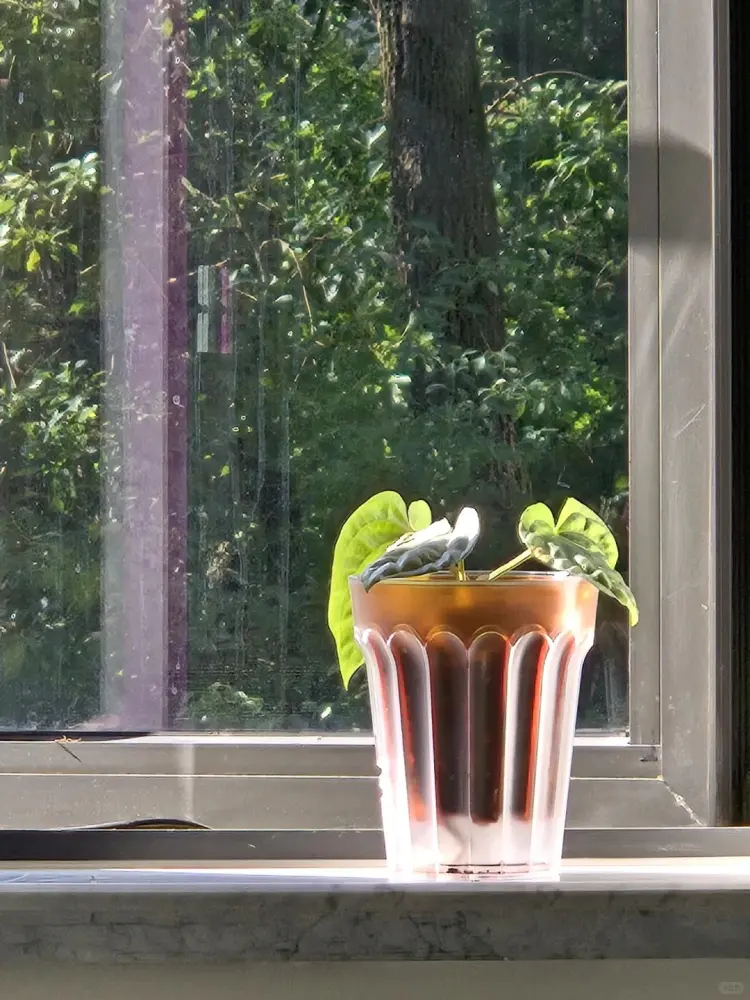
For most indoor anthuriums, this is the most reliable zone for long-term growth. It gives the plant enough usable light to grow steadily without exposing the leaves to the harsher side of direct sun. In real homes, this is usually the range that feels easiest to work with over time.
When a Spot Only Looks Bright to Your Eyes
This is where a lot of people get misled. Human eyes adjust very easily, so a room can feel bright even when the plant is not actually receiving enough usable light. This happens all the time in the middle of rooms, on shelves placed too far from the window, or during winter when the overall room still looks pleasant but the real light level has dropped a lot.
These are often the spots where anthuriums stay alive without really growing well. The plant may not immediately collapse, but new leaves stay small, growth slows down, and the pot may start taking much longer to dry. A room that feels bright enough for you may still be too dim for the plant to do much beyond surviving.
Why the Same Window Does Not Give the Same Light All Year
One thing that becomes very obvious once you grow anthuriums indoors for a while is that the same window does not behave the same way all year. Even if the plant never moves, the light it receives can change a lot between summer and winter. Day length shifts, the sun angle changes, and the amount of usable light reaching indoor surfaces changes with it.
In summer, the bright area near a window often lasts longer and reaches farther into the room. In winter, that bright zone usually becomes smaller, weaker, and much shorter-lived. This is why an anthurium that grows well near a window in summer may suddenly slow down or stall in winter, even when you have not changed the watering, the pot, or the general setup in any obvious way.
I notice this especially in a Pacific Northwest climate, where winter is long, grey, and much darker overall. In that kind of environment, the seasonal drop in usable indoor light can be much more dramatic than many growers expect. A spot that feels perfectly workable in late spring or summer can become a marginal light position once the darker months set in.
Do Not Judge Winter Light by One Bright Midday Moment
Winter light can also be misleading because a room may look bright for one short stretch around midday and still not provide enough light overall. One bright hour at noon does not always mean the plant is getting enough light across the day. What matters more is the total amount of usable light the plant receives from morning through late afternoon, not just the best-looking moment.
This is one of the easiest ways to overestimate winter light indoors. The room briefly looks bright, the window still seems workable, and it is easy to assume the plant is getting what it needs. But if the rest of the day stays dim, that short bright period may not be enough to support steady growth for long.
Signs Your Anthurium Is Not Getting Enough Light
Low light does not always show up as obvious damage right away. More often, it shows up as a pattern over time. That is why I pay more attention to repeated growth behavior than to one imperfect leaf. When an anthurium is not getting enough usable light, the signs are often subtle at first, but they become much easier to spot once you know what to watch for.
New Leaves Keep Getting Smaller
This is one of the clearest early signs. If each new leaf comes in smaller than the one before it, and that pattern keeps repeating, I start looking at light much more closely. One imperfect leaf on its own does not mean much. But when the plant keeps producing weaker, smaller growth over time, it usually means the setup is no longer giving it enough energy to build properly.
Growth Slows Down for Too Long
Some slowdown is normal, especially in winter. But there is a difference between seasonal slowdown and a plant that never really starts moving again. When an anthurium stays weak, stalled, or half-active for months at a time, I usually take that as a sign that the setup is not giving it enough usable light to support steady indoor growth.
The Pot Stays Wet Much Longer Than Before
This is one of the most useful signs because it often shows up before people realize light is the issue. When light drops, water use slows down too. A mix that used to dry at a reasonable pace may suddenly stay wet much longer than before, even though nothing about the pot or watering routine has changed. In that situation, the plant is often telling you that the environment is no longer supporting the same level of activity.
The Plant Survives but Never Really Sizes Up
Some anthuriums in weak light do not look obviously miserable. They just stay small for too long. The leaves remain undersized, the growth never seems to strengthen properly, and the plant looks static month after month. It may still be alive, but it never develops the size or momentum you would expect from a plant that is truly comfortable in its spot.
Recovery After Stress Becomes Much Slower
A plant growing in weak light often takes much longer to recover after repotting, root damage, shipping stress, or other setbacks. Even relatively minor problems can linger because the plant does not have enough energy coming in to restart strong growth. When recovery feels unusually slow for too long, I often find that the light setup is part of the reason.
Light and Watering Are More Connected Than Most People Think
One thing I learned the hard way is that light and watering cannot really be separated indoors. Light affects how quickly the pot dries, how actively the roots function, and how easily the plant can recover from any kind of stress. When the light level drops, the whole system slows down with it.
In lower light, the mix usually stays wet longer. Once that happens, the roots spend more time in a cooler, heavier, lower-oxygen environment. The problem may look like overwatering on the surface, but the real issue often started earlier with a drop in usable light. Many indoor watering problems do not start with the watering can. They start with a drop in light that slows everything else down.
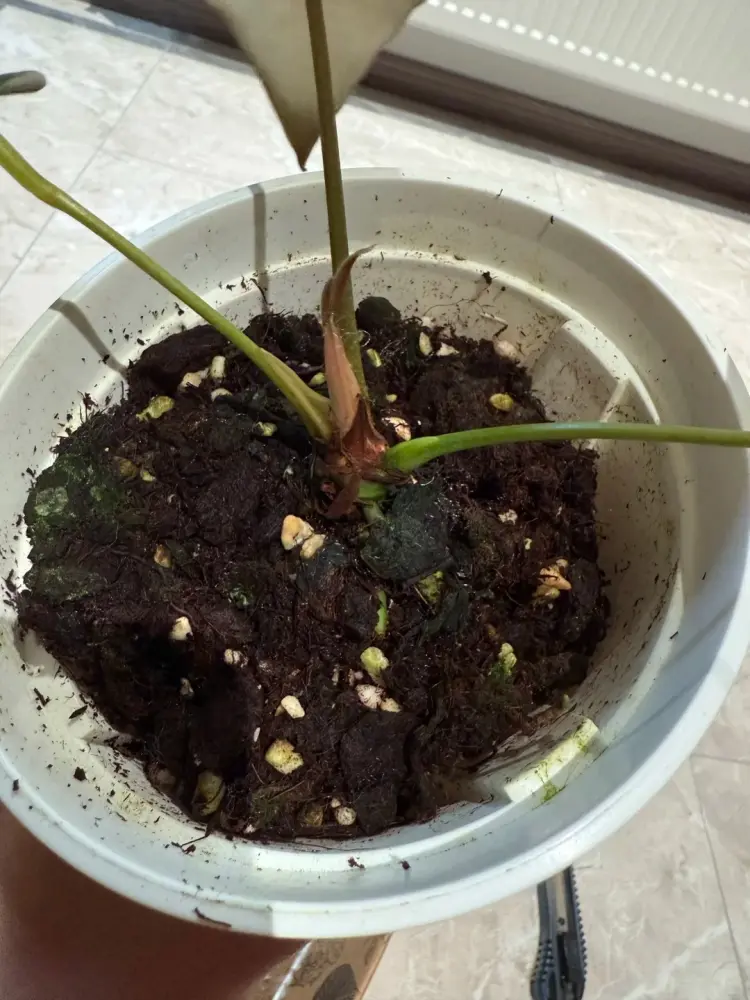
This is why a watering rhythm that works perfectly well in summer can suddenly become too heavy in winter. A grower may feel like they are watering the same as usual, but the environment is no longer the same. The plant is using less water, the mix is drying more slowly, and the roots are staying wet for longer than they did before. If light drops and watering does not adjust with it, decline often follows.
This is also why I do not like judging watering in isolation. If an anthurium stays wet for too long, slows down, and starts looking weaker, I do not only ask whether I watered too much. I also ask whether the light dropped to the point that the whole pot stopped cycling the way it used to.
When I Use a Grow Light Instead of Chasing Better Window Light
I use a grow light when the natural light is clearly not enough, not as a decorative extra and not because every anthurium “needs” artificial light by default. Once I know the window setup is not enough, I would rather solve the problem directly with a grow light than keep hoping the plant will adapt to a weak spot that never really works.
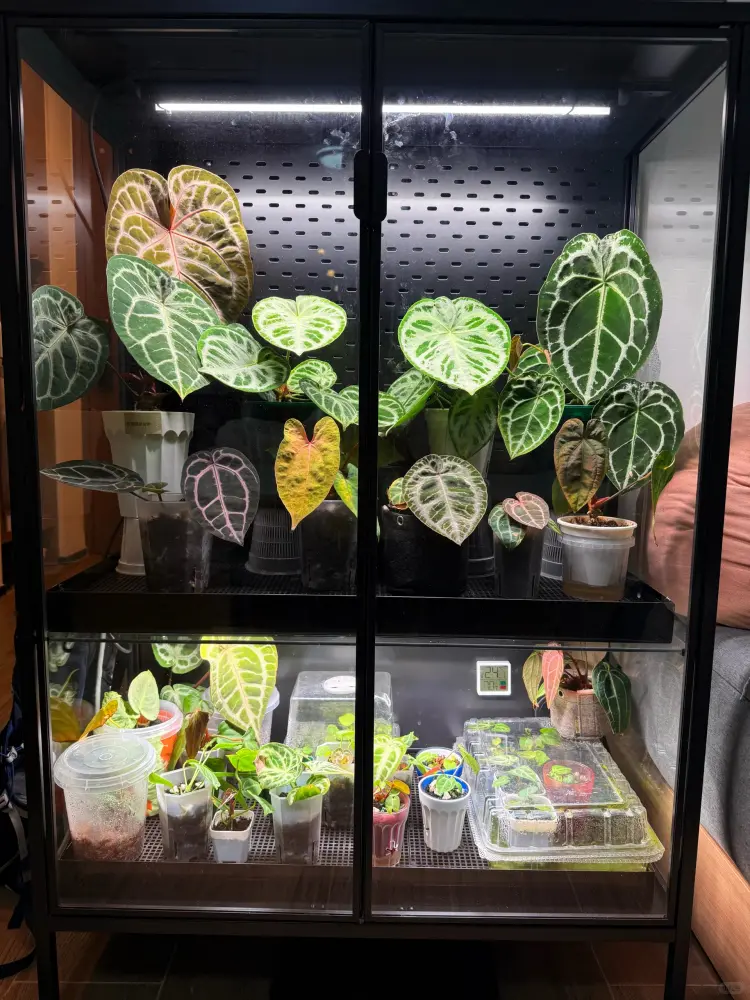
This usually makes sense when the room stays dim for most of the day, when winter days become too short to support steady growth, when the best window positions are already taken, or when the plant needs to stay farther from the window than ideal. I also start thinking about supplemental light when a plant is already showing the usual signs of weak light — smaller leaves, slower growth, longer drying times, or poor recovery after stress.
There are many ways to set up grow lights indoors, including spotlights, tube or bar lights, panel lights, and strip lights. But in practice, I care much less about the form of the fixture than about the actual light reaching the plant. A fancy-sounding product description does not help much if the leaves are still sitting in weak light.
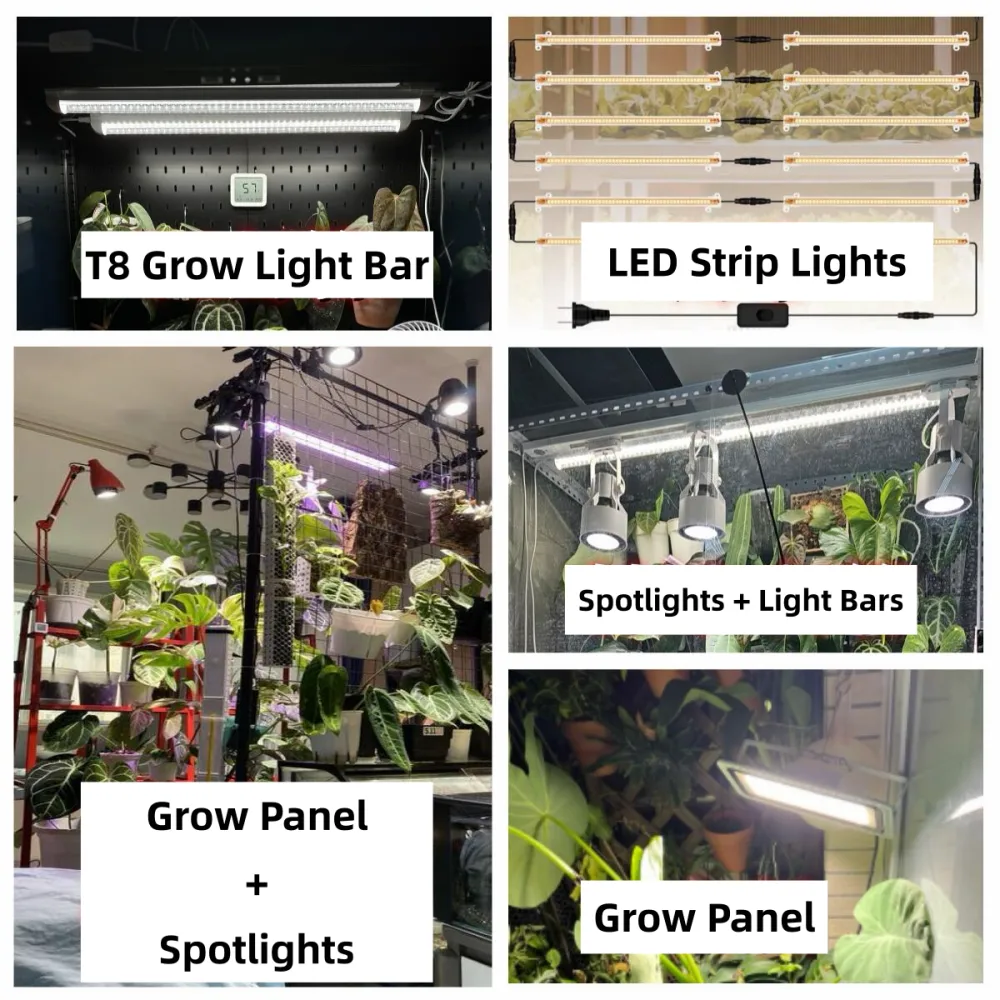
What matters most to me is usable light at leaf level. If the plant is not getting enough where it actually sits, the type of fixture matters less than people think. I would rather use a simple setup that delivers the right intensity than keep chasing marketing terms or assuming that any “full spectrum” light automatically solves the problem.
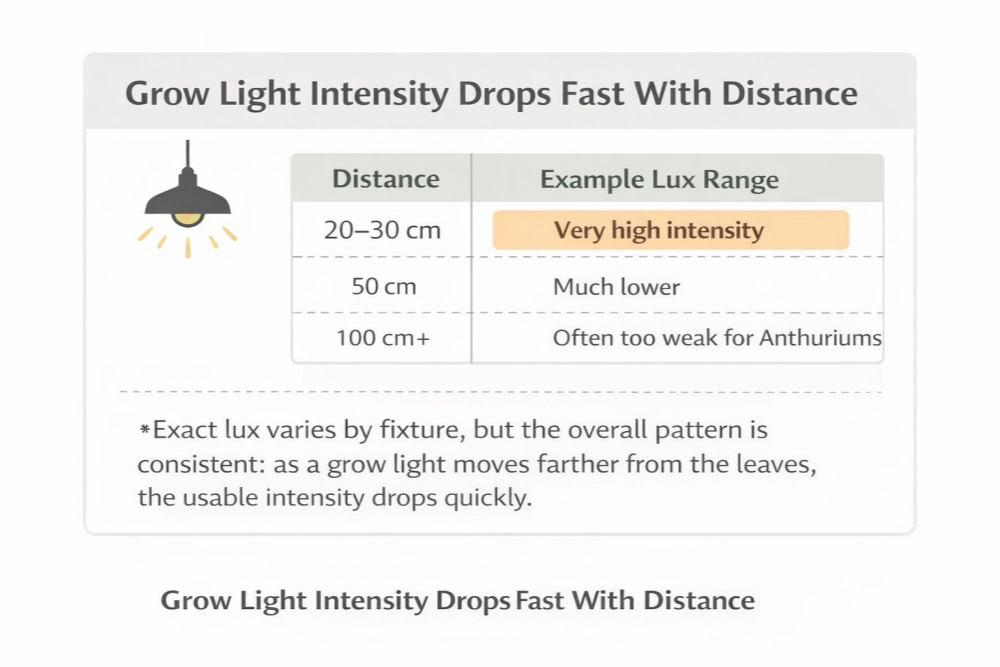
My Real Rule: Enough Light to Grow, Not Just Stay Alive
Anthuriums do not need the brightest possible setup. What they need is a stable level of light that supports steady leaf growth, active roots, and decent recovery. Indoors, the goal is usually not more light at any cost. It is enough usable light, for enough hours, without pushing the leaves into unnecessary stress.
For many growers, that means making the most of bright indirect natural light when it is available, and using supplemental light when the window setup clearly falls short. My rule is simple: I want enough light for the plant to keep moving forward, not just enough to stop it from collapsing.
FAQ
Still figuring out what works for your Anthurium?
Light, watering, humidity, soil, and root health all shape how an Anthurium grows indoors. If you’re still comparing care routines or trying to build a setup that actually works at home, my main Anthurium care page brings the most useful guides together in one place.
Go to Care Hub →