An anthurium rarely goes from healthy to dying overnight. Most of the time, the decline has been building for a while — slower growth, smaller new leaves, a pot that stays wet too long, or roots that are no longer working the way they should. When I see that kind of slide, I do not run through every possible cause first. I look at where the trouble likely began: the roots, the watering pattern, the light, or a recent change the plant never really recovered from.
What Kind of Decline Are You Seeing?
Not every struggling anthurium is actually dying. Before I start changing the care routine, I usually look at the pattern first. A single old leaf fading is very different from a plant that has gone limp or started drooping all over, stopped growing, and keeps getting weaker.
One older leaf is fading, but the rest of the plant looks fine
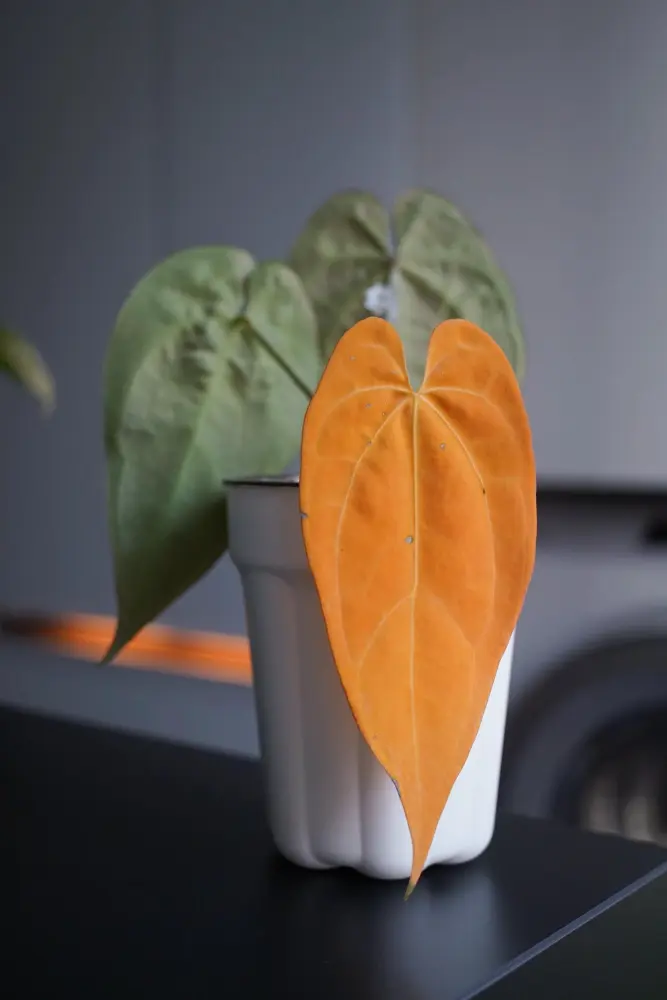
Sometimes a lower, older leaf starts turning yellow while the rest of the plant still looks healthy. If the plant is still pushing new growth and the other leaves look normal, I usually treat that as ordinary aging rather than a sign that the whole plant is declining.
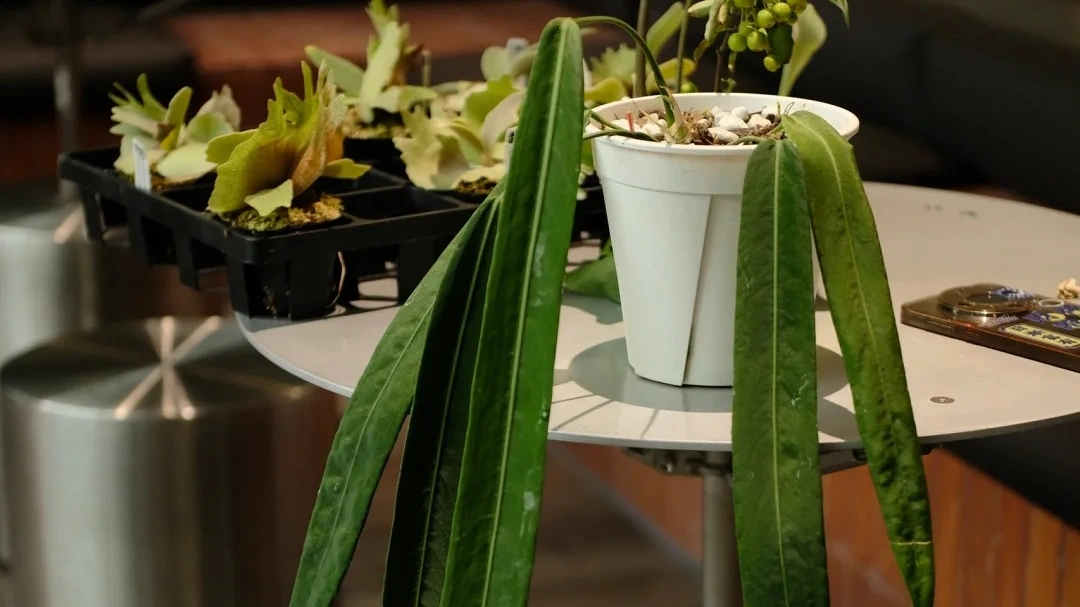
The whole plant feels limp or unstable
If the leaves all look limp, the plant feels loose in the pot, or the petioles no longer seem to support themselves properly, I stop thinking of it as a simple leaf issue. That kind of weakness often points to something deeper below the surface. This is where I start suspecting root trouble.
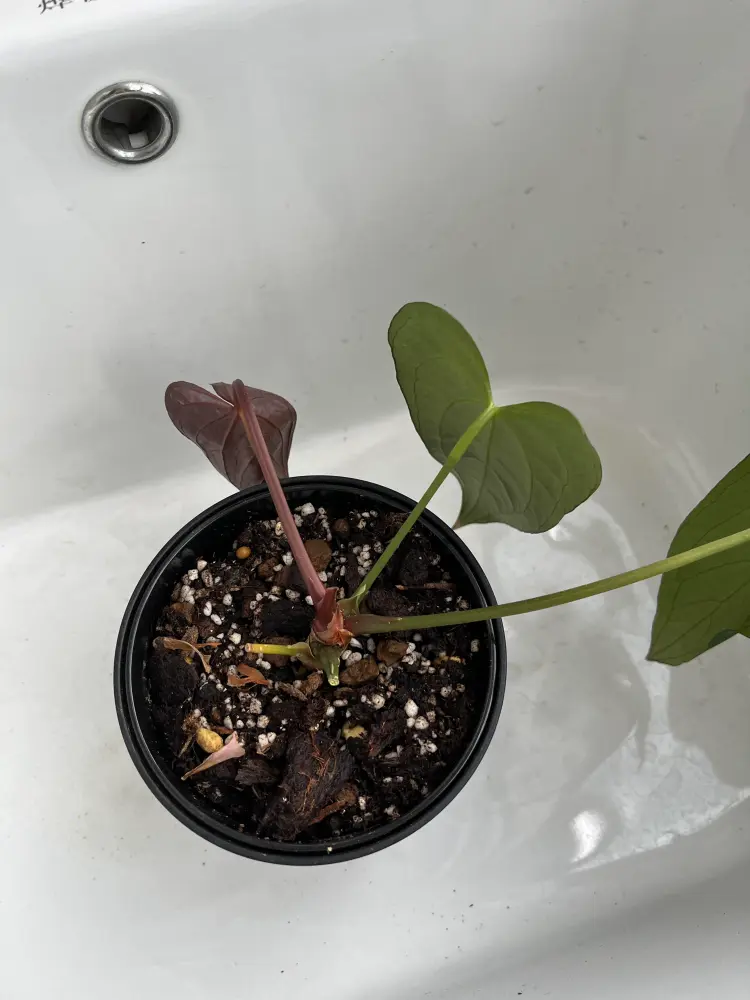
Each new leaf is smaller or weaker than the last
When an anthurium keeps producing smaller leaves, thinner leaves, or leaves that struggle to unfurl cleanly, I usually see that as a sign of declining vigor rather than a one-time setback. The plant may still be alive and holding onto older foliage, but it is no longer moving forward the way a healthy plant should.
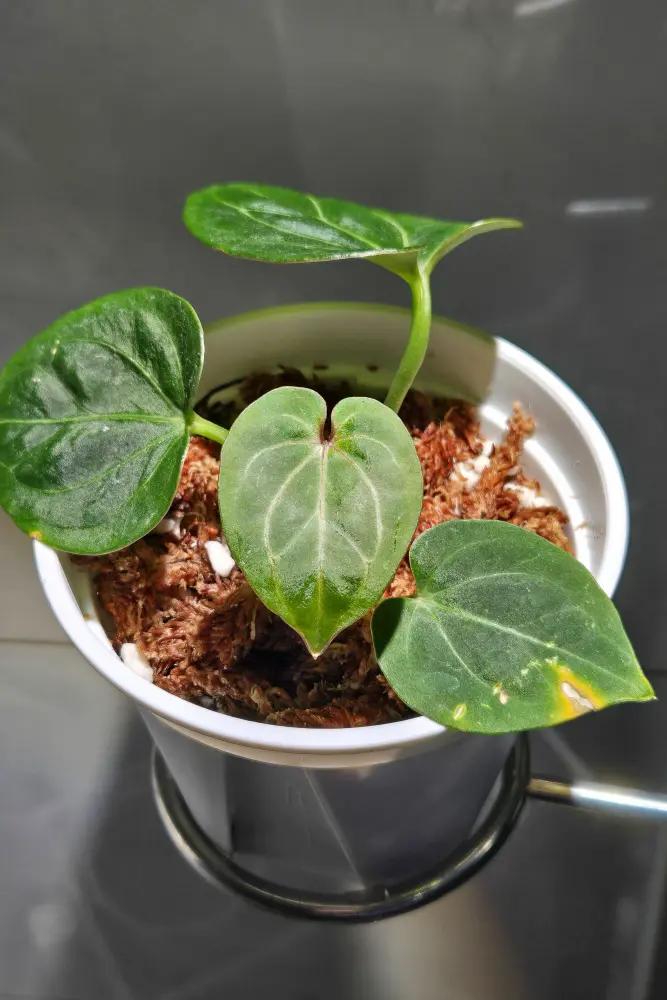
The plant has stopped growing and keeps looking worse
This is one of the most common “it looks like it’s dying” situations indoors. The plant does not fully collapse, but it also does not recover. It sits still for weeks or months, older leaves keep declining, and nothing about it looks stronger over time. That kind of slow, stuck decline usually means the problem has been going on longer than it first appeared.
When an Anthurium Looks Like It’s Dying, I Check the Roots First
If an anthurium keeps getting weaker and I still cannot clearly explain why, I stop guessing and check the roots. Too many problems that show up in the leaves actually begin below the surface.
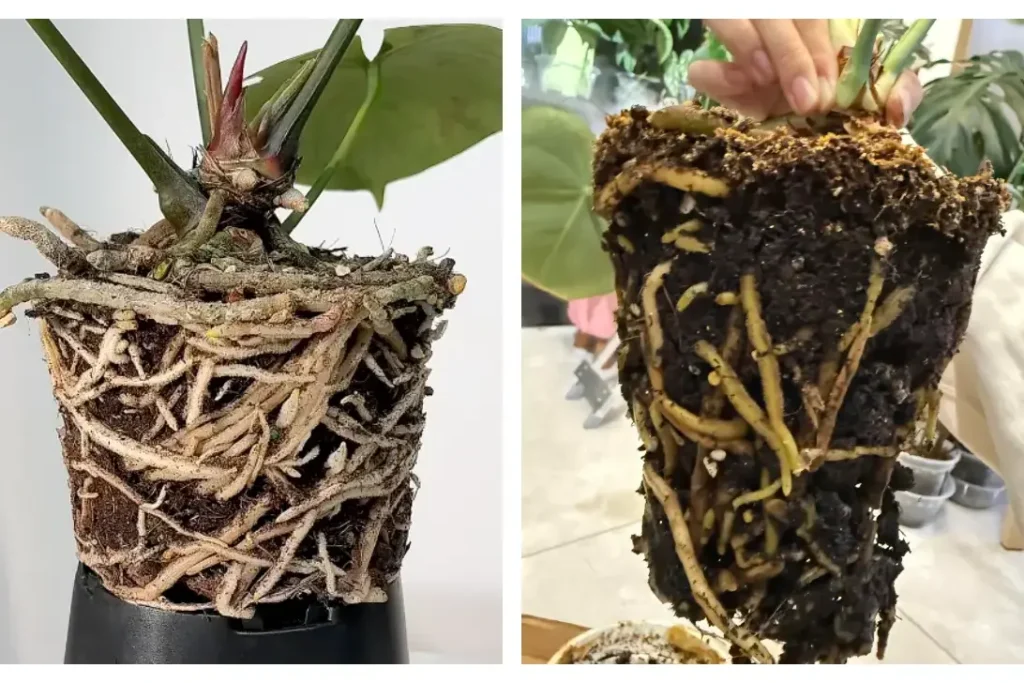
If the pot stays wet for too long and the plant still keeps declining, I stop reading the leaves as the main clue. The same is true when the plant keeps losing strength without one obvious cause — older leaves yellowing one after another, new growth coming in smaller, or the whole plant starting to feel loose in the pot. Those signs do not always mean root rot, but they often mean the root system is no longer supporting the plant properly.
I have found that once an anthurium reaches that stage, guessing from the foliage alone usually wastes time. A plant can still hold onto a few leaves even when the roots are already weak, damaged, or barely functioning. That is why root condition is usually the first thing I want to confirm when a plant looks like it is dying.
Start Here: 4 Common Reasons an Anthurium Starts Dying
When an anthurium keeps declining, I stop focusing on one symptom at a time and look at the bigger pattern instead. Most plants that seem to be “dying” are being dragged down by one of a few core problems: failing roots, a pot that stays wet too long, weak light that slows everything down, or stress the plant never fully recovered from.
1. The roots are failing
This is the first place I look when an anthurium keeps getting weaker for no clear reason. The leaves may look more tired over time, the whole plant may feel less stable, and new growth may come in smaller, slower, or get stuck before it opens properly. Sometimes the pot stays wet for too long. Other times the plant does get watered, but it no longer bounces back the way it used to.
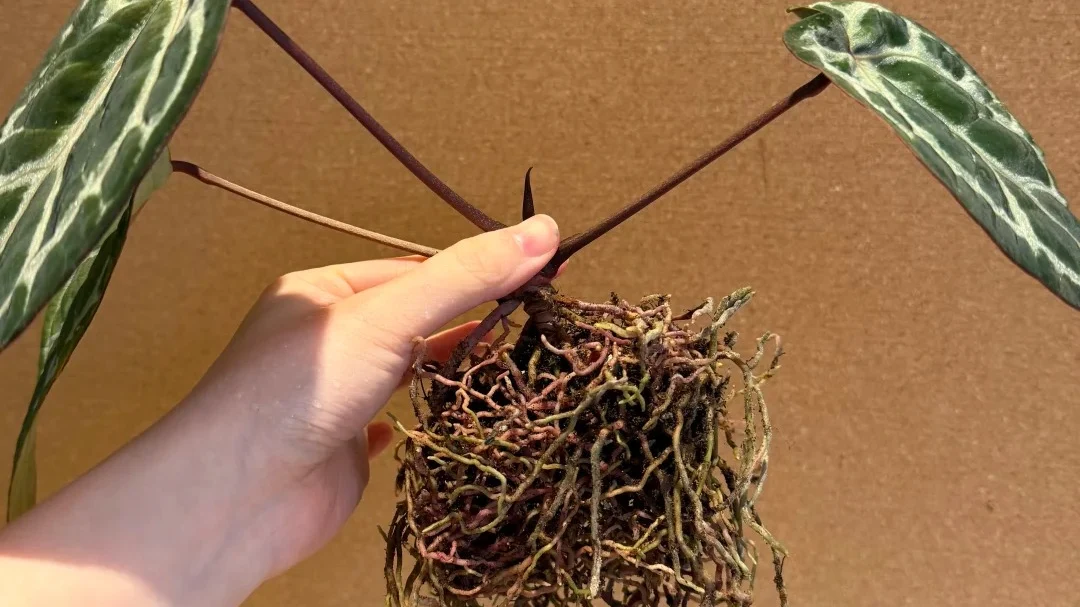
When I finally check the roots in that situation, I usually find one of a few things: roots that have already rotted, a root system that is much smaller than it should be, dry hollow roots that are no longer active, or older roots that are still present but barely functioning. Not every declining anthurium has root rot, but if the whole plant keeps sliding downhill, the roots are always worth checking.
A plant can keep a few leaves for a while even when the root system is already failing.
2. The pot is staying wet too long
This is related to root problems, but it is not exactly the same thing. Sometimes the issue starts with the condition inside the pot before obvious root damage shows up. The surface may look dry, but the lower part of the mix stays wet for too long. The pot may take forever to dry. In cooler weather or weaker light, the plant may still be getting watered on the same schedule it handled during stronger growth. A mix that holds too much moisture, an oversized pot, or poor airflow can all make that worse.
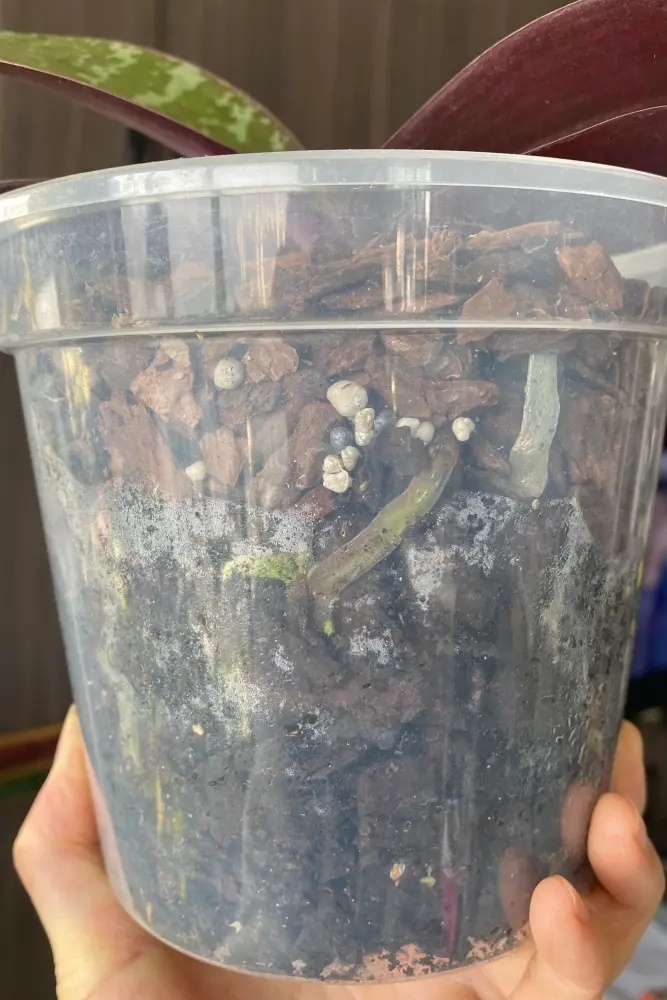
A lot of people think they are watering normally in this situation, and sometimes they are not watering that often at all. But the real problem is that the root zone stays heavy and airless too much of the time.
3. The plant has stalled in weak light
Weak light does not always make an anthurium look obviously stressed right away, which is why this problem gets missed so often.
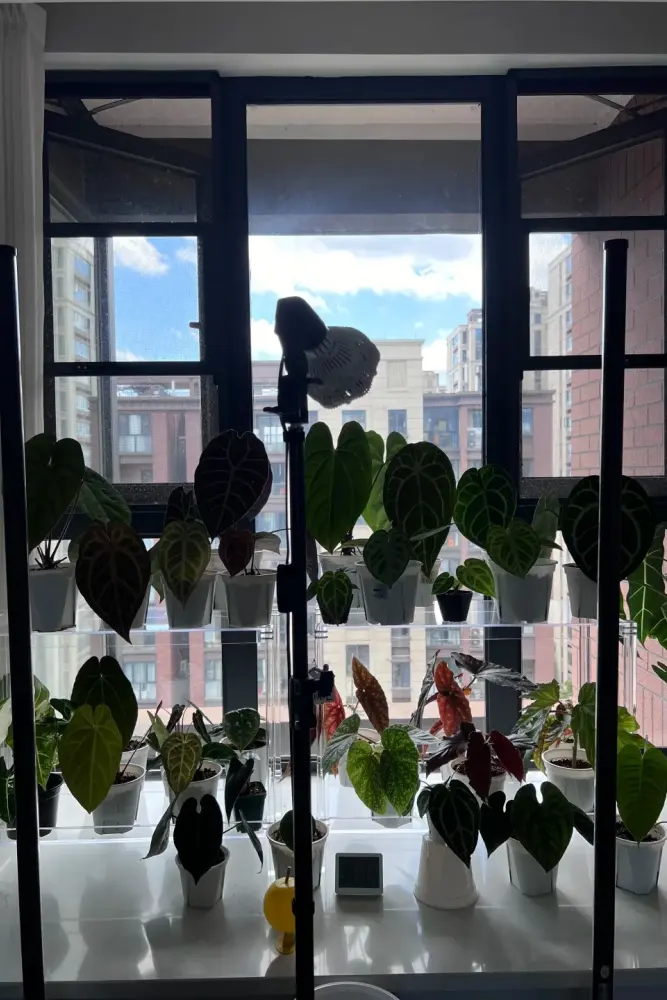
What I see most often indoors is not a plant suddenly dying from low light alone. It is a plant becoming less active, less resilient, and harder to stabilize. Once growth slows, water use slows too. Once water use slows, the roots tend to sit wet longer. And if the roots were already weak to begin with, the whole plant starts slipping further. I’ve had anthuriums that did not look dramatic in weak light. They just kept getting slower, smaller, and harder to recover.
4. It declined after repotting, shipping, or sudden environmental stress
Sometimes a plant looks like it is dying, but the real story is that it never recovered properly from a recent change. I see this after repotting, after shipping, after suddenly moving a plant into a very different spot, after cold exposure, or when low humidity and stronger light hit a plant whose roots were already weak. The same can happen after dividing a plant or trimming damaged roots.
In those cases, the problem is not always one dramatic failure. It is often a chain reaction. The roots get disturbed, water uptake drops, the leaves stress, growth stalls, and then the plant just sits there getting weaker instead of restarting. Sometimes the damage from each individual stress looks small, but together they are enough to push the plant into decline. Sometimes the plant is not collapsing from one dramatic cause. It is simply failing to recover after too many changes too close together.
Can It Still Be Saved?
A declining anthurium is not always beyond recovery. What matters most is whether the core of the plant is still firm and whether there is still enough living tissue left for it to rebuild from.
Signs It Still Has a Good Chance
- The crown is still firm
- There are still some healthy roots left
- The newest growth point is intact
- The decline has been gradual rather than a full collapse
Signs Recovery Will Be Much Harder
- The crown is mushy
- The stem is collapsing at the base
- All roots are gone
- Rot is moving upward
- The newest growth point has failed
When I check a struggling anthurium, this is usually the point where I can tell whether it still has a real chance to recover or is already too far gone.
What I Do First With a Declining Anthurium
When an anthurium starts going downhill, I try not to react too quickly. Weak plants usually get into more trouble when too many things change at once. What helps more is slowing down, removing extra stress, and figuring out what the plant is still able to handle.
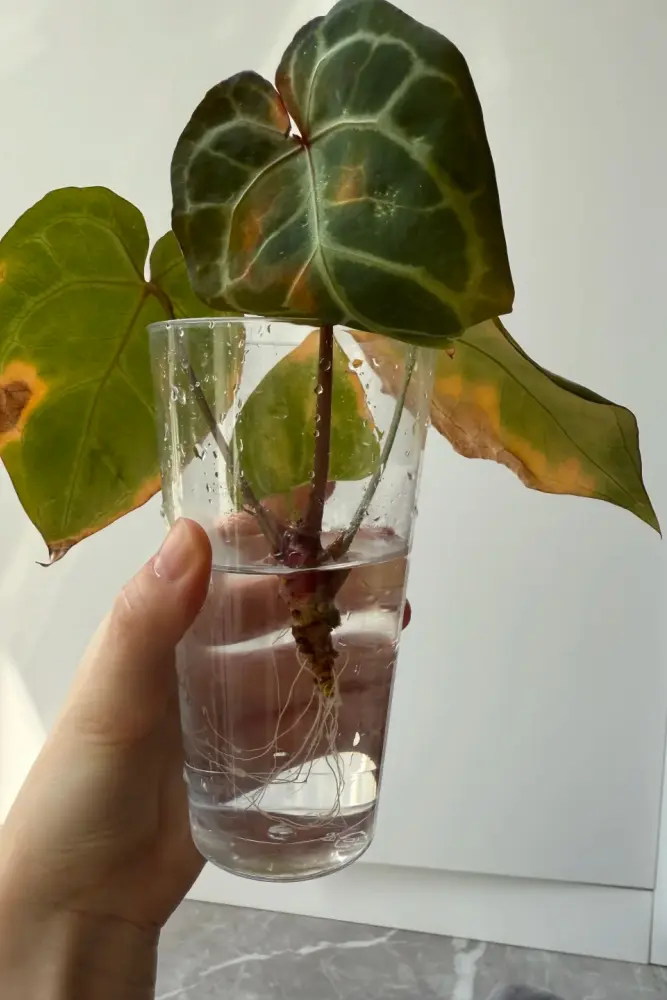
I Stop Fertilizing
If the roots are weak, damaged, or barely functioning, fertilizer usually does not help. It just adds more pressure to a plant that is already struggling to take up water properly. When an anthurium looks like it is declining, I would rather stabilize it first than keep feeding a plant that is not in a position to use that fertilizer well.
I Stop Watering on Autopilot
At that stage, I stop watering by habit or by schedule. I also do not assume a drooping or weaker-looking plant automatically needs more water. Some declining anthuriums are thirsty, but others are already sitting in a mix that stays wet too long. Until I understand what is happening in the pot, watering more just because the plant looks bad can make things worse.
I Check the Roots Before I Change Everything Else
Before I start repotting, increasing humidity, adding supplements, or trying random fixes, I want to know what the roots actually look like. Too many above-soil symptoms can be misleading on their own. If the roots are still decent, I know I may be dealing with a care or environment problem. If the roots are failing, that changes the whole direction of what I do next.
I Simplify the Setup
When a plant is declining, I usually try to make the setup easier to read and easier for the plant to handle. That may mean moving it into a more appropriate pot size, switching to a mix with better airflow, placing it somewhere with steadier light, or simply leaving it in one stable place instead of moving it around. I want stable conditions, better root-zone balance, and enough light to support recovery without adding harsh stress.
The goal at this stage is not to do everything. It is to remove confusion, reduce pressure, and give the plant a simpler path back if it still has the strength to recover.
What Usually Makes It Worse
When an anthurium is already declining, the biggest mistakes usually come from reacting too fast. I have found that weak plants rarely benefit from constant intervention. More often, they decline further because the setup keeps changing before the real problem has been identified.
Repotting Again Before Understanding the Root Condition
A lot of people see a plant looking worse and assume the answer must be another repot. Sometimes that does more harm than good. If the roots are already weak, taking the plant out again, disturbing the base, and changing the mix too soon can add another layer of stress before it has recovered from the first one.
Watering More Just Because the Leaves Droop
Drooping does not always mean thirst. In a weak or oxygen-poor root system, the plant can look limp even while the mix is still too wet. Adding more water at that point often pushes the plant further in the wrong direction instead of helping it recover.
Fertilizing a Plant With Weak or Damaged Roots
This is one of the most common ways people accidentally make a bad situation worse. When the roots are not functioning well, the plant cannot use fertilizer properly. Instead of helping growth restart, feeding often adds more stress to a system that is already struggling.
Moving It From Place to Place Instead of Stabilizing Conditions
A declining anthurium usually does better with steadier conditions, not constant experimentation. Moving it between rooms, windows, humidity setups, or light levels in a short period can make it harder to tell what is helping and what is hurting. When a plant is weak, stability usually matters more than chasing the perfect spot.
What This Usually Comes Down To
Most anthuriums do not go from healthy to dying all at once. More often, the plant has been declining for a while, and the pattern just gets missed for too long. Once I stopped reacting to every leaf on its own and started checking roots, moisture pattern, light, and recent stress in that order, I made fewer panic decisions and got much better at telling which plants still had a real chance to recover.
FAQ
Still unsure what your Anthurium is trying to tell you?
Not every Anthurium problem starts the same way. If your plant is yellowing, drooping, browning, stalling, or showing root trouble, I’ve put together the most common issues I’ve run into indoors — along with what actually helped in each case.
Go to Problems Hub →