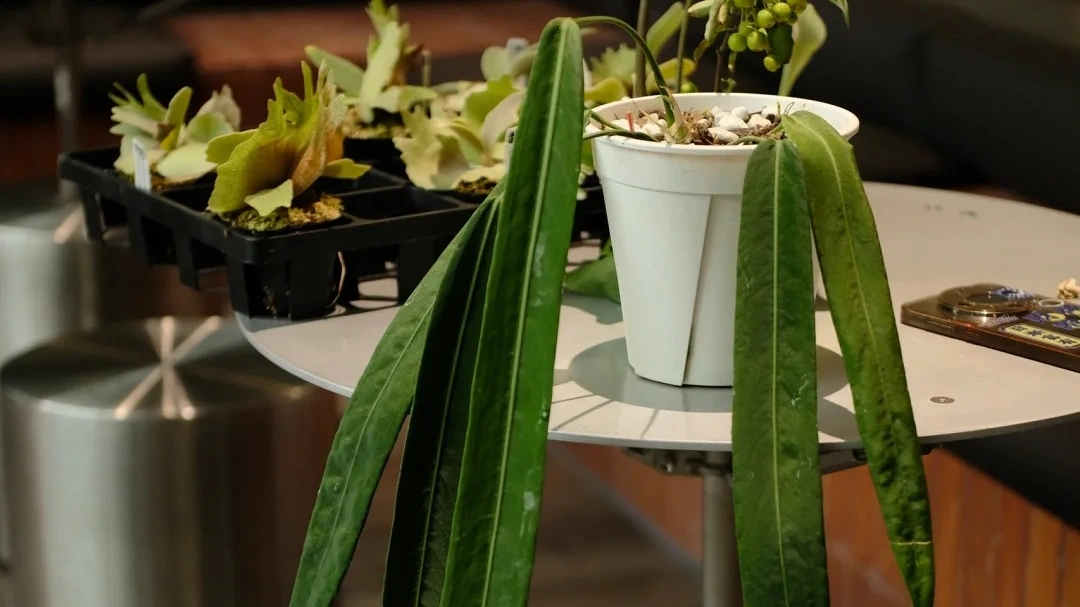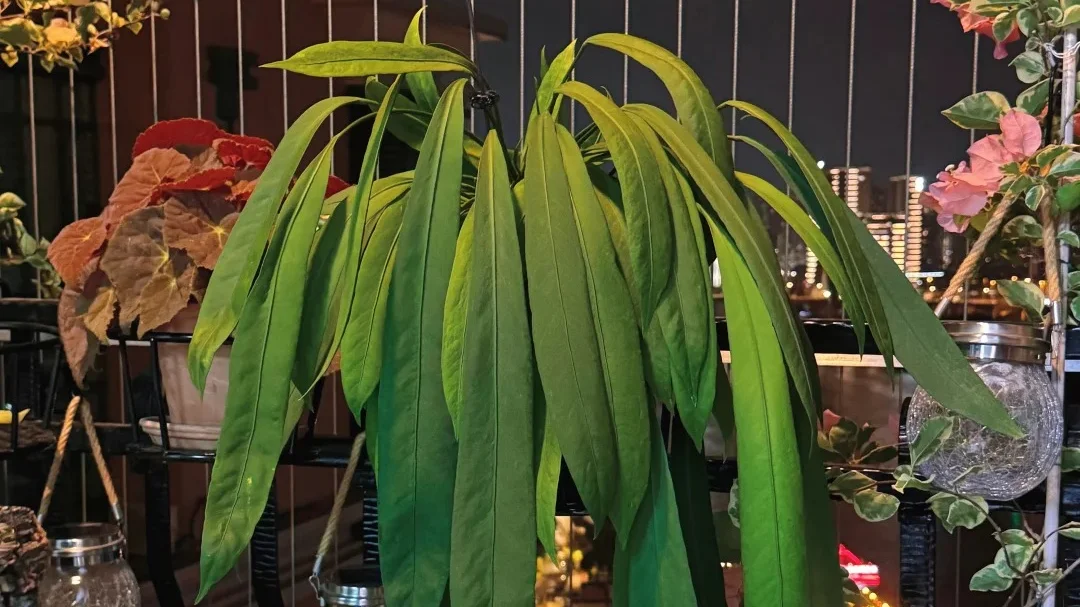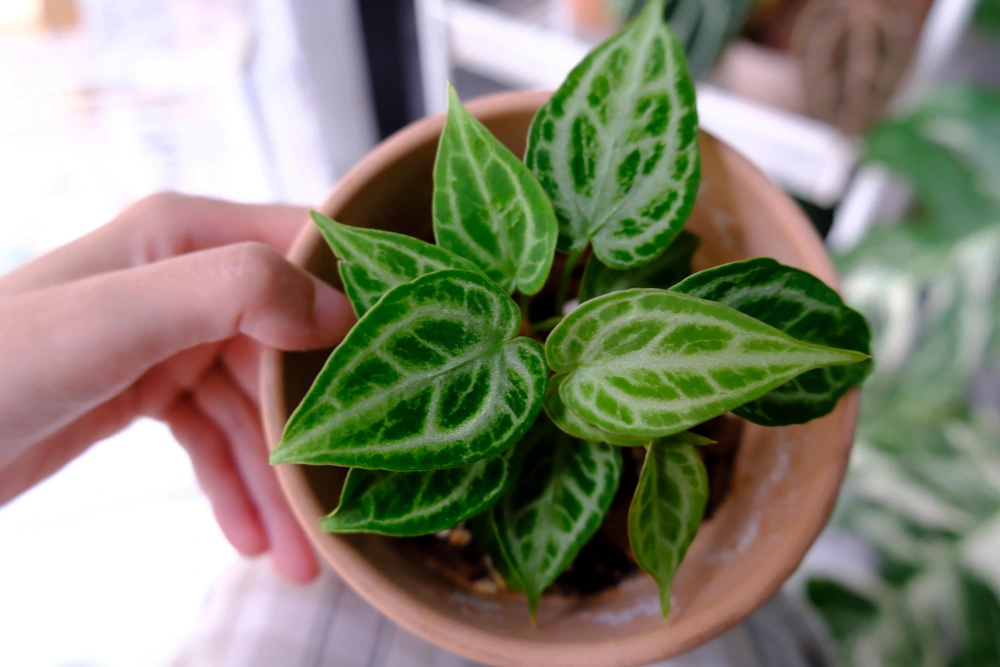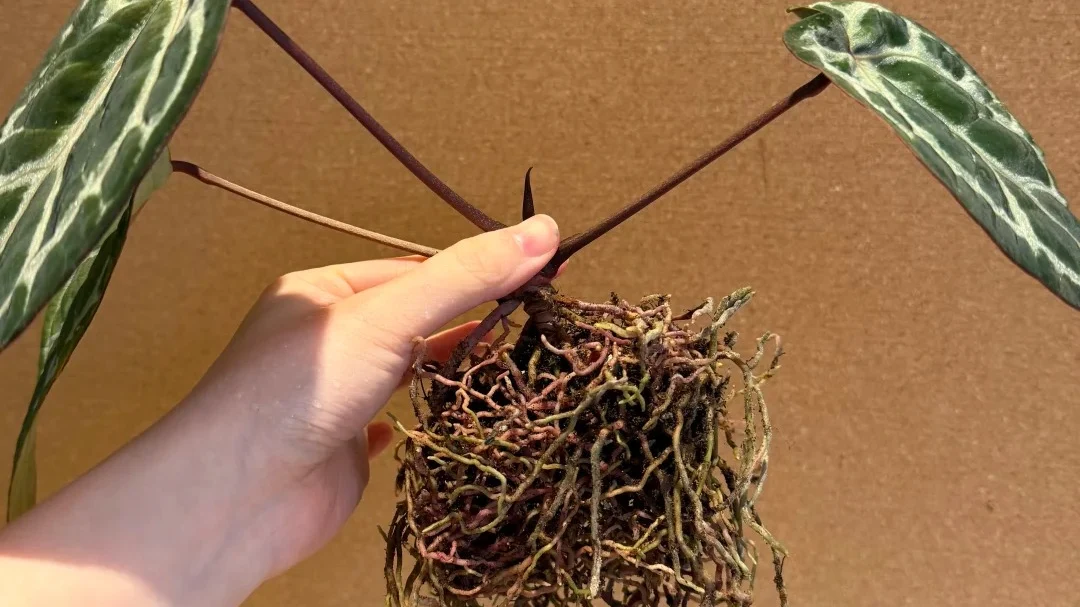
I honestly expected Anthurium forgetii to be harder than it turned out to be. When I first bought it, I picked up two very small plants because I was not sure how well I would do with this species. At the time, it looked like the kind of anthurium that might be fussy, slow, or easy to ruin if the conditions were not right.
But both plants made it through, including the indoor heating season. I kept them in a humid setup through winter, and once spring arrived, they continued growing without the kind of collapse I had half expected. That changed the way I see forgetii. It is not necessarily the fragile, impossible plant some people assume it is when they first see that unusual leaf shape.
The bigger problem, at least in my home, was not basic survival. It was cosmetic damage. New leaves were much easier to mess up than I expected, and some older leaves kept the marks from my own clumsy handling. That is why my view of Anthurium forgetii now is pretty simple: it is not as hard to keep alive as it looks, but it is not a plant for growers who like to keep interfering with every new leaf.
What Makes Anthurium forgetii So Different
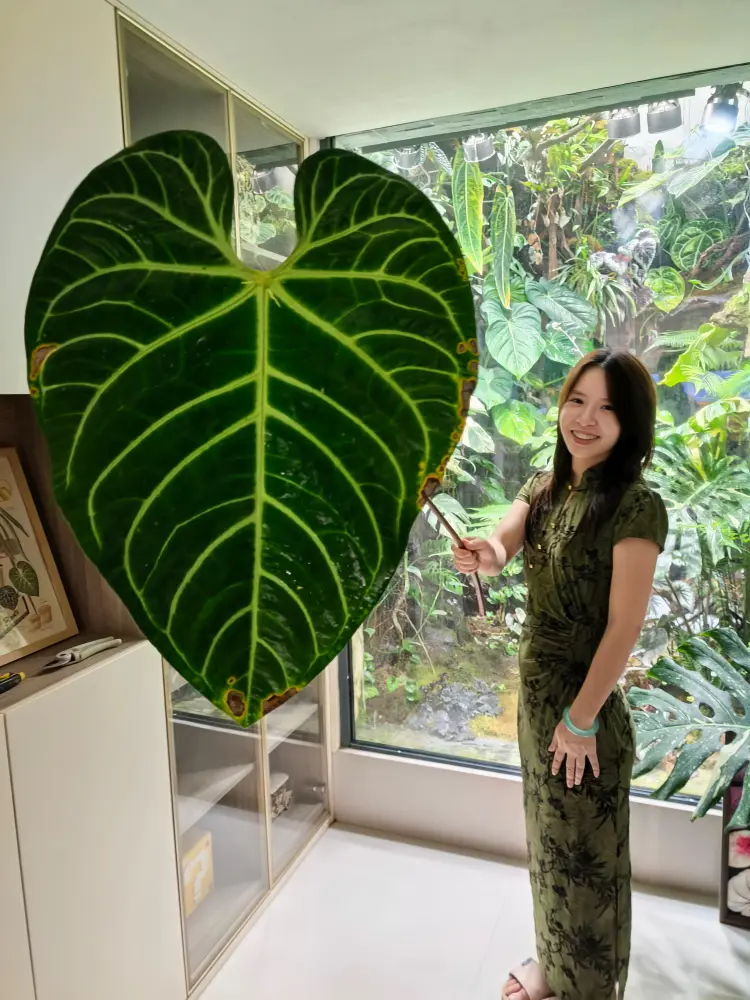
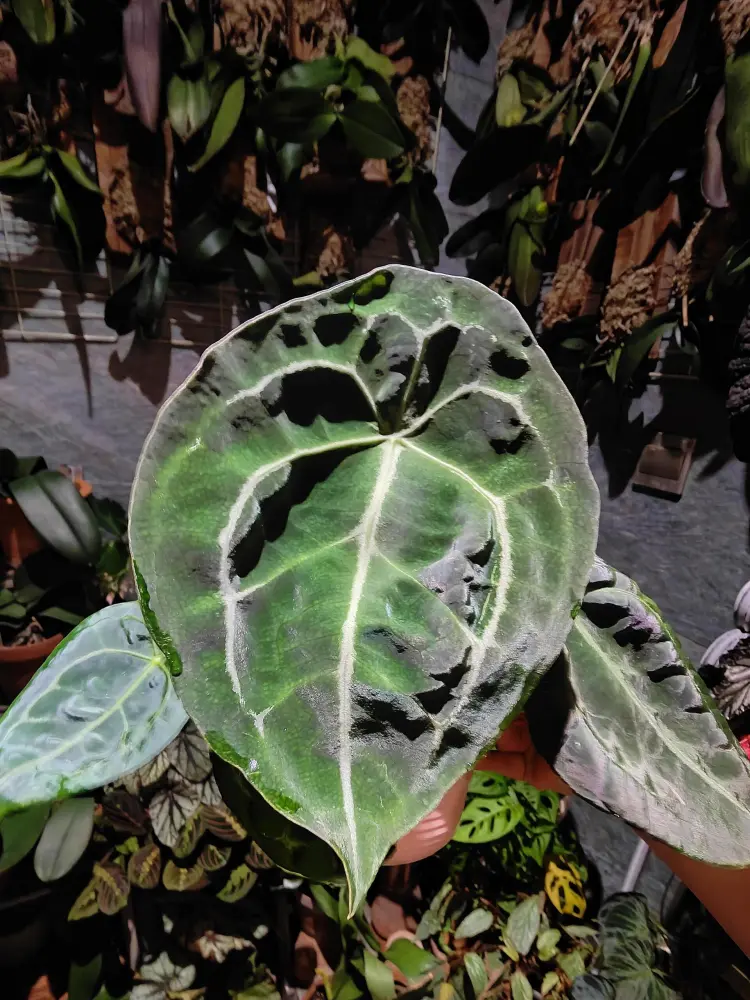
One reason Anthurium forgetii stands out so quickly is its closed sinus. Unlike most anthuriums, the two lobes at the top of the leaf are almost completely fused, so the leaf does not read as a classic heart shape. Instead, it looks more complete, more enclosed, and much more like a shield. That is not a minor detail. It is the feature that makes forgetii instantly recognizable, even when the plant is still small.
What I also like about forgetii is that its beauty feels quieter than many crystal anthuriums. It does not usually rely on dramatic white veins to grab attention right away, and some plants show only very subtle venation. The appeal is more in the velvety surface, the fine veins, the thickness of the leaf, and the overall character of the plant. To me, it is one of those anthuriums that becomes more rewarding the longer you look at it, rather than one that gives everything away at first glance.
It also has more visual depth than people often expect from photos. Because the petioles are shorter and the leaves tend to hold themselves in a more compact way, the plant often develops a stronger sense of volume indoors. As it matures, it does not just sit flat and look decorative. It starts to feel heavier, quieter, and more sculptural in person. That is one reason forgetii often looks better in a real room than it does in a quick online photo.
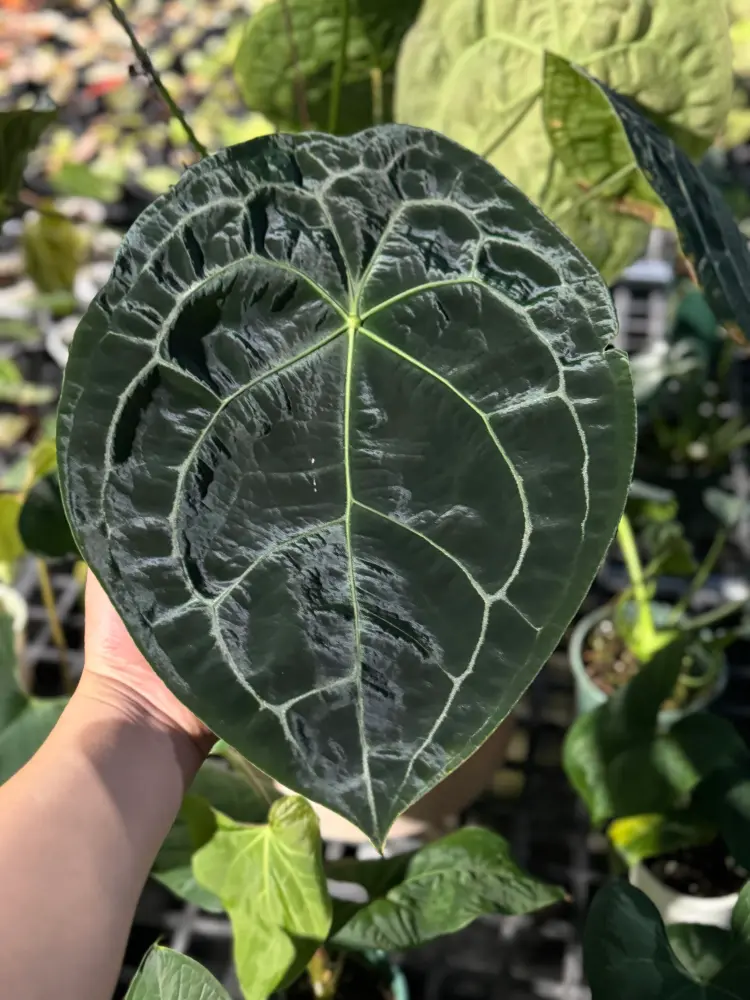
How My forgetii Changed as It Grew
When my forgetii was still small, what stood out most was simply the unusual leaf shape. Even at that stage, the closed sinus made it easy to tell apart from most other anthuriums, but the plant still felt more interesting than impressive. The leaves were smaller, the overall look was lighter, and it had not yet developed that heavier, more settled character that makes this species so appealing to me now.
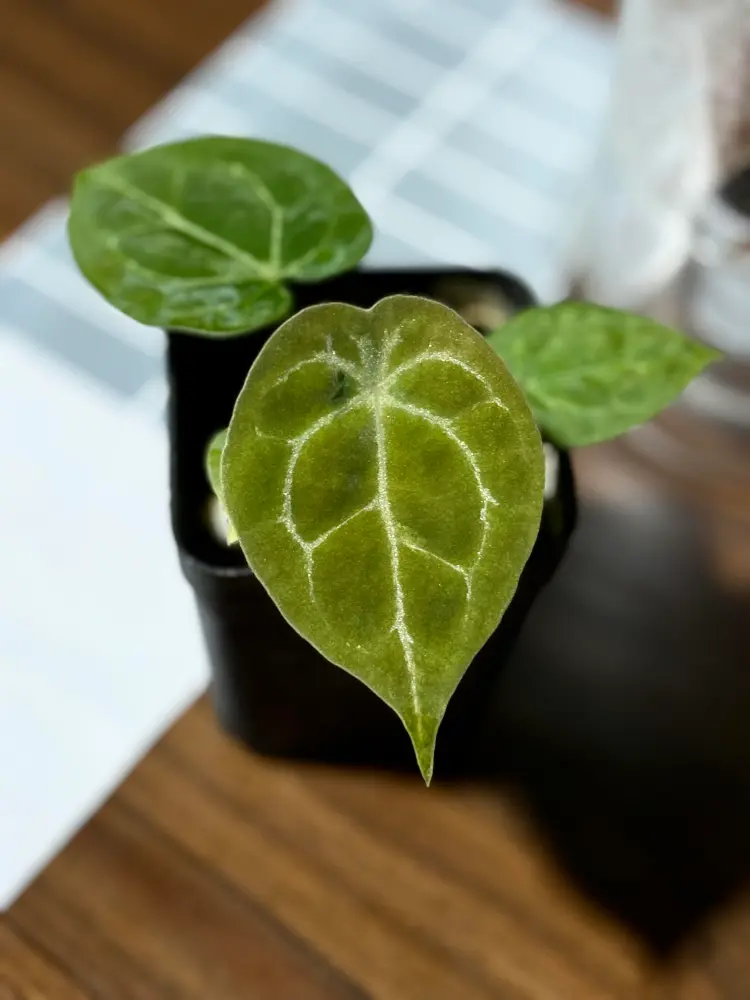
As it grew, the things I liked about it became much clearer. The venation started showing up better, the leaf surface looked more velvety, and the foliage developed a thicker, more substantial feel. The shield-like shape also became more convincing with time. It did not just look like a plant with an unusual outline anymore. It started looking like a plant with its own very distinct presence.
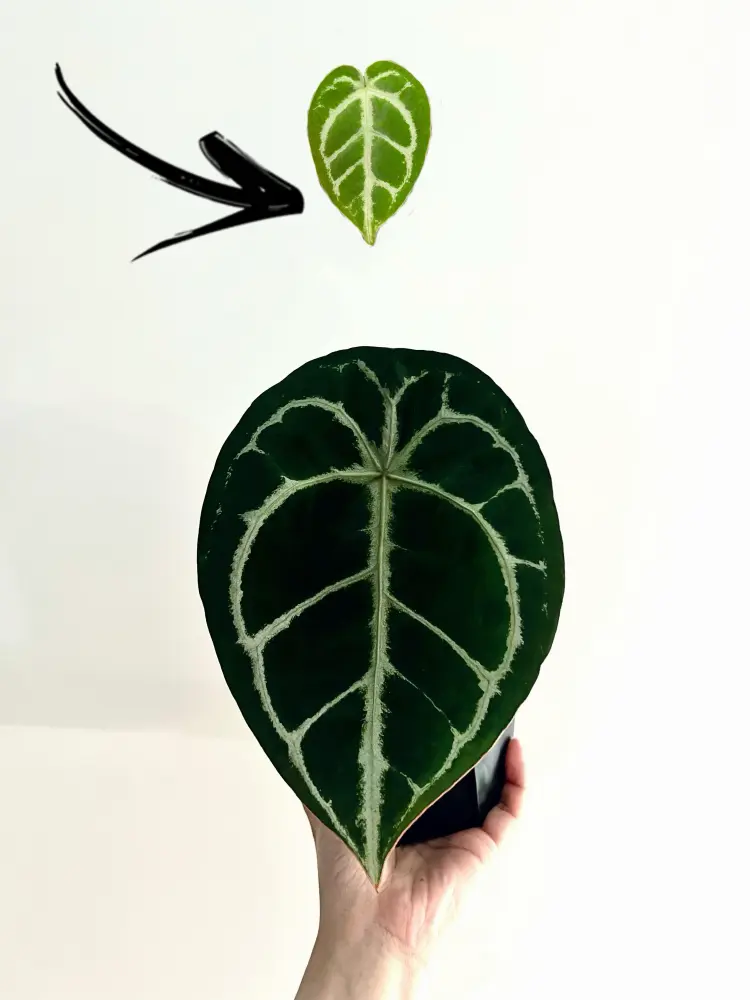
I have three forgetii at home, but this is still the one I like most. It is not necessarily the one with the brightest veins or the strongest contrast. What I like is that the whole plant feels the most balanced and the most interesting to live with over time. As it matured, it became one of those anthuriums that feels quieter than crystallinum at first, but more and more rewarding the longer you grow it.
The Real Challenge: New Leaves, Not Basic Survival
For me, the hardest part of growing Anthurium forgetii has not been keeping it alive. The real challenge has been getting the new leaves to come out cleanly. This is where the plant feels much less forgiving. A forgetii can stay alive quite well, but still leave you with distorted new growth, leaves that struggle to unfurl properly, or scars that stay visible long after the leaf has hardened.
Low humidity is one of the easiest ways to run into trouble here. When the air is too dry, new leaves are much more likely to come out misshapen or get stuck while opening. That does not always mean the whole plant is failing. Sometimes it simply means the unfurling stage was too dry or too unstable for the leaf to expand the way it should.
I also learned very quickly that forgetii new leaves are easier to damage than I expected. I do not touch them anymore unless I absolutely have to. That is not one of those exaggerated care tips people repeat online. In my experience, it is a very practical rule. If I handle a soft new leaf too much, there is a good chance it will mark, deform, or harden off with damage that stays visible for a long time.
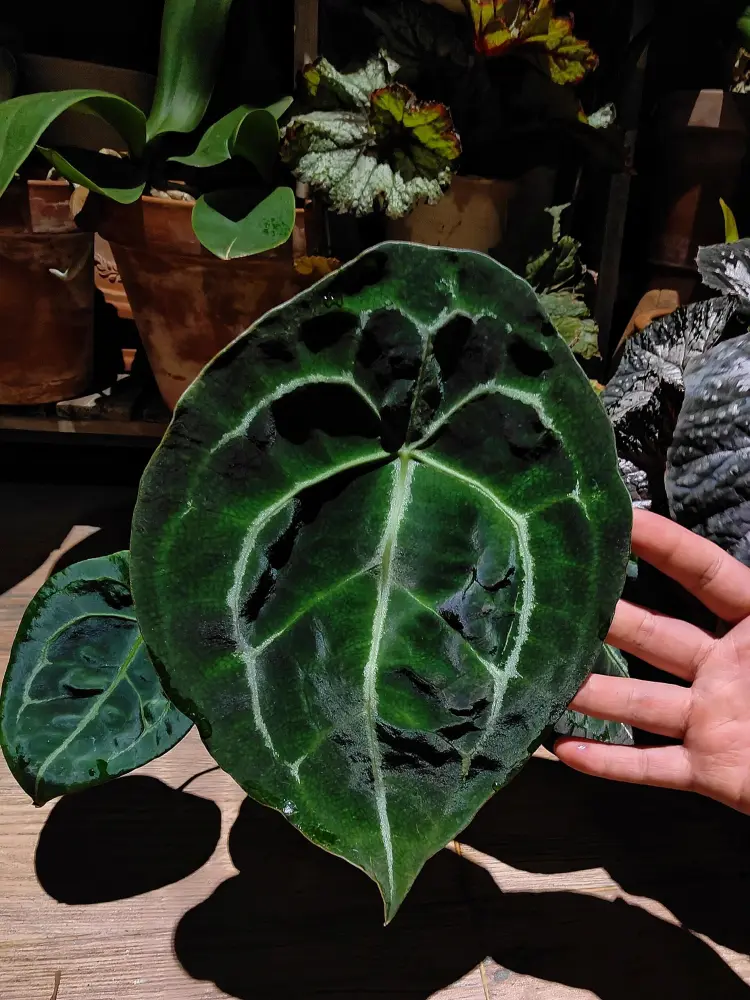
That is why I think forgetii gets misunderstood so easily. People often focus on whether it is “hard” or “easy” to grow, but the real issue is usually leaf quality, not survival. If you are the kind of grower who likes to keep checking, adjusting, or helping new leaves along, this is probably not the best plant to fuss over. Forgetii does better when the environment stays stable and the new growth is left alone to finish its job. In that sense, I do not think it is especially difficult — I just do not think it rewards restless growers.
What Helped My forgetii Grow Well Indoors
What worked best for my Anthurium forgetii was not one dramatic trick. It was a combination of conditions that kept the plant growing steadily while reducing stress on new leaves. In my home, forgetii improved once I stopped thinking only about survival and paid more attention to what actually helped it produce cleaner, better-looking growth.
Consistent Moisture Mattered More Than I Expected
One thing I learned quite quickly is that forgetii does not respond well to being kept too dry for too long. I would not treat it like an anthurium that wants long dry spells between waterings. In my experience, it grows better when the root zone stays lightly and consistently active instead of swinging between very wet and very dry.
That does not mean the mix should stay dense or soggy. It just means I have had better results when I water before the pot gets too far into the dry stage. For me, that often means watering once the surface is drying out, rather than waiting until everything feels fully dry. The exact timing will always depend on the mix and the environment, but overall, steady moisture has worked much better than a harsh dry-down cycle.
Humidity Helped Most During Leaf Unfurling
I do not think forgetii needs extreme humidity every hour of the day to stay alive. But I do think humidity matters a lot when the plant is pushing a new leaf. That is the stage where lower humidity tends to show up most clearly, because the new growth is more likely to deform, get stuck, or harden off with damage.
So for me, humidity is less about chasing some perfect number all the time and more about protecting that unfurling stage. When the air is too dry, the new leaves simply come out worse. When humidity is more supportive, leaf quality improves, even if the plant was already surviving before.
It Grew Faster When Warmth and Airflow Stayed Stable
Forgetii also grew much better once warmth and airflow were working together. I do not think high humidity alone is enough if the air feels stagnant. In a warm indoor setup with poor air movement, growth can still feel slow or awkward, and the plant does not seem to push forward as confidently.
In my experience, forgetii responds best when the environment stays warm, steady, and gently moving rather than hot and heavy. Good airflow made the higher humidity more usable, and stable warmth helped the plant keep moving instead of pausing every time conditions shifted.
Bright but Not Harsh Light Worked Best
I would not treat forgetii as a deep-shade plant, but I also would not put it in aggressive direct sun. What worked better for me was bright indoor light that stayed soft and consistent. That gave the plant enough energy to keep growing without pushing the leaves into stress too easily.
If the light is too weak, the plant may still live, but it often feels slower and less satisfying overall. If the light is too harsh, leaf quality can suffer in a different way. Indoors, I have found that forgetii does best somewhere in the middle: bright enough to support steady growth, but not so intense that the foliage starts paying for it.
My Mix, Watering Style, and Why I Would Not Let It Go Too Dry
With Anthurium forgetii, I do not think the goal is to choose the chunkiest mix possible or to keep the pot constantly wet. What worked better for me was a mix that stayed airy enough to breathe, but still held enough moisture to keep the roots active. Forgetii does not seem to enjoy a setup that dries hard and fast, especially if the plant is trying to push new growth at the same time.
That is why I prefer a mix with some water-holding capacity still built in, rather than treating it like a plant that should dry down aggressively between waterings. I do use coarser materials to open the mix up, but not to the point where moisture disappears too quickly. For me, the balance matters more than the formula. I want the roots to have air, but I also want them to stay engaged instead of repeatedly dropping back every time the pot gets too dry.
My watering style follows that same logic. Once the surface is drying out, I am usually already paying attention, and in many cases that is the stage when I water again. I do not treat that as a rigid rule, because temperature, pot size, and airflow all change the timing. But overall, I have had much better results when the root zone stays lightly active instead of swinging between extremes. With forgetii, I would much rather keep the plant growing steadily than push the mix to dry completely just because I can.
What I Think People Misjudge About forgetii
I think Anthurium forgetii is easy to misread when you first get into it. The leaf shape is unusual, the surface can look velvety, and the whole plant gives off the kind of feeling people often associate with something more difficult than it actually is. In my experience, though, forgetii is not necessarily more fragile than many other velvet-like anthuriums. It just tends to show stress through leaf quality rather than through obvious collapse.
One thing I think people get wrong is focusing too much on whether it will survive. With forgetii, the bigger issue is often leaf quality rather than basic survival. A plant can stay alive and still give you distorted new growth, scarring, or leaves that never come out as cleanly as they should. If you only judge it by whether it is alive or dead, you miss the part that actually affects how satisfying it is to grow.
I also think some people expect forgetii to impress in the same way a dramatic white-vein anthurium does. If that is what you want, this species may feel quieter at first. But that is also exactly why I like it. The beauty of forgetii is not loud contrast. It is the closed sinus, the velvety surface, the fine venation, and the way the whole plant starts feeling deeper and more settled as it matures. To me, it is not a flashy plant. It is a plant with a slower, heavier kind of appeal, and that is the whole point.
Forgetii vs Crystallinum: Which One Feels More Rewarding?
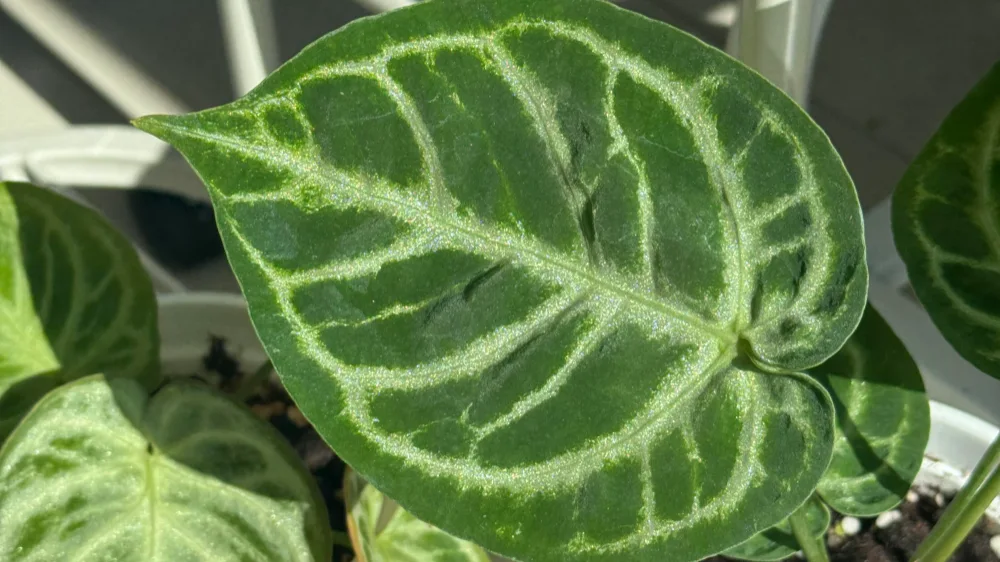
If someone is deciding between Anthurium forgetii and Anthurium crystallinum, I think the answer depends less on difficulty and more on what kind of beauty they actually enjoy living with. Crystallinum is usually the easier one to admire immediately. The stronger vein contrast tends to stand out faster, and even a relatively young plant can already look striking in photos.
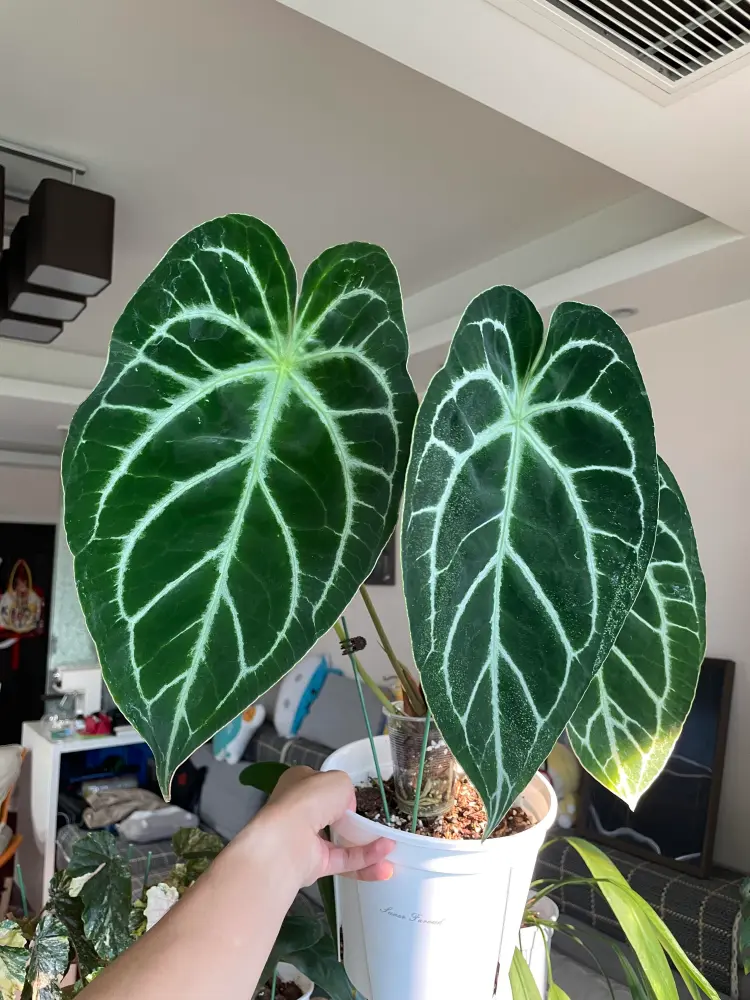
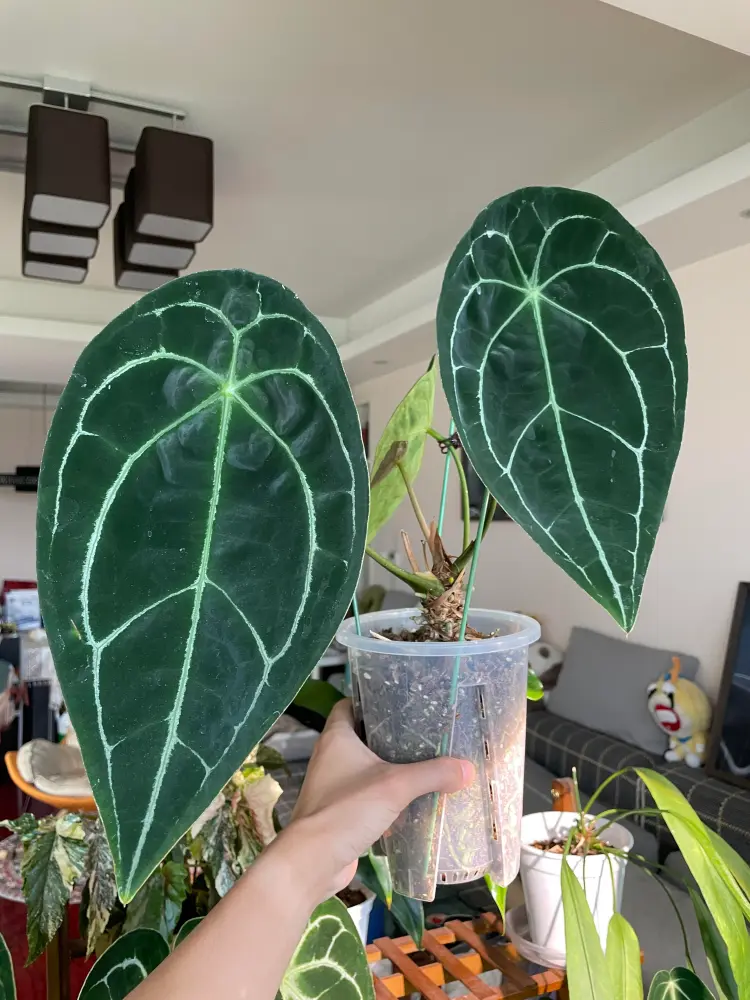
Forgetii is quieter. It usually does not give you that same sharp white-vein impact right away, and in some forms the venation can look quite subtle. What it gives instead is a more unusual leaf shape and a different kind of atmosphere. The closed sinus, the shorter petioles, the denser feel of the foliage, and the way the plant develops more depth as it matures all make it feel more distinctive to me over time.
If you like anthuriums that look bold and photogenic from the start, crystallinum will probably feel more rewarding at first. If you prefer plants that feel more individual, a little heavier, and more interesting the longer you grow them, forgetii may end up being the one you stay attached to. For me, crystallinum is easier to admire quickly, but forgetii is the one I would rather keep living with over time.
Why I Still Think forgetii Is Worth Growing
For me, Anthurium forgetii is worth growing because it has such a clear identity of its own. It is not the loudest anthurium in the room, and it does not rely on dramatic white veins to make an impression. What makes it memorable is the leaf shape itself, along with the velvety surface, the fine venation, and the heavier presence it develops as it matures.
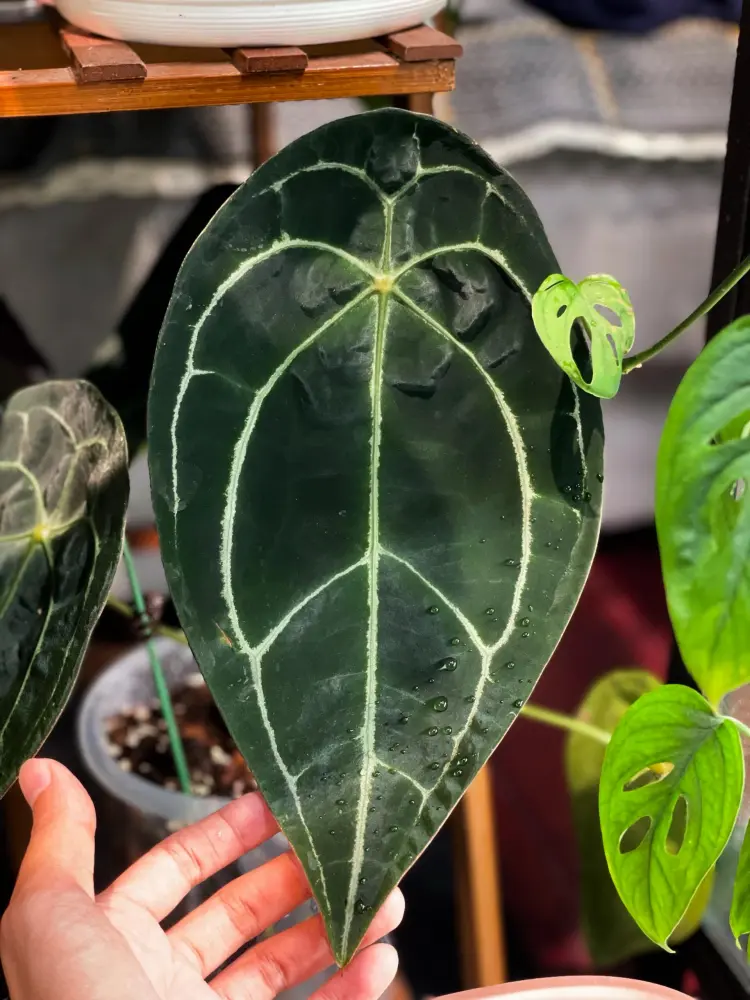
The more it grows, the more all of those qualities start working together. The shield-like form becomes more convincing, the texture feels richer, and the plant takes on a depth that is easy to miss when it is still small. It is a quieter kind of beauty, but for me that is exactly why it becomes more addictive over time.
When I first bought forgetii, I expected it to be more difficult than it turned out to be. Now I think of it very differently. It is one of those plants that did not win me over through drama, but through character. And once that character starts showing up properly, it becomes very easy to see why this species stays with people.
FAQ
Still comparing Anthurium varieties?
If you’re trying to figure out which anthuriums are actually worth growing indoors, my Anthurium varieties hub is a better place to compare leaf texture, growth habits, and overall difficulty side by side.
Explore Anthurium Varieties →