Anthurium ace of spades is one of those plants that gets mythologized very easily. The moment people talk about it, the conversation often shrinks down to a single word: black. That is understandable, because a good Ace of Spades really can look unusually dark, especially from a distance. In the right setting, it reads almost like a shadow with a leaf shape.
But that is also where I think this plant gets flattened too much. In real growing, Ace of Spades is not uniformly black from beginning to end, and its appeal is not just about looking like the darkest thing in the room. The younger and earlier mature leaves can stay greener, and a lot of the “black” people respond to is tied to maturity, individual form, and the way light hits the leaf surface.
That is why I do not think this plant makes sense if you reduce it to “the black anthurium.” A strong Ace of Spades is memorable because the darkness sits inside a much bigger effect — the heart-shaped leaf, the scale, the surface texture, and the way the plant gradually builds that heavy, shadowed presence over time. If you focus only on whether it looks black enough, you can end up missing what actually makes it good.
What the “Black” Actually Looks Like in Real Growth
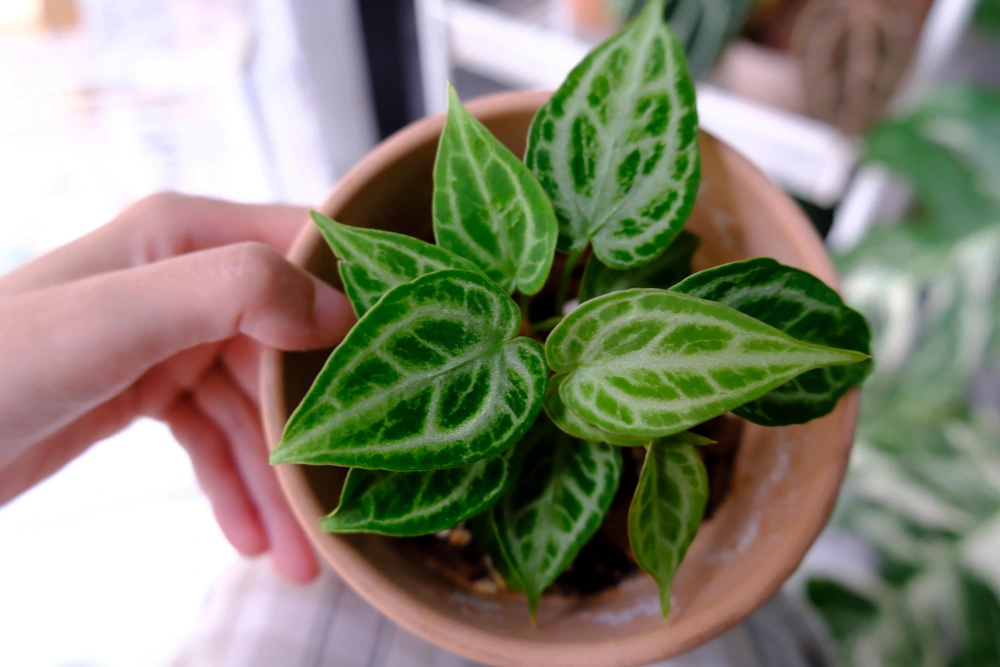
One of the easiest mistakes people make with Anthurium ace of spades is treating “black” like a fixed label instead of a changing effect. In real growth, the plant does not look equally dark at every stage. Younger plants and earlier mature leaves often stay much greener than people expect, sometimes closer to deep green than anything truly black-looking.
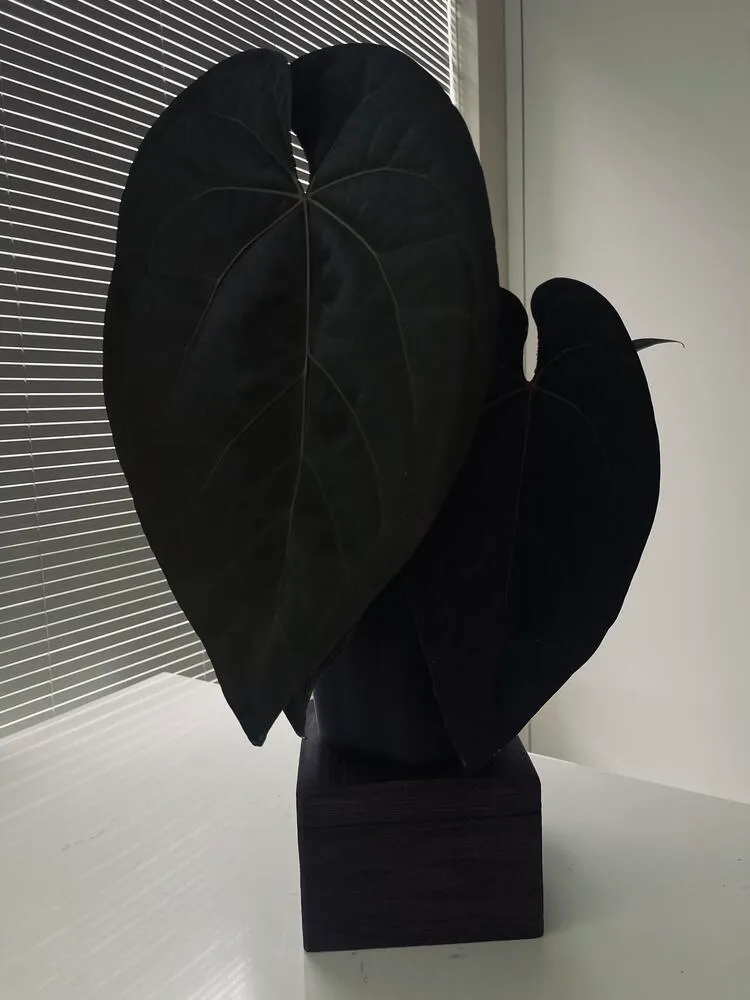
That darker look usually builds over time. As the plant matures, the leaves often deepen from green into a much heavier, inkier tone, especially in mid- to later-stage growth. Even then, I do not think the effect is best described as a flat, uniform black. Most of the time, it is more like deep green, dark olive, or near-black depending on the leaf and the moment.
Light also changes the impression a lot. In some conditions, Ace of Spades can look almost black from a distance, while in others the same leaf reads much more clearly as dark green. That is one reason the plant feels so dramatic in person. A lot of the “black” people respond to is really a combination of maturity, lighting, and the surface of the leaf catching or absorbing light in a certain way.
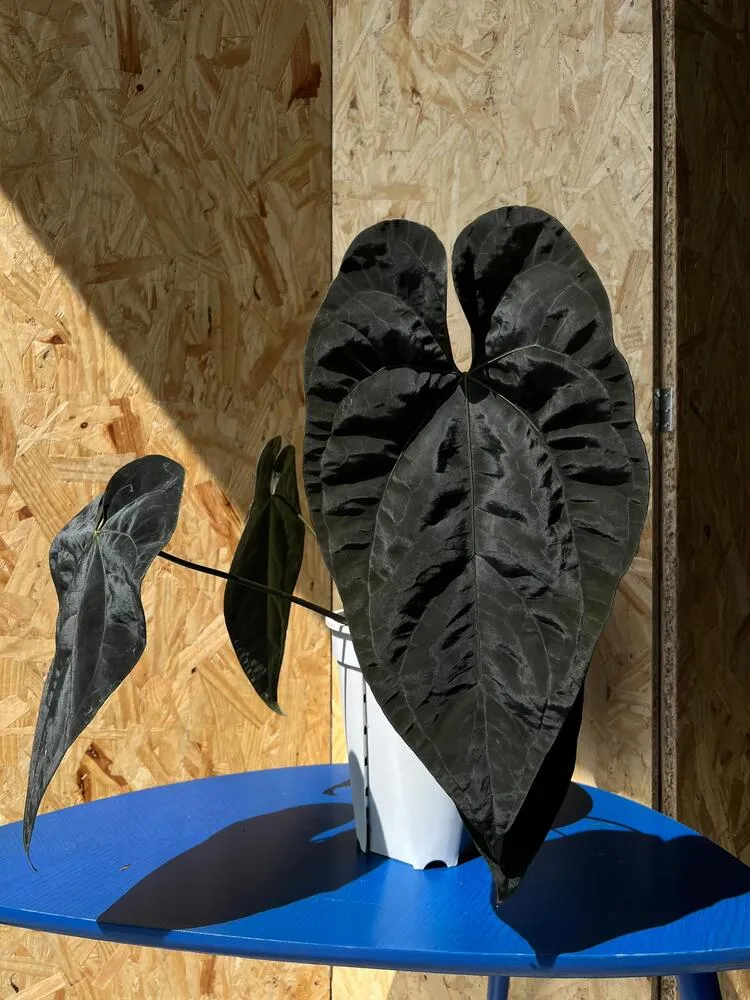
I also think leaves often look darkest right before or around the point where they are finishing up and settling into maturity. That is one reason photos of Ace of Spades can create a more absolute impression than the plant really has across all stages of growth. For me, the blackness is not something static or guaranteed. It is a moving target shaped by growth stage, light, and individual expression, and that is part of what makes the plant more interesting rather than less.
That is also why I think people who only chase the darkest possible leaf often end up understanding this plant too narrowly.
The Part People Remember Is Not Just the Color
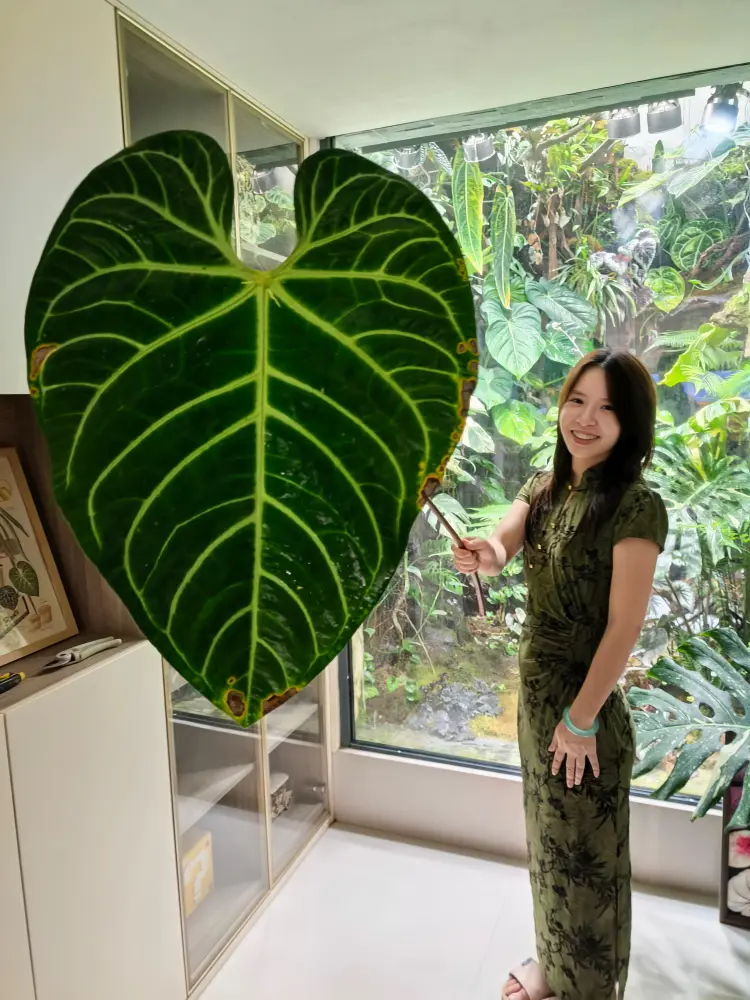
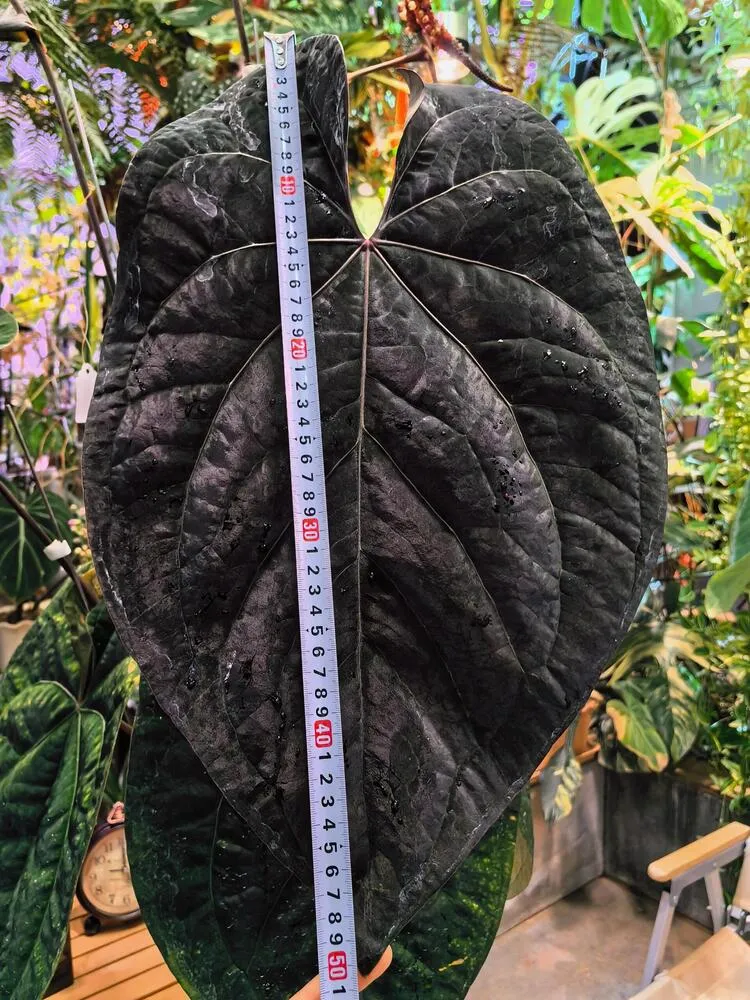
What people remember about Anthurium ace of spades is usually described as “the blackness,” but I do not think color alone explains why the plant stays in people’s minds. A good Ace of Spades has a convincing heart-shaped leaf, a heavy dark surface, and enough size that the whole leaf starts feeling more like a presence than just a detail. The color matters, but it works best when it sits inside that larger structure.
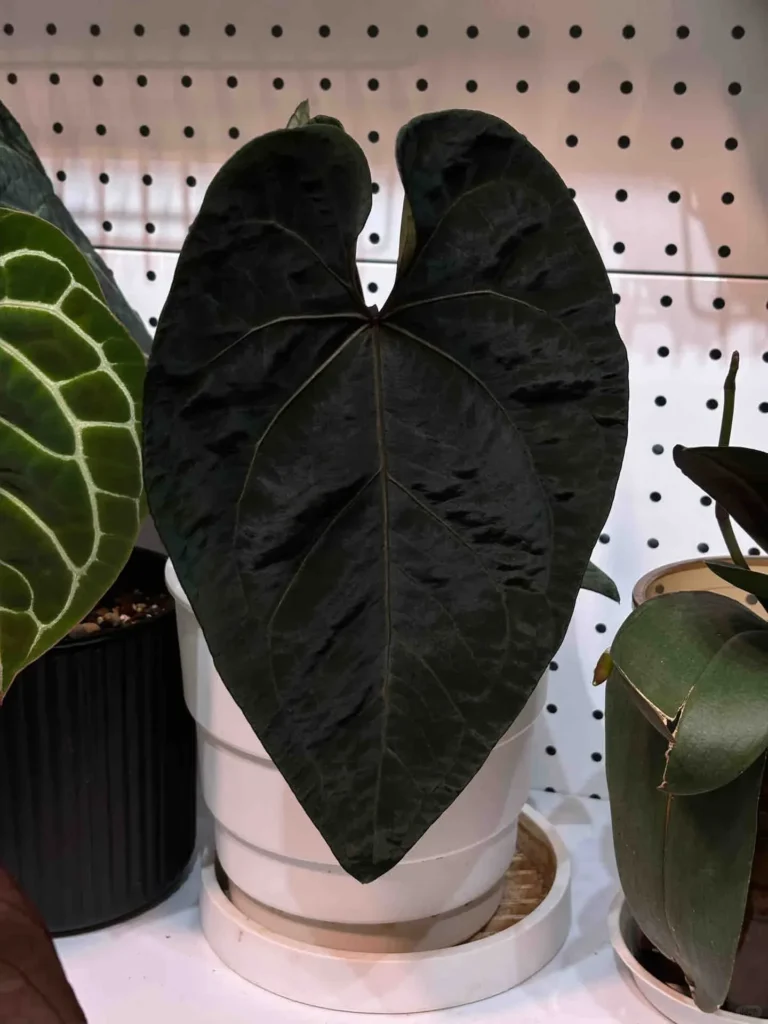
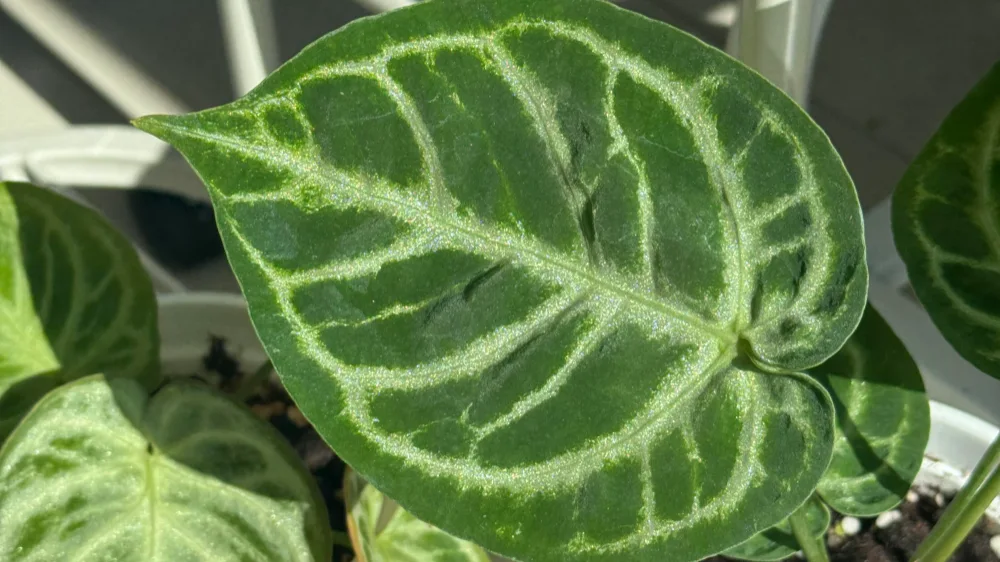
The surface also plays a big role. From a distance, the plant can read almost like a dark silhouette, especially against lighter green foliage. But once you get closer, the leaf stops being just a black shape. You start noticing the texture, the lines across the surface, and the way the leaf holds light instead of reflecting it evenly. That is part of what makes Ace of Spades more interesting than a simple “dark leaf” description suggests.
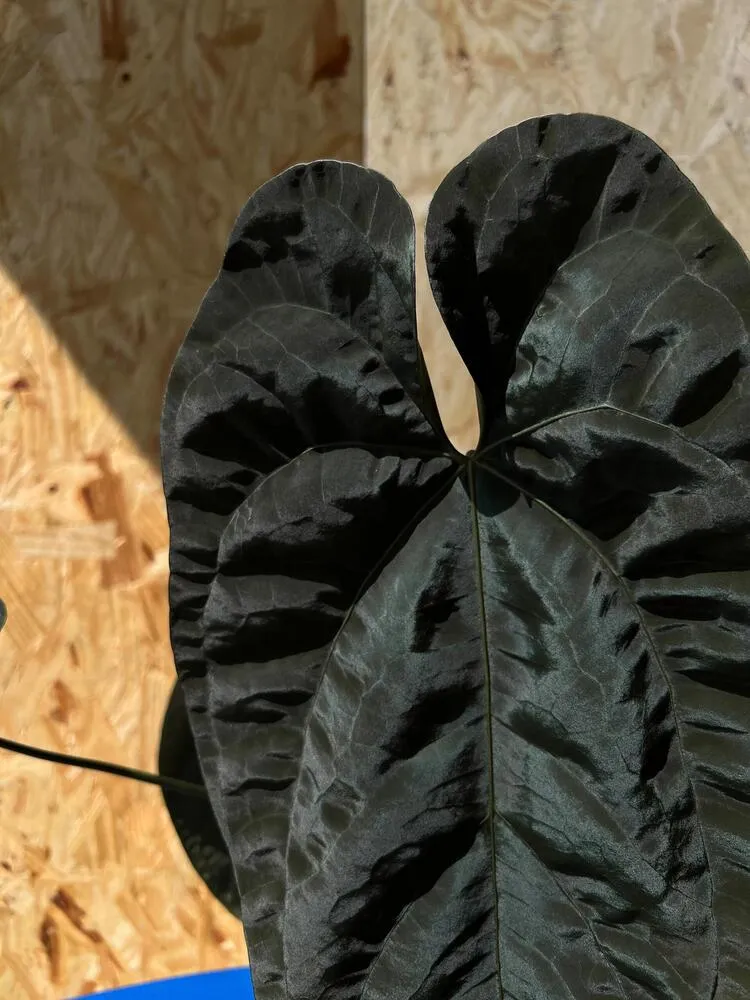
Size changes the effect even more. On a small plant, the darkness is noticeable, but it does not always feel fully convincing yet. On a more mature leaf, once the blade gets larger and the outline becomes stronger, the plant starts carrying a very different kind of weight. That is when the dark color, the heart-shaped form, and the scale begin reinforcing each other instead of working separately.
So for me, the part people really remember is not just the darkness itself. It is the way the plant can read like a single black mass from far away, yet still hold structure and detail up close. When Ace of Spades is really working, the color, size, and silhouette come together at once. That is when it stops feeling like a novelty and starts feeling like a plant with real presence.
What Growing One Actually Feels Like at Home
Growing Anthurium ace of spades at home does not usually give you the full effect right away. A small plant can already look promising, but it often does not feel like the version people imagine when they hear the name. The leaves may still read more green than black, the size is not there yet, and the overall presence has not fully arrived.
That is part of what makes this species interesting to grow over time. Your impression of it can keep changing as each leaf matures. A plant that looks merely nice at one stage can feel much more convincing later, once the leaf darkens, the shape settles, and the size begins to carry more weight. Ace of Spades often grows closer to its reputation rather than delivering it all at once.
It is also not the kind of plant that rewards you in a constant, obvious way. There can be long stretches where it feels like not much is happening, especially if you are waiting for more size or darker finished leaves. But when a mature leaf finally comes together well, it can be much more persuasive than the plant was earlier on. That is why, to me, Ace of Spades makes more sense as a long-term plant than a quick one.
The Stage I Trust the Least: From New Leaf to Mature Leaf
The stage I trust the least on Anthurium ace of spades is the stretch between a new leaf emerging and that leaf finally settling into maturity. This is the part where the plant feels most vulnerable to small mistakes. A leaf can start with a lot of promise, but that does not mean it will finish well.
That is why I try not to interfere with it too much during this period. Once a new leaf is pushing and expanding, I do not want to touch it, move it unnecessarily, or keep adjusting the plant around it. With Ace of Spades, that stage decides more than simple survival. It decides whether the leaf will actually end up looking worth the wait.
A lot of damage at this point does not ruin the whole plant, but it can ruin the finished quality of that leaf. And with a plant like this, that matters. A scar, a distorted section, or a leaf that hardens off badly may not kill anything, but it can take away much of the effect you were waiting for in the first place.
So for me, this is not just a fragile stage. It is the stage where the final impression is still being made. With Ace of Spades, a leaf is not finished when it unfurls. It is finished when it hardens, darkens, settles, and still looks convincing at the end of it.
What I Learned From Letting a Large Plant Stay in a Too-Small Pot
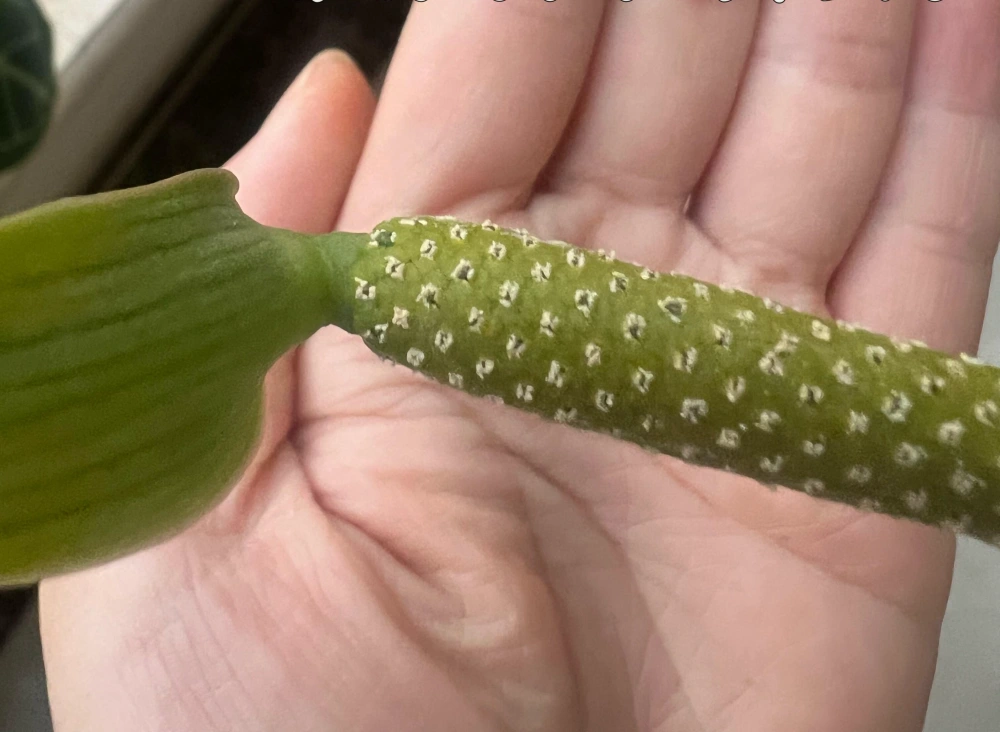
One of the most useful things this plant taught me had nothing to do with color. It had to do with timing the pot change properly. My Ace of Spades stayed in the same pot for well over a year because it was busy flowering, carrying seed, and generally putting its energy somewhere other than making larger leaves. During that time, I kept leaving it alone because I did not want to interrupt flowering and fruiting. But the plant itself kept getting bigger, and eventually the pot no longer matched the size of the plant above it.
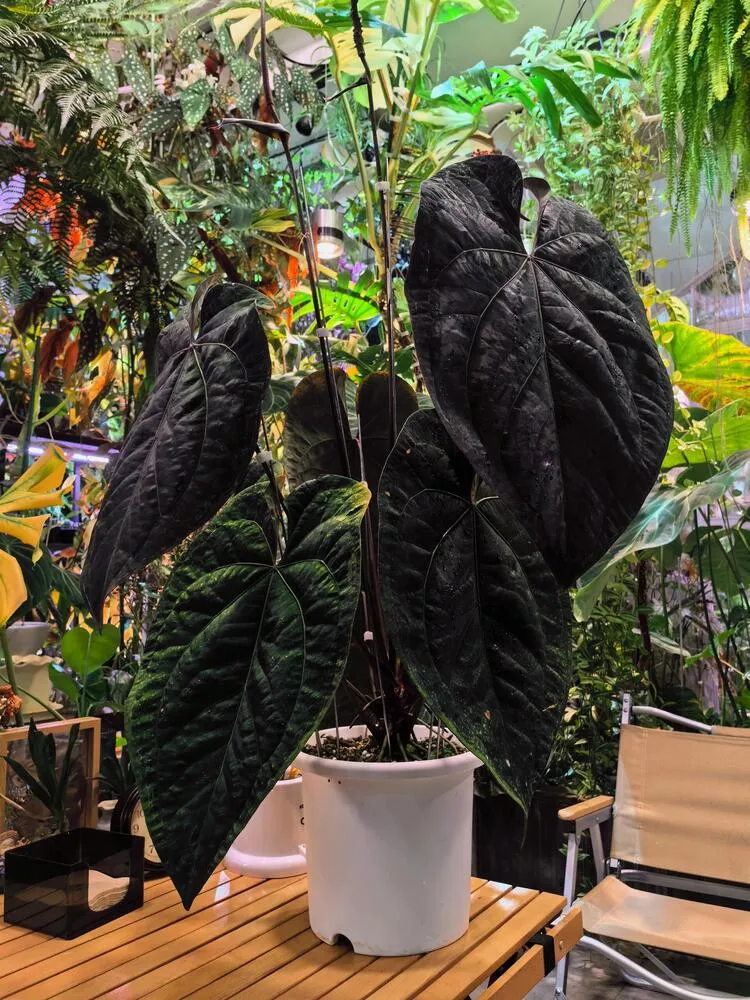
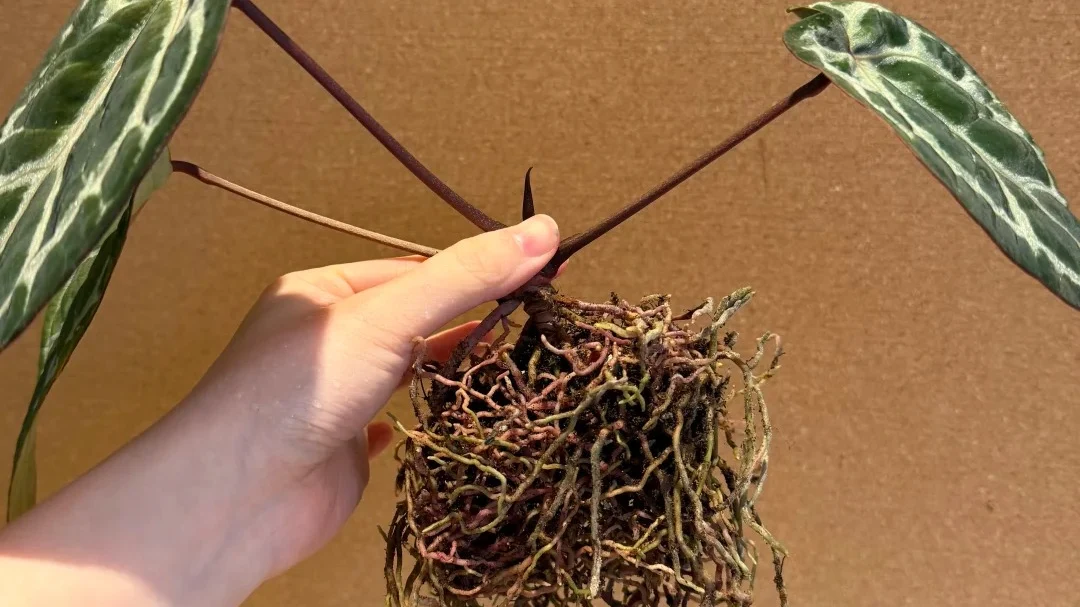
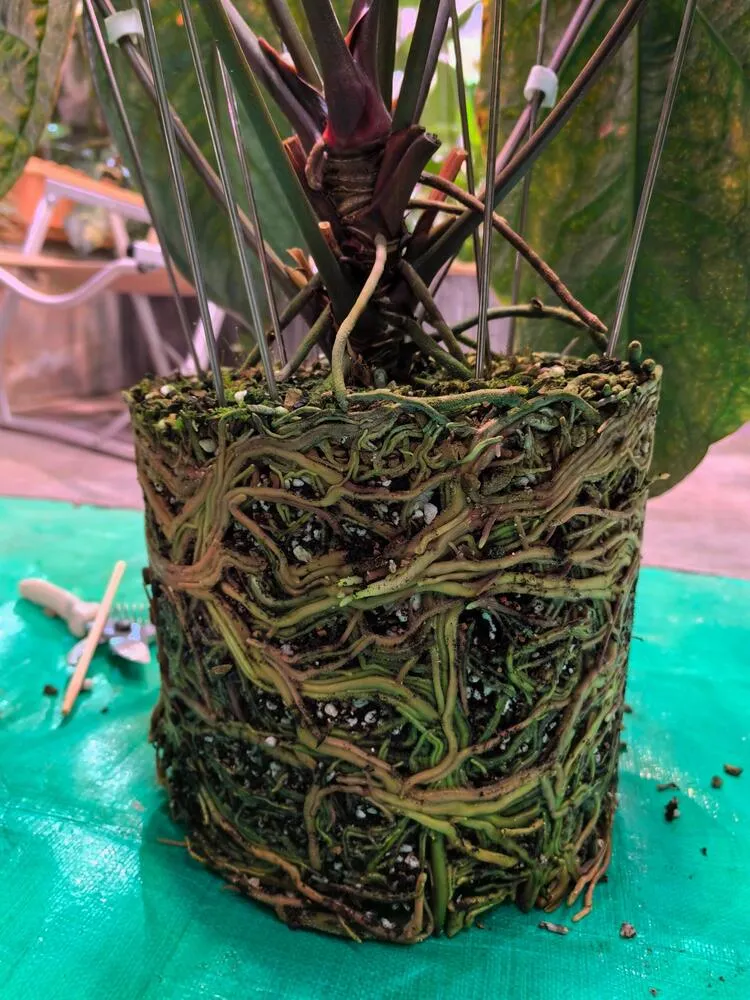
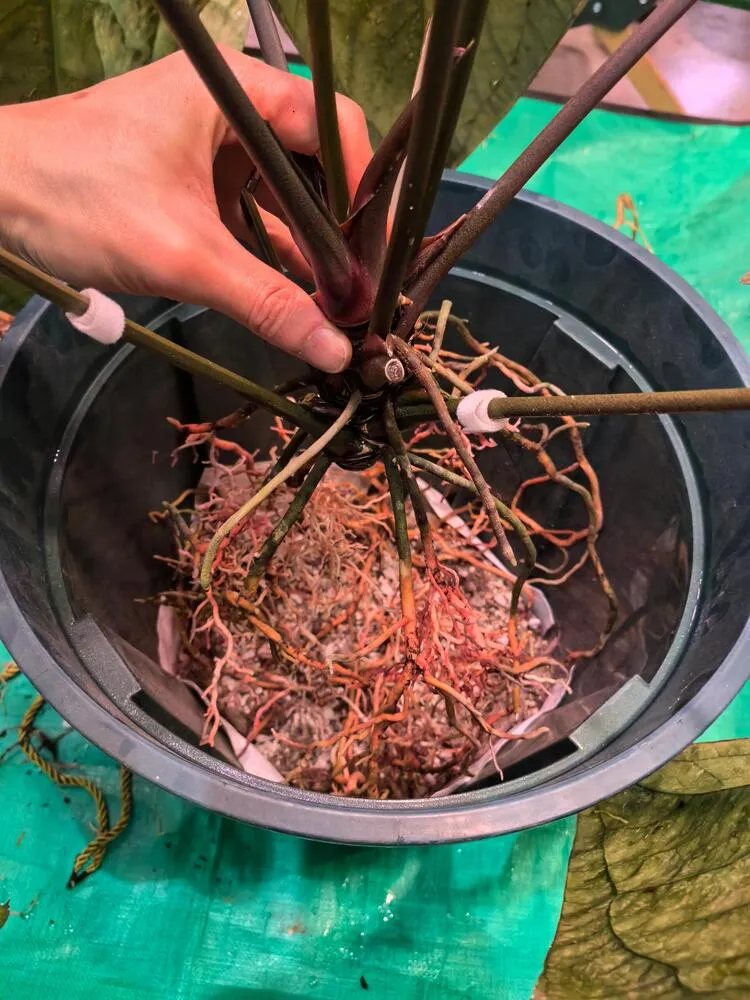
That was the point where I decided to repot, even though I knew the root ball would be a mess. The reason was not simply that “the roots were full.” With anthuriums like this, I do not think repotting should be decided by root quantity alone. A plant can have a massive, tangled root mass and still be in a pot that no longer fits the size and weight of the growth above it. For me, the real issue was that the whole plant had outgrown the balance of the pot, not that I needed to preserve every root at all costs.
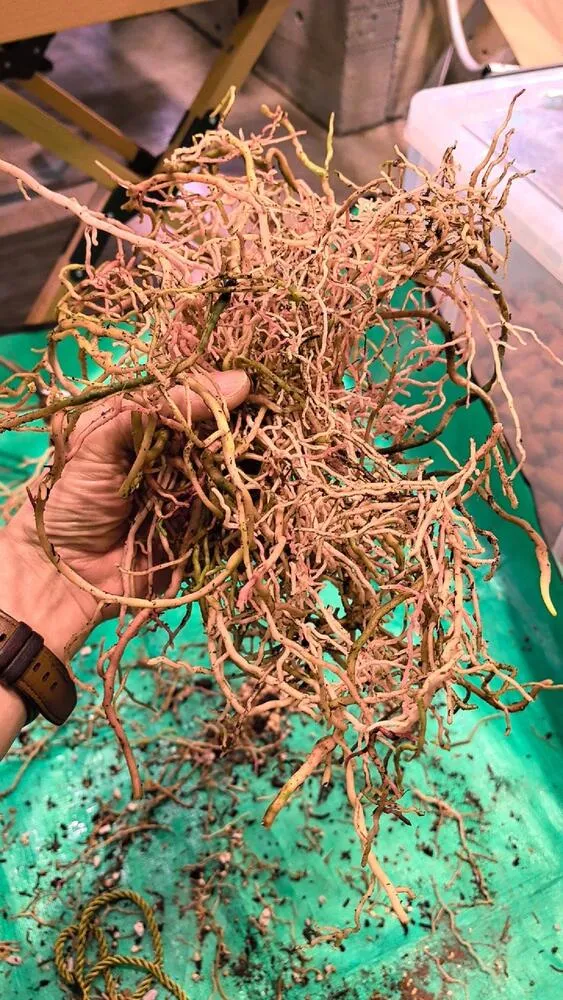
What that repot made very clear is that not all old roots are equally useful. Once they have packed themselves into a tight mass, circling and pressing into each other, they do not automatically become an advantage. In fact, too much congested root mass in the wrong kind of mix can start working against the plant by holding moisture badly and increasing the risk of root problems. That is why I ended up cutting back more than people might expect, including cleaning up roots and cutting the lower base.
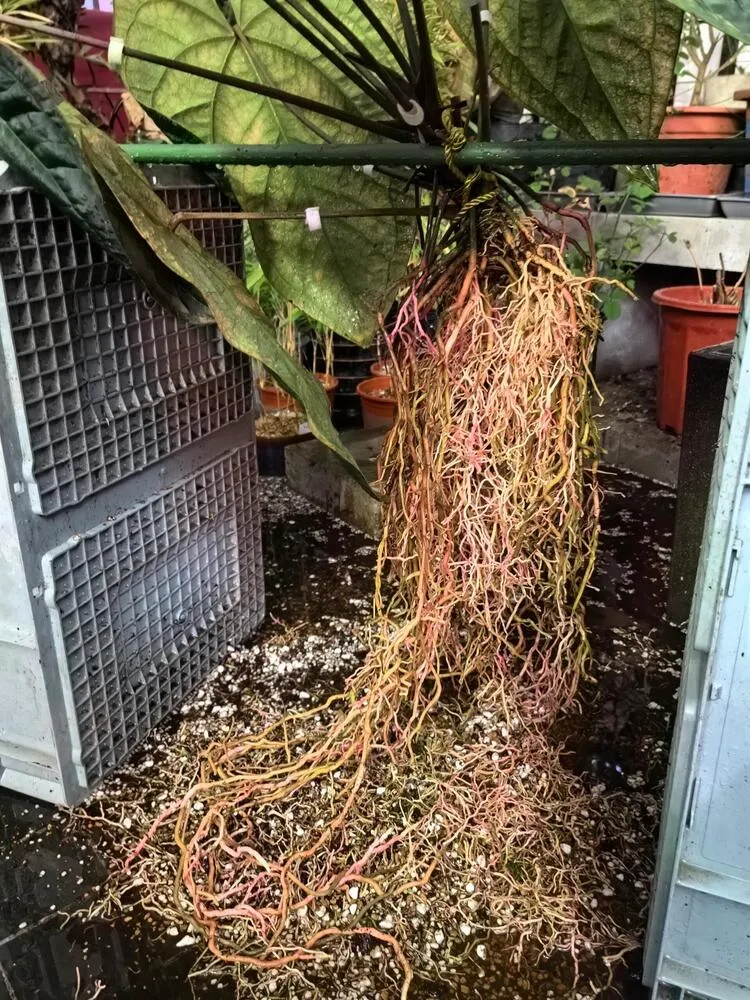
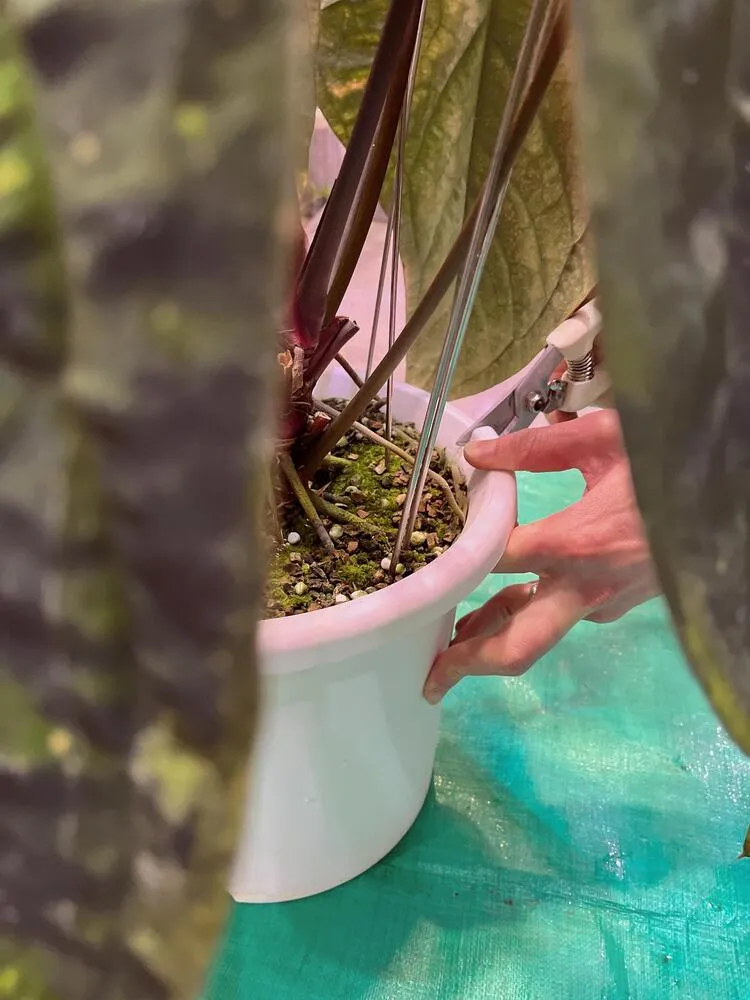
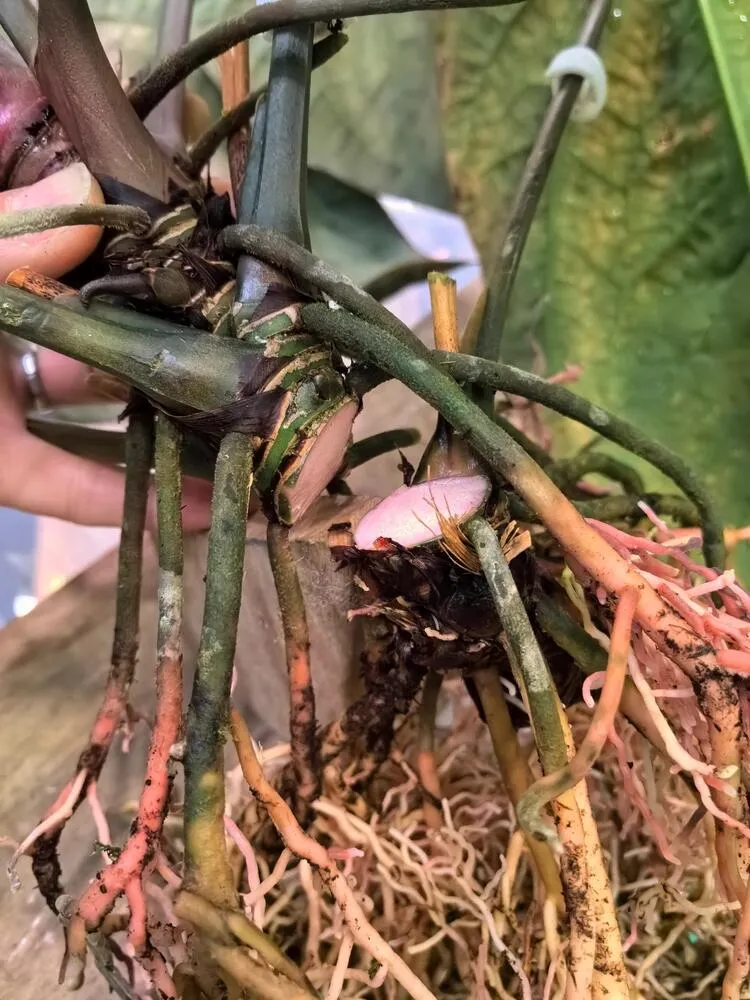
The main lesson I took from that whole process is this: with large anthuriums, I no longer think in terms of “more roots means leave it alone.” I think more in terms of whether the current pot still fits the size, weight, and future direction of the plant. Repotting is not just about making space for roots. It is about resetting the balance between the plant above the soil and the system below it so the next phase of growth has somewhere to go.
What Helped Mine Keep Its Quality
What mattered most with my Anthurium ace of spades was not trying to make it as dark as possible or as fast as possible. What actually helped was keeping it in conditions where a leaf could finish well. With a plant like this, that matters more than chasing dramatic results too early.
Light That Kept the Leaf Dark Without Flattening It
I never found Ace of Spades looked best by simply being kept as dark as possible. If the light was too weak, the plant could survive, but the leaf often lost some of its structure and presence. What worked better for me was moderate, stable light that kept the leaf dark enough to feel moody without making the whole plant look flat or sleepy.
That balance mattered because this species needs more than color alone to look convincing. The leaf has to keep its shape, texture, and overall definition too. For me, light worked best when it supported the darkness without collapsing everything else into one dull, heavy surface.
Moisture That Kept the Plant Moving Without Turning the Pot Stale
I also got better results when the moisture stayed steady enough to keep the plant moving. I would not let Ace of Spades swing too hard between extremes. If the mix stayed too wet and stale, the roots felt compromised in one direction. If it dried too hard, the plant seemed to lose momentum in another.
What worked better was a rhythm that kept the root zone active without feeling swampy. That mattered especially when a new leaf was in progress, because once the plant lost continuity there, the finished result usually looked weaker too.
Air Movement That Made High Humidity Workable
Higher humidity helped, but only when the air was moving well enough to support it. On a plant with large, dark leaves, still air can work against you surprisingly quickly. I found that humidity made more sense when it helped the leaf develop cleanly without turning the whole setup heavy or stagnant.
So for me, the real goal was not simply “more humidity.” It was humidity that stayed usable. Once there was enough airflow to keep the environment feeling fresh, the higher moisture level became much more helpful instead of risky.
Why Some Ace of Spades Look Underwhelming and Others Don’t
One reason Anthurium ace of spades can be disappointing to some growers is that the name creates a very specific expectation. People expect something deeply black, immediately dramatic, and impossible to ignore. But plants sold under the same name do not always deliver the same effect, and that gap can be larger than people expect.
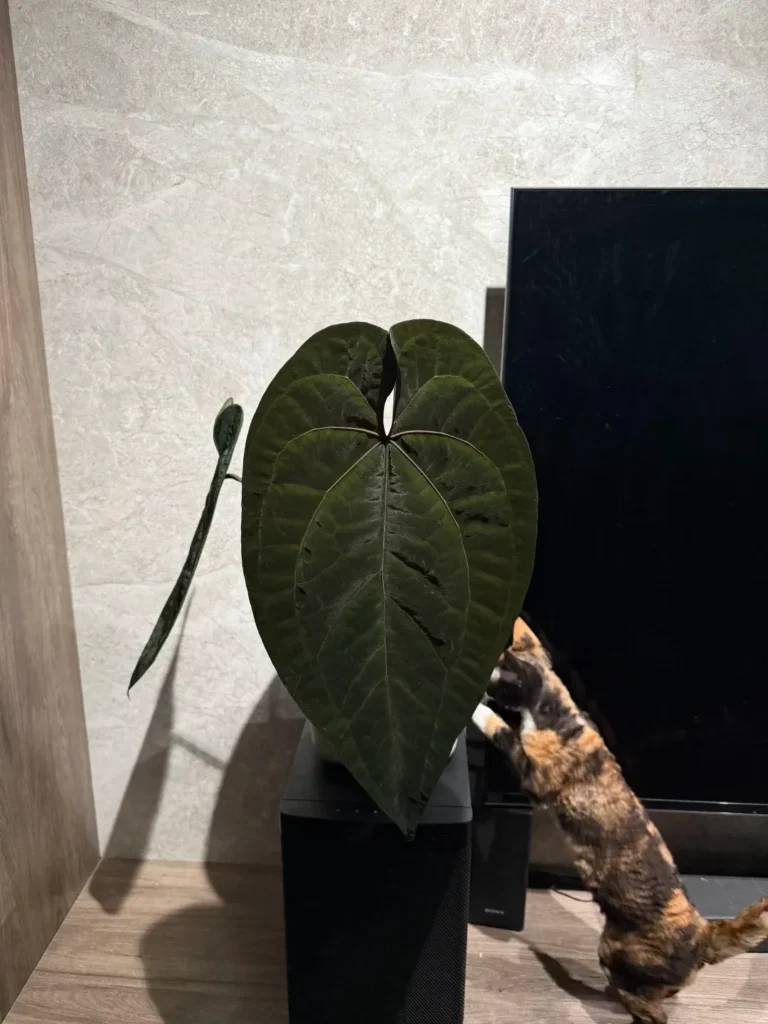
Some plants simply do not develop the same depth of color, or they stay more dark green than truly shadowed. Others may have the right color but still lack the size, shape, or finished surface that gives the plant real presence. That is part of why certain darker lines get so much attention. The appeal is not just that they are darker, but that the darkness works together with the rest of the leaf instead of trying to carry the whole plant on its own.
To me, a really good Ace of Spades is never just about one trait. It is about the overall combination — the depth of the leaf color, the heart-shaped outline, the size of the blade, and the way the surface looks once the leaf has fully matured. When those things come together, the plant feels convincing. When they do not, it can still be healthy and attractive, but much less memorable than the name suggests.
What Makes This Plant Worth the Space
Anthurium ace of spades is not the fastest plant, and it is not the easiest one to finish well either. But if you are drawn to dark, large, dramatic foliage, a mature leaf on this plant is very hard to replace. Its value does not come from bright, obvious beauty. It comes from a heavier, more shadowed kind of presence that very few anthuriums create in quite the same way.
That is what makes it stay with people. You do not remember it because it is cheerful or instantly easy. You remember it because, once it works, it feels like a dark shape holding the room in place. For me, that is what makes Ace of Spades worth the space — not just the color, but the way color, scale, and silhouette come together into something that feels heavier and more lasting than a single leaf should.
If you want to work on the basics first, my Anthurium care guides go deeper into light, watering, soil, and the indoor conditions that affect leaf quality most.
FAQ
Still comparing Anthurium varieties?
If you’re trying to figure out which anthuriums are actually worth growing indoors, my Anthurium varieties hub is a better place to compare leaf texture, growth habits, and overall difficulty side by side.
Explore Anthurium Varieties →