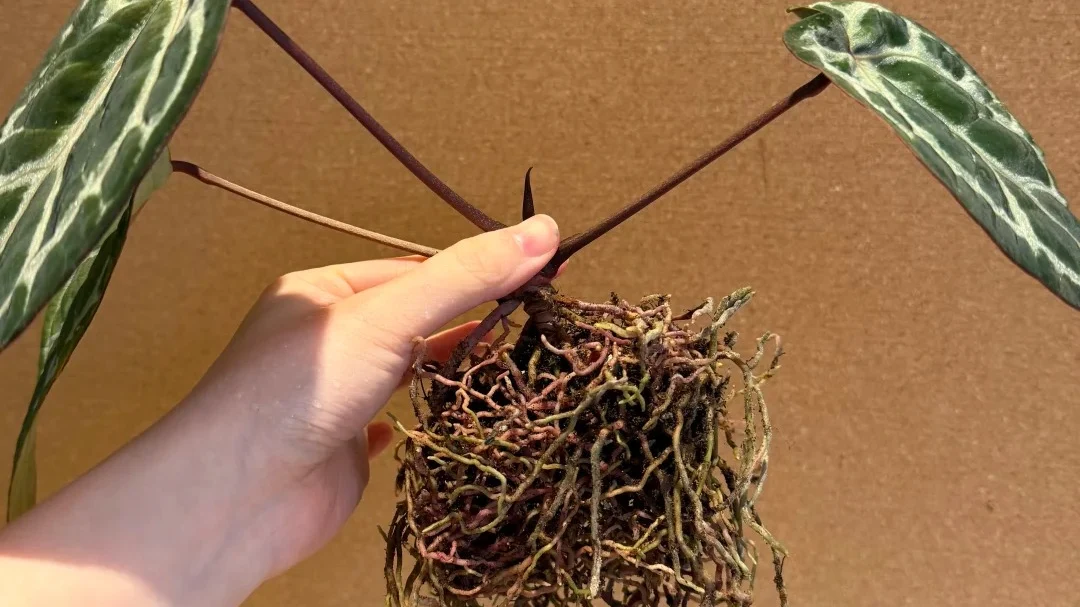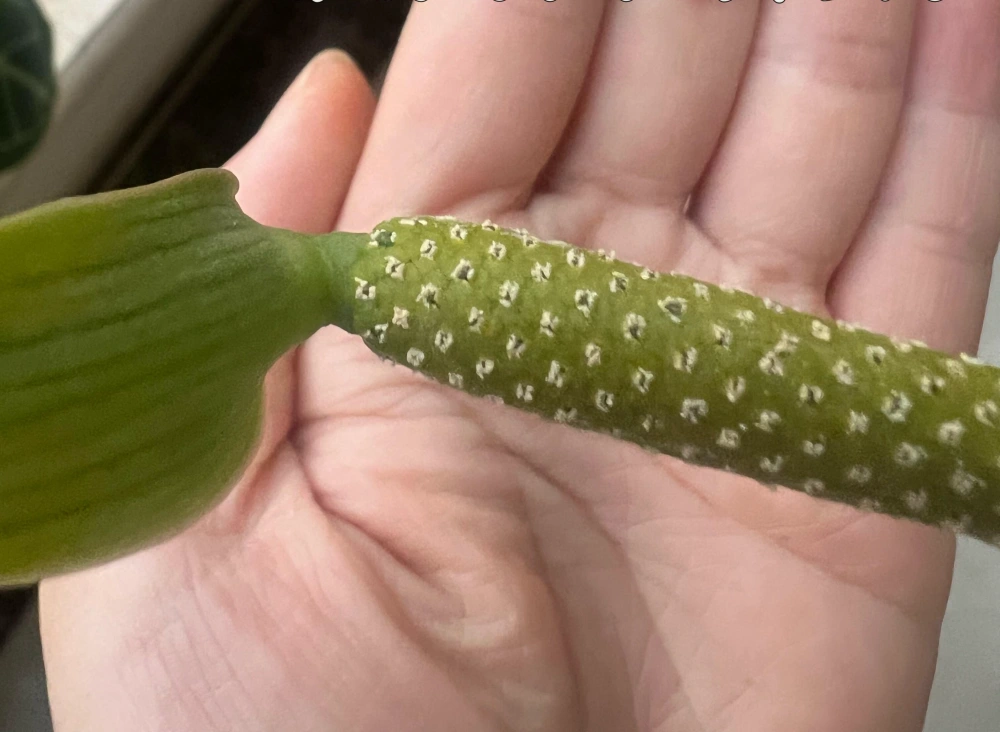
When an anthurium stops growing, my first reaction is not to add fertilizer right away. I used to think slow growth meant the plant needed more nutrients, but after dealing with different stalled anthuriums indoors, I do not see it that way anymore.
Some plants stay small because there are too many growth points crowded into one pot. Some pause because the room is too cold and the plant simply does not have enough warmth to move. Some keep making roots but refuse to push leaves because the root system is not working efficiently. And with older plants, the issue may be that the aerial roots have dried out or lost good contact with anything they can grow into.
That is why I do not treat “anthurium not growing” as one single problem. Fertilizer can support an active plant, but it rarely fixes a plant that is already stuck for another reason.
Before I try to push an anthurium to grow, I ask a different question first: what is actually holding this plant back?
Case 1 — A Small Anthurium That Would Not Size Up
One stalled plant I remember clearly was a small anthurium with plenty of leaves, but none of them were sizing up. From the top, it did not look empty or weak. It actually looked busy. The problem was that all the growth stayed small.
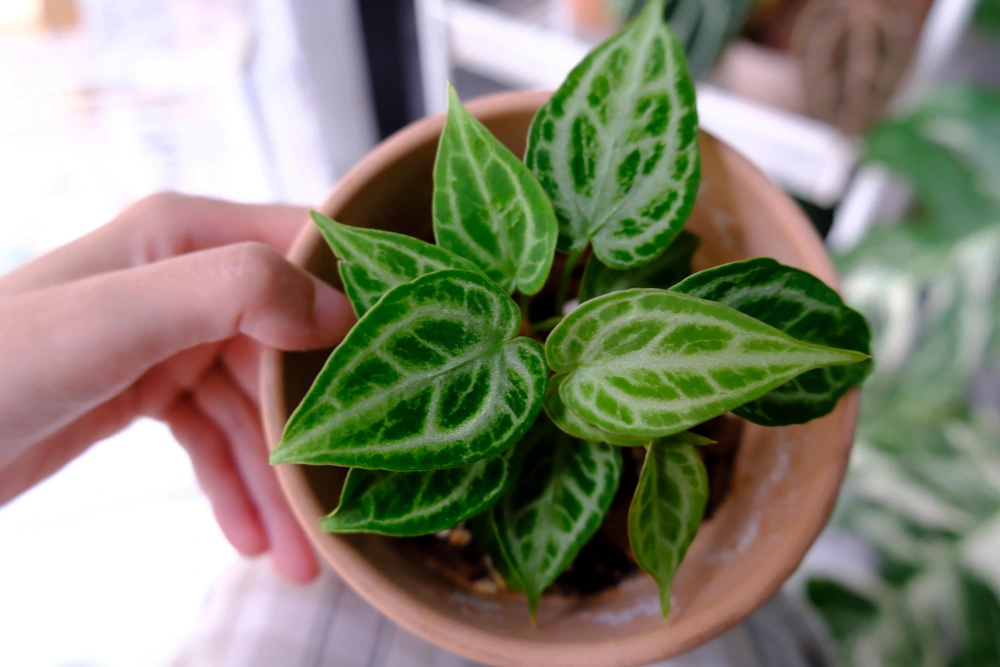
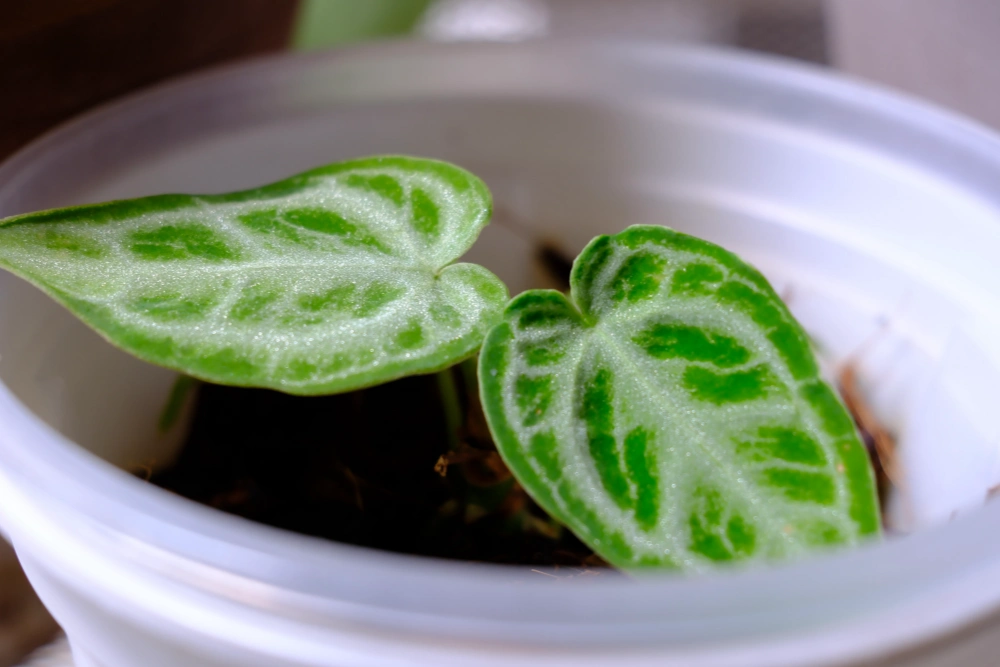
In that case, I did not think the plant was genetically “small” or unable to grow larger leaves. The bigger issue was crowding. There were several growth points packed together in one pot, and each one was competing for the same space, light, roots, and nutrients.
I would not divide every small anthurium just because the leaves are not huge yet. Some plants simply need more time, stronger light, or a better season. But if I see several crowded growth points sitting tightly together, division can make a real difference.
After separating the plant into individual pots, each division had more room to build its own root system and leaf structure. With mild feeding, enough light, and the stronger growing season around late spring to early summer, the change was obvious. Within about two months, the new leaves started coming in much larger.
The lesson for me was simple: sometimes a small anthurium does not need to be pushed harder. It just needs enough space for each growth point to grow properly.
Case 2 — A Clarinervium-Type Anthurium That Would Not Move for Months
Another stalled plant was a clarinervium-type anthurium that barely changed for about four months. It was not completely dead or collapsing. There were small buds, but they just sat there and did not move.
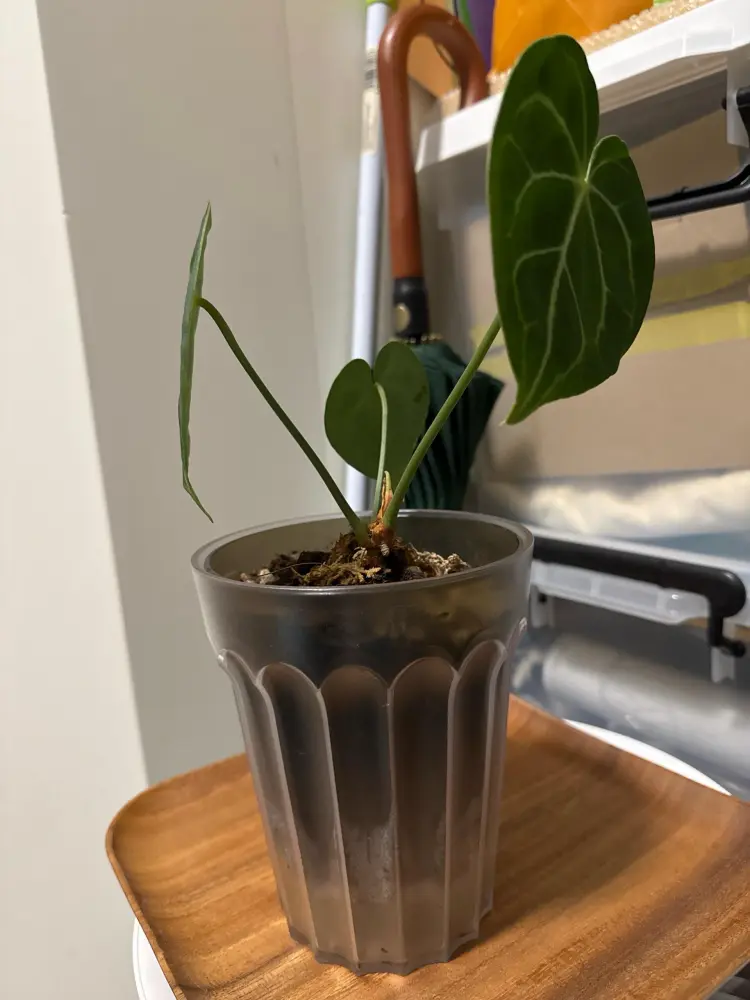
The setup looked “humid” on paper. It had been kept in an enclosed space with humidity around 90%, which sounds ideal for anthuriums at first. But the temperature was only around 15°C, and that changes everything.
At that temperature, many anthuriums slow down heavily. Some may not fully die back, but they stop pushing new leaves with any real energy. Around 15°C, I would not expect much active growth, especially from a plant that is already known to be slow.
The other warning sign was moisture sitting on the backs of the leaves after watering. That tells me the air is not moving enough. High humidity can help anthuriums, but cold, stagnant humidity is a very different thing from warm, moving, tropical air.
For a plant like this, I would not try to solve the problem with more water or more fertilizer. I would focus on:
- warmer conditions
- better gentle airflow
- patience until spring or a stronger growing season
- avoiding wet leaves and stale air inside the enclosure
The lesson here is that humidity alone does not restart a stalled anthurium. Warmth, airflow, and season matter more than people expect.
Case 3 — An Anthurium Growing Roots but Not Leaves
This case looked strange at first because the plant was not inactive. It kept making roots, but the leaves were not moving. From the outside, that can feel confusing. More roots should mean a stronger plant, right?
Not always.
In this case, I think the root system had become too large and not very efficient. The mix was also too coarse for that plant. The roots kept searching through large particles instead of settling into a compact, useful root zone that could actually support leaf growth well.
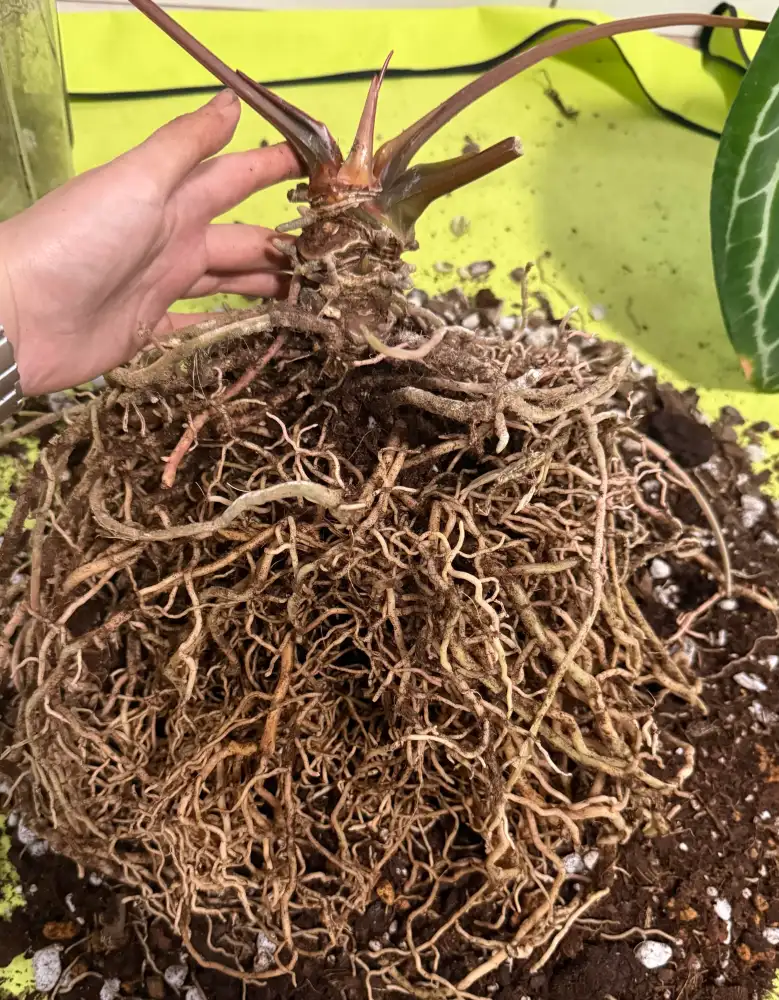
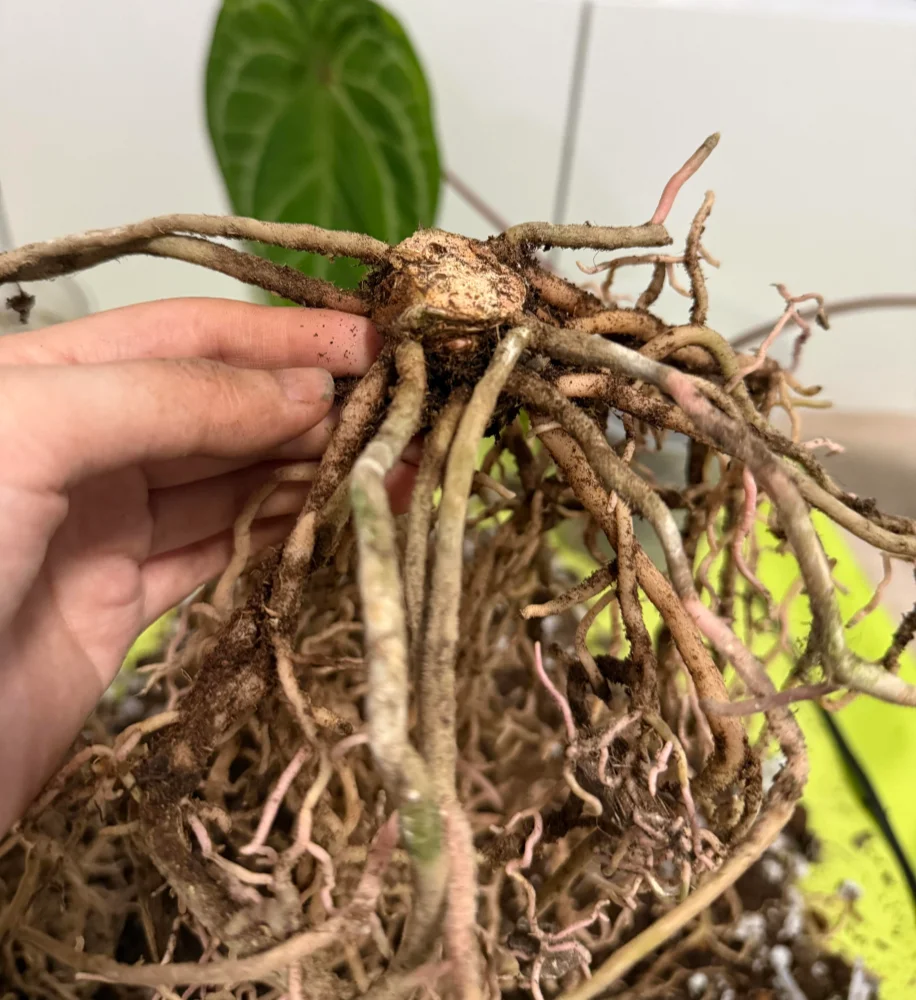
When an anthurium puts too much energy into root growth, leaf growth can stall. It is not always a fertilizer problem. If the roots are not working efficiently, adding more fertilizer does not fix the real issue.
What helped was a careful root reset. I would not do this to a normal healthy plant, and I would not cut roots just to force growth. But when a plant has an oversized root mass and is already stalled, I may reduce the excess roots, keep enough healthy roots to support the plant, and move it into a mix that fits the root system better.
For this kind of recovery, I would use:
- a finer but still airy mix
- more moisture-holding material, such as coco coir or fine organic components
- high humidity while the plant rebuilds
- stable warmth and gentle light
- patience while the plant redirects energy into new leaves
The key is not to remove roots randomly. The goal is to help the plant build a more efficient root system, so it can stop putting so much energy into roots and start pushing leaves again.
Case 4 — An Old Anthurium With Shrinking Leaves and No New Growth
The fourth case was an older anthurium that had been growing for about two years. It was not a new plant trying to settle in. It had already grown for a long time, but then the new leaves started getting smaller and the whole plant slowly lost momentum.
At first, it looked like a plant that was simply tired. The old stem was still there, but the aerial roots around it looked dry and inactive. They were not really helping the plant take up moisture or nutrients anymore.
Instead of throwing the plant away, I tried to give the newer aerial roots a place to become active again. I used a simple sphagnum moss collar around the base. This can be made with a plastic mesh collar, or even a cut plastic bottle ring, filled with lightly moist sphagnum moss.
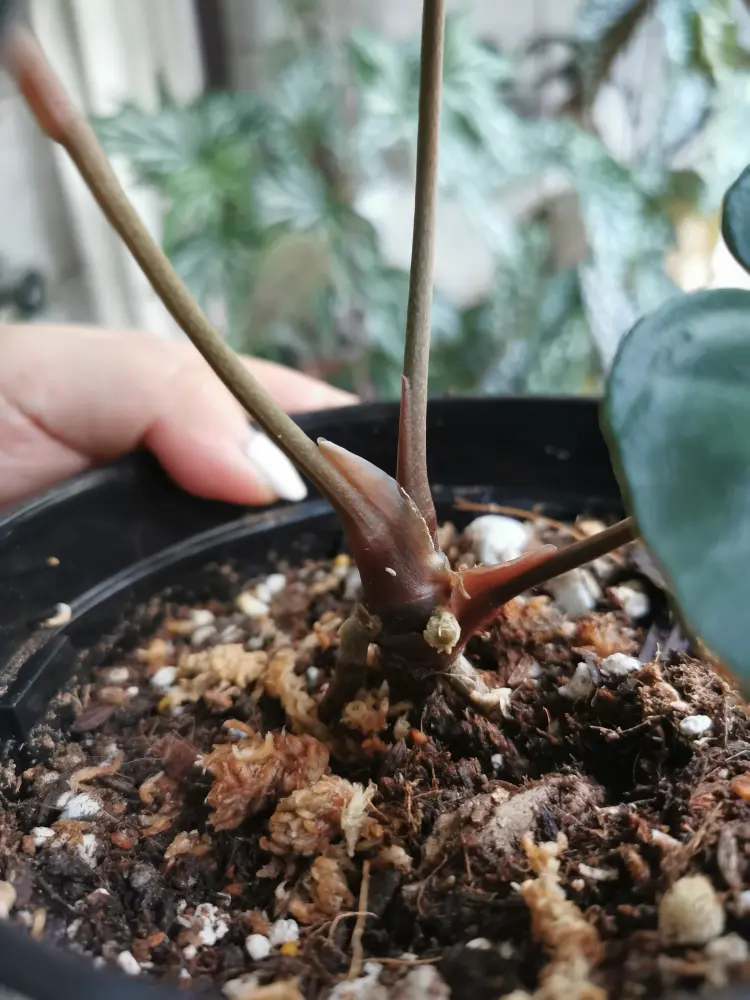
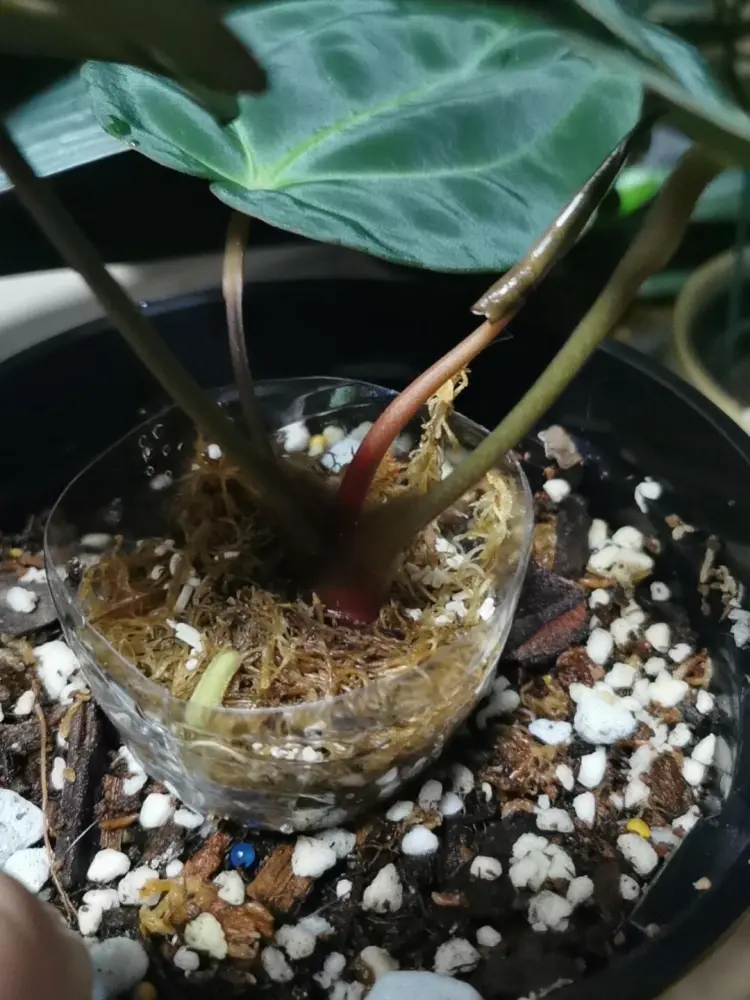
The goal is not to bury the stem or keep it wet all the time. The goal is to create a moist, airy zone where new aerial roots can enter the moss and start working.
After I did this, the change was surprisingly fast. New fuzzy roots started forming within a few days, and once the upper root system became active again, the plant started pushing a larger new leaf.
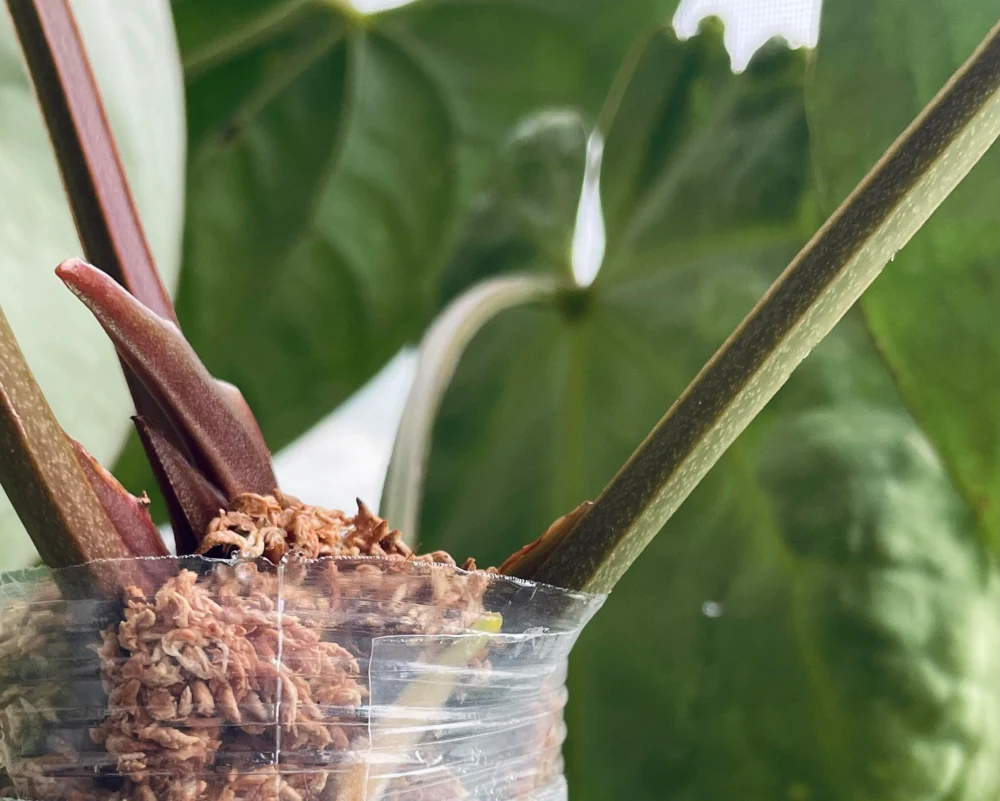
This case reminded me that an older anthurium does not always need more fertilizer. Sometimes the real fix is helping the plant reconnect with an active root zone, especially when the old aerial roots have dried out and stopped doing much.
How I Decide Which Fix to Try First
When an anthurium stops growing, I try not to jump straight to one solution. The same symptom — no new leaves — can come from very different problems. Before I divide, cut roots, add moss, or change the mix, I look for the main bottleneck first.
| What I See | What I Suspect First | What I Would Try |
|---|---|---|
| Many small leaves with several growth points | Crowding | Divide the plant and give each growth point more space |
| Buds are present but not moving | Cold or seasonal slowdown | Add warmth, improve gentle airflow, and wait for stronger growing conditions |
| Lots of roots but no leaves | Inefficient root system or the wrong mix | Adjust the roots carefully and move the plant into a better-matched mix |
| Old stem, shrinking leaves, dry aerial roots | Weak upper root connection | Use a sphagnum moss collar to help aerial roots become active |
| Yellowing, drooping, and a wet pot | Root stress, not a growth problem | Check the roots and watering rhythm before trying to push growth |
This is why I do not treat stalled growth as one simple issue. If the plant is cold, I do not divide it first. If the pot is wet and the leaves are drooping, I check the watering rhythm before adding fertilizer. If the root ball is inefficient, I do not expect light alone to fix it.
The right fix depends on where the plant is stuck. Once I know that, the next step becomes much clearer.
What Usually Matters More Than Fertilizer
Fertilizer can support growth, but I rarely see it fix a stalled anthurium by itself. If the plant is already stuck, I usually assume something else is holding it back first.
A plant needs working roots, enough warmth, and enough light before it can turn nutrients into new leaves. If the roots are weak, the room is cold, the pot is too wet, or the plant has no active root zone, feeding more will not solve the real problem.
I use fertilizer after the plant is ready to grow, not as a way to force a plant that has already stalled. First I try to fix the bottleneck — space, warmth, airflow, roots, or mix. Then feeding becomes useful support instead of a desperate push.
My Takeaway From These Four Stalled Anthuriums
These four cases changed the way I look at a stalled anthurium. “Not growing” is not one problem, and it should not always lead to the same fix.
A crowded plant may need space.
A cold plant may need warmth, airflow, and time.
A plant making roots but no leaves may need a root reset.
An older plant with dry aerial roots may need help building a new active root zone.
Once the real bottleneck is fixed, leaf size often improves naturally. The plant does not always need to be pushed harder. Sometimes it just needs the right part of its growing system to start working again.
When I stopped asking only “what should I feed it?” and started asking “where is the plant blocked?”, my stalled anthuriums became much easier to fix.
FAQ
Still unsure what your anthurium is trying to tell you?
A single leaf symptom can be misleading on its own. If your anthurium is struggling with yellow leaves, brown spots, drooping, slow growth, or root issues, you can browse the full problems hub for the patterns I watch and the adjustments that have helped most in my home.
Go to Problems Hub →