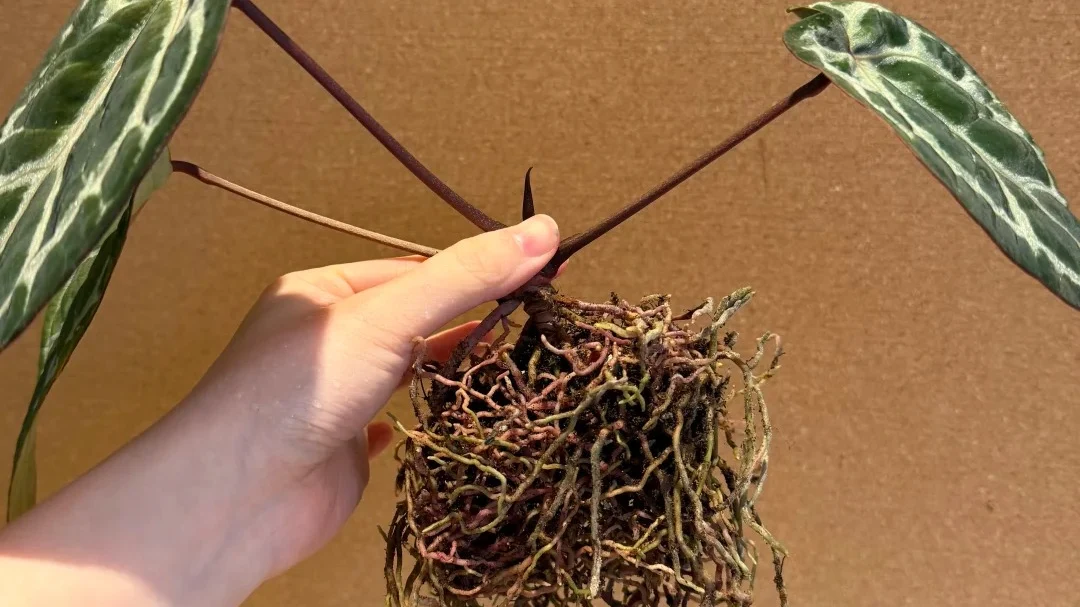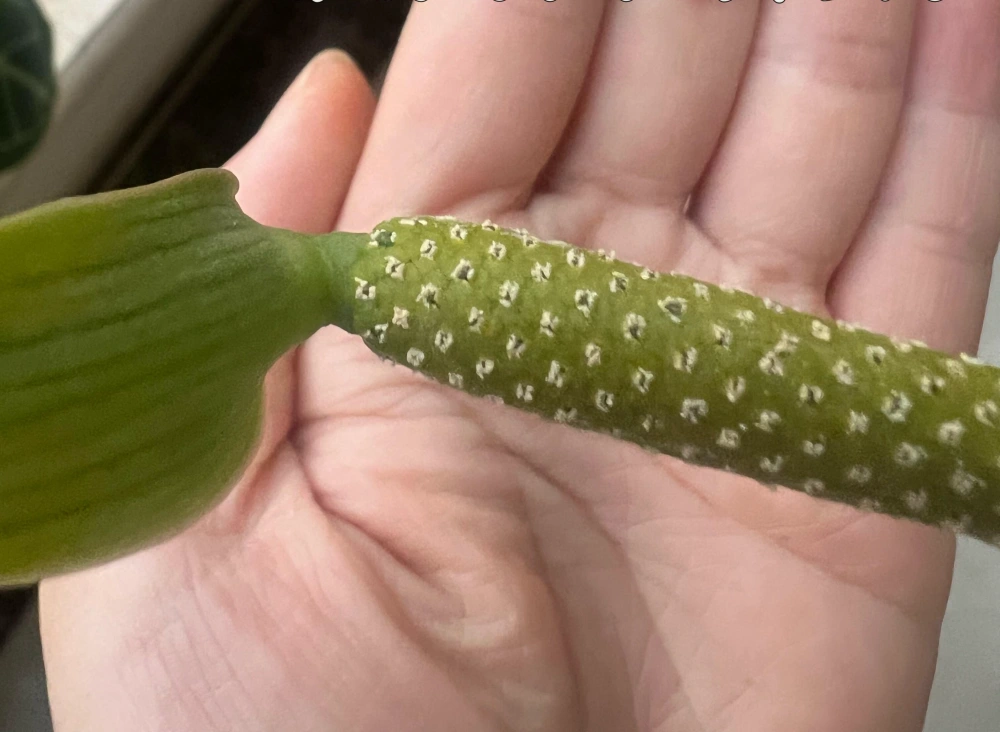
When I first saw yellow leaves on my anthuriums, I assumed I had done something wrong. Over time, though, I realized yellowing does not always mean the plant is in trouble. Sometimes it is just an older leaf reaching the end of its life. Other times it is the plant reacting to stress from light, roots, humidity, or watering.
What matters most is not the yellow color by itself, but the pattern. Which leaf is turning? How fast did it happen? Is the plant still pushing new growth, or has everything started to slow down? Those details usually tell me much more than the yellowing alone.
So instead of listing every possible cause, I want to walk through the kinds of yellowing I have actually seen at home. That way, you can compare your plant to a real pattern and decide whether it needs action or just time.
Start Here: What Kind of Yellowing Are You Seeing?
Yellow leaves on your Anthurium don’t always mean something is seriously wrong. Over the years, I’ve learned that which leaf is yellow, how quickly it changes, and the plant’s overall growth tell the real story. Some yellowing is just natural aging, some comes from environmental stress, and some points to root or nutrient issues. Here’s how I break it down based on my own experience.
Case 1 – A Large Leaf Disappeared Almost Overnight
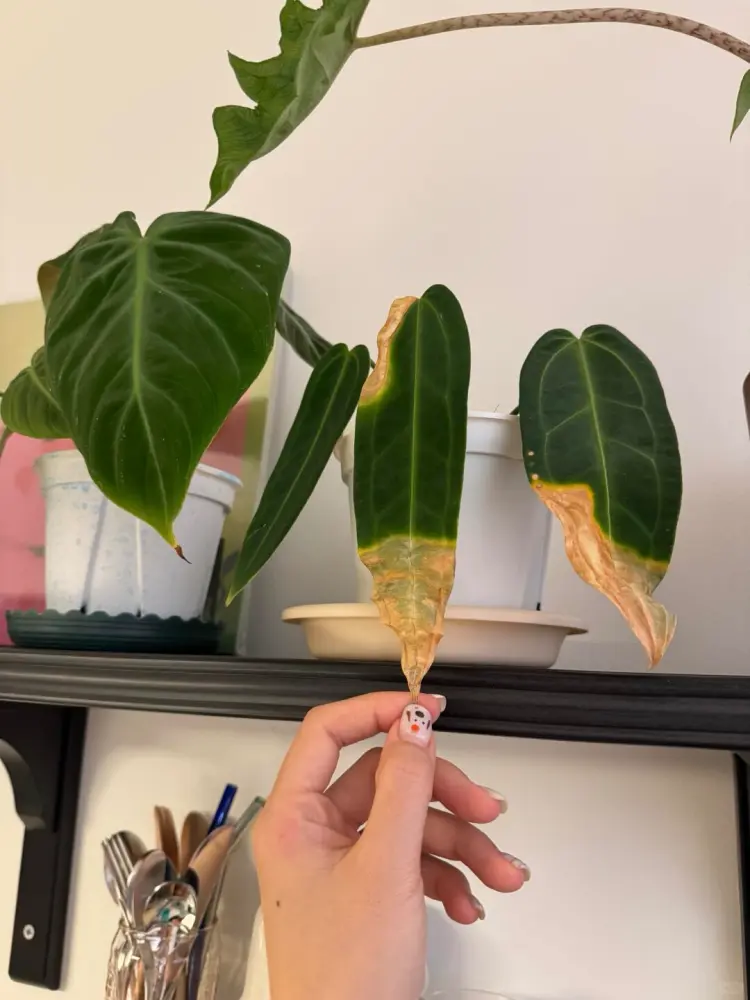
One morning I woke up to find a 27 cm leaf completely yellowed and shriveled. I had assumed a little direct sun would be fine, but that leaf had clearly taken more light than it could handle. Thankfully, it was an older leaf, and the newer growth stayed fine.
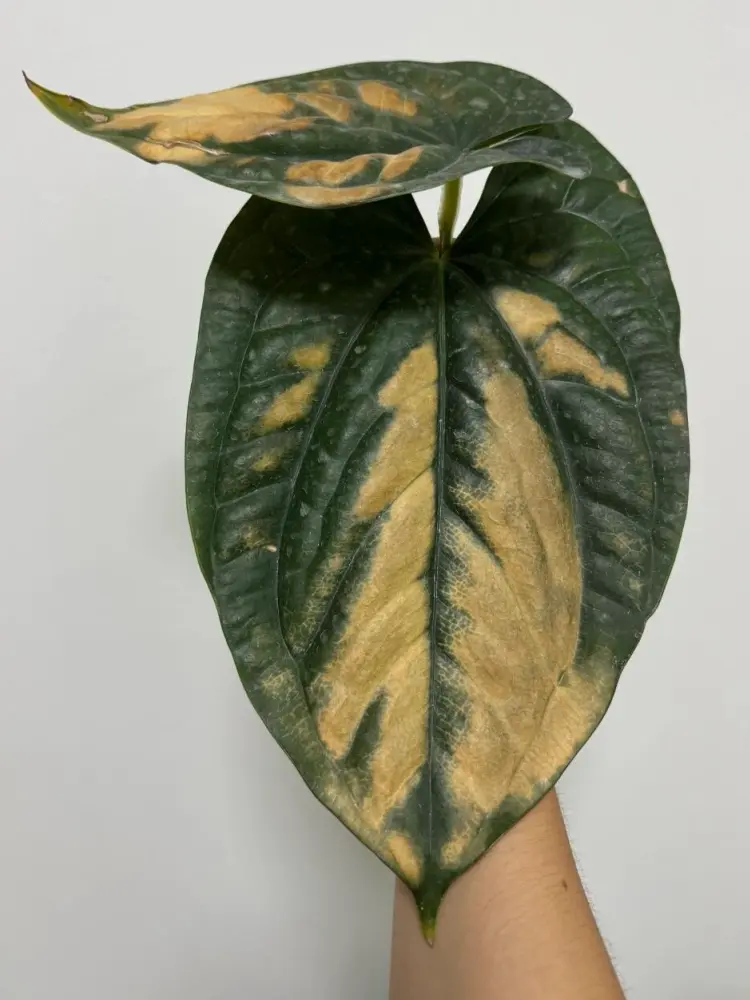
The yellowing was broad, patchy, and fast-moving, which made it look more like light stress than normal aging. The leaf itself was already beyond recovery, but the rest of the plant stayed stable once I adjusted the light.
When yellowing happens this fast, especially on a larger older leaf, I usually think of environmental stress first. In my case, it was too much direct summer sun. A leaf like this is not going back to normal, but the plant itself can still be fine once the light is adjusted.
Case 2 – Yellowing That Turned Out to Be Root Rot
I bought a small Anthurium online, and just a few days after it arrived, the first leaf turned yellow. At first I thought it was just normal adjustment stress. But weeks passed, no new leaf appeared, and more foliage started fading. When I finally checked the roots, most of them were already rotten.
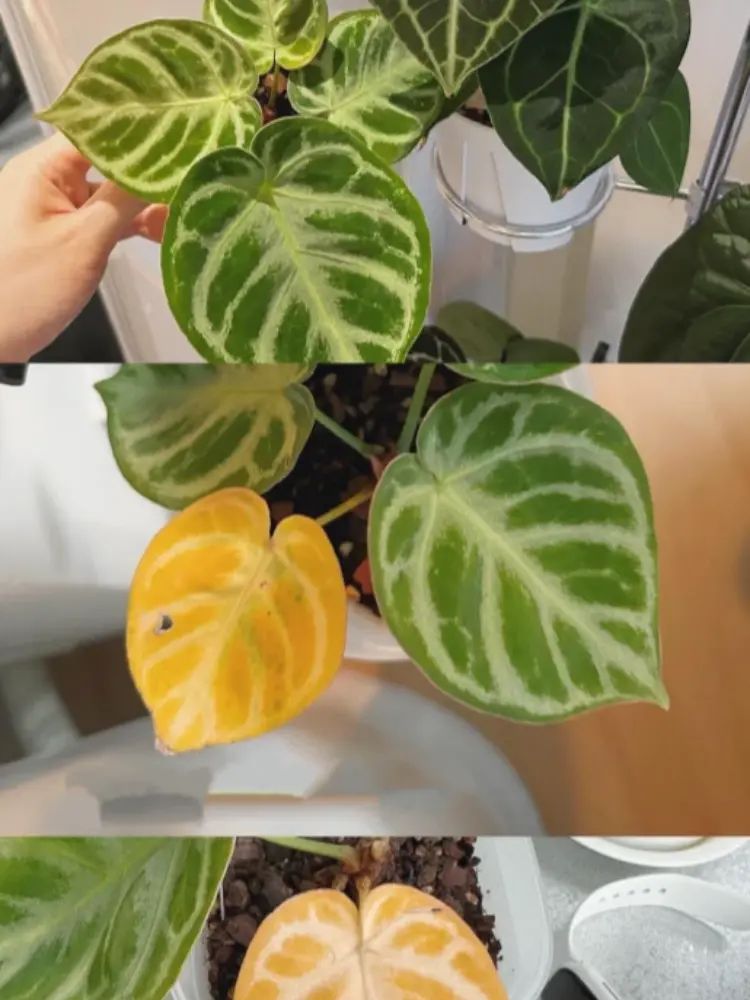
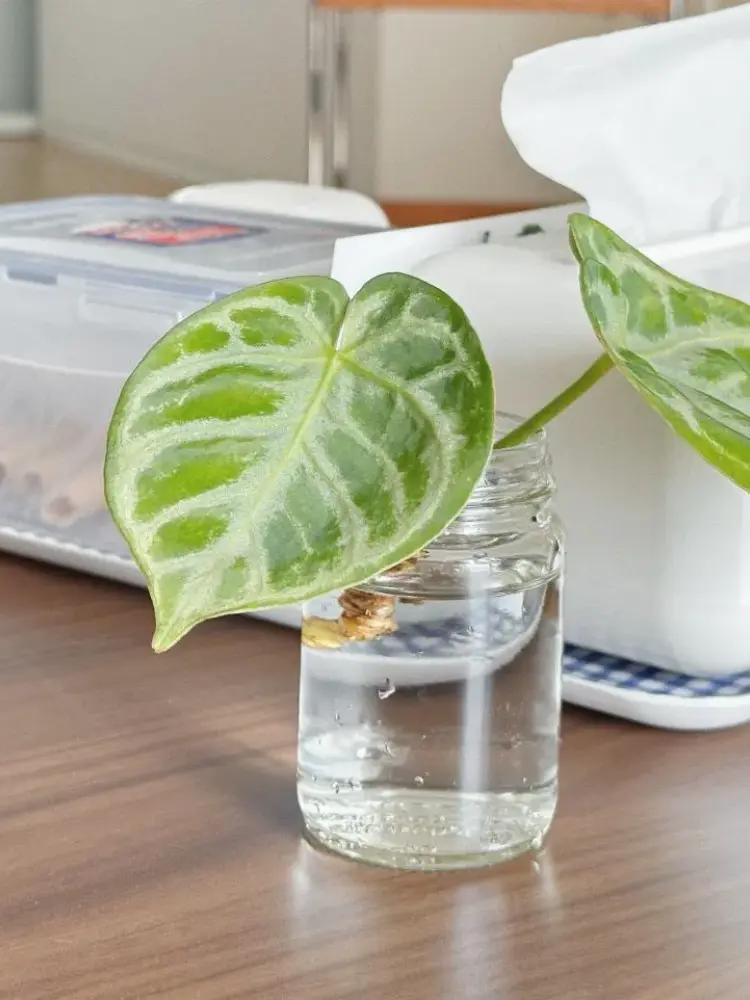
This is the kind of yellowing I take more seriously now: not just one leaf aging out, but yellowing paired with stalled growth. I trimmed off the damaged roots, let the cuts dry briefly, and kept the plant in water while I waited for new roots to form. It took about three months, but it did recover.
Case 3 – The Roots Looked Fine, but the Plant Still Wasn’t Happy
I had a small Anthurium that stayed in its original potting mix for too long. The leaves slowly started curling and yellowing, so I assumed the roots must be in bad shape. But when I took it out, they actually looked better than I expected.
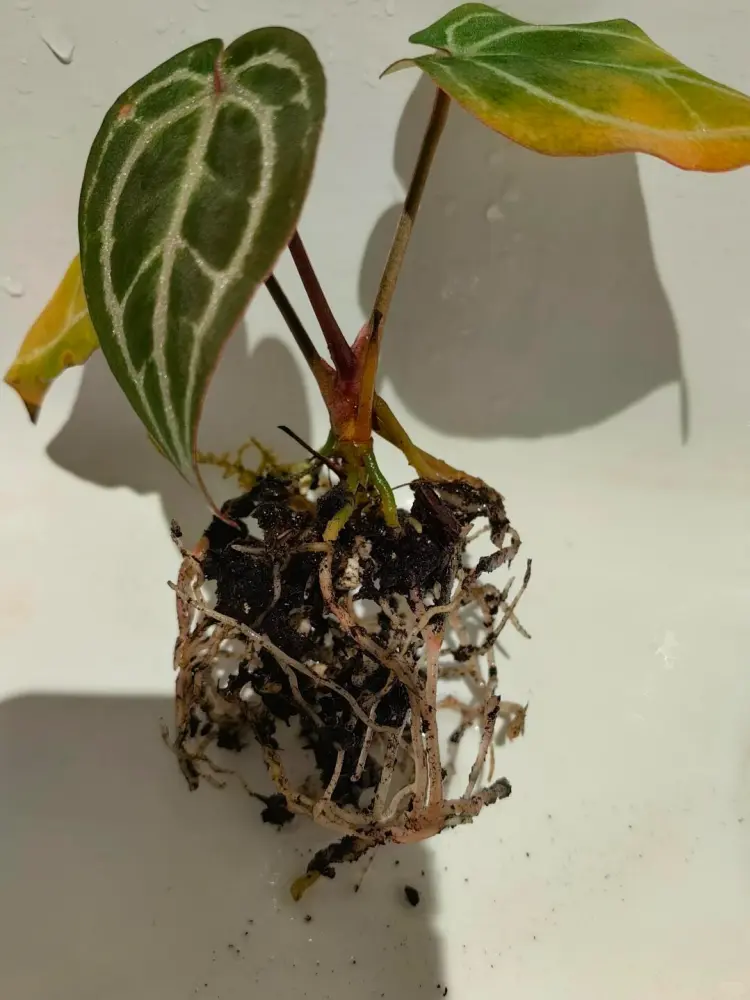
They were not completely rotten, but they also did not look strong enough for the way the plant had been declining. In my case, the issue felt more like a stressed root system sitting too long in dense mix than obvious root rot.
In that case, the problem was less about obvious rot and more about a root system that was stressed and not doing much well in dense soil. I moved it into a chunkier mix, removed the damaged leaves, and the new growth that came after that looked much healthier.
Case 4 – New Growth Slowed Down While an Older Leaf Kept Yellowing
One of my plants had an older leaf that was already halfway yellow, while the new growth barely moved for weeks. I eventually moved it to a spot with better airflow and raised the humidity with a humidifier. Over the next couple of months, the plant slowly picked up again.
The new growth wasn’t collapsing, but it wasn’t actively pushing either. After improving airflow and humidity, the plant slowly started moving again, even though that older leaf never recovered.
The yellowing leaf never recovered, but the plant did. Cases like this remind me that sometimes the leaf is already lost, and the real goal is just to get the plant growing well again.
Case 5 – The Roots Were Not Rotten, Just Not Doing Much
One Anthurium I brought home had four leaves at first, but after I came back from a short trip, two had started yellowing. I checked the roots and did not find obvious rot, which made the whole thing more confusing. The plant did not look diseased, and it did not really look nutrient deficient either. It just looked tired.
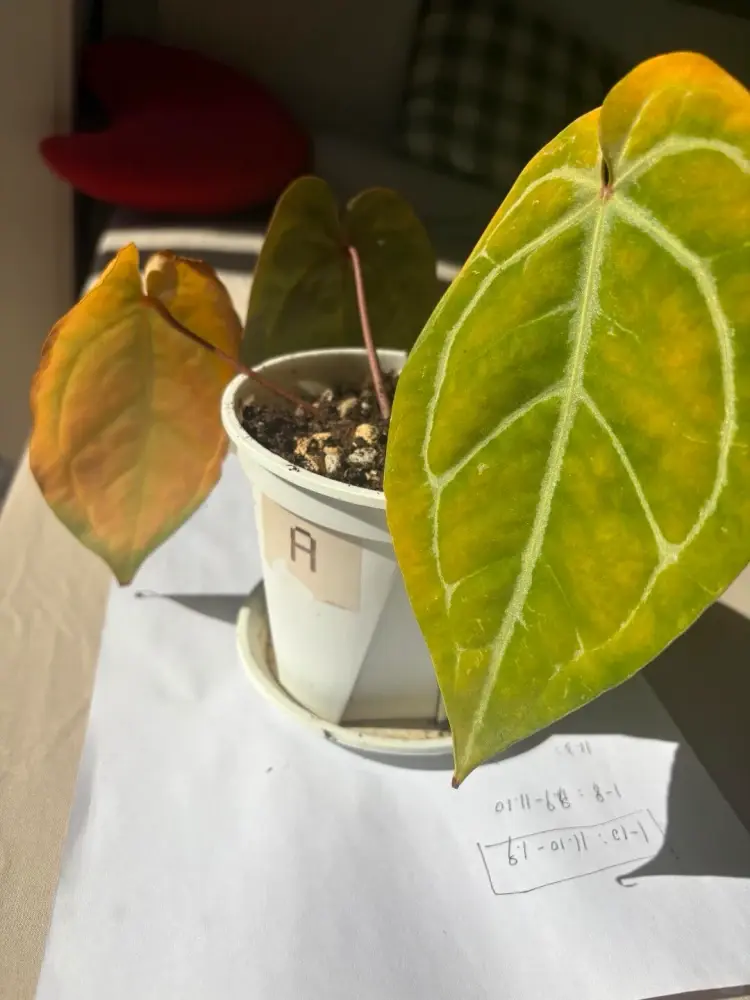
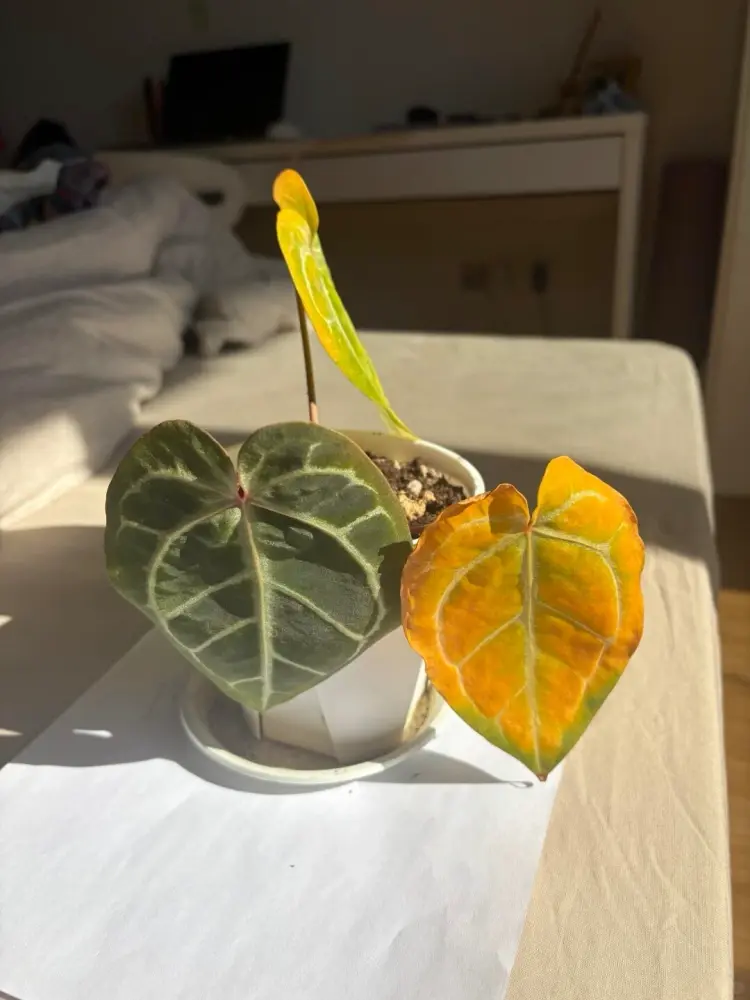
Now, when I see this kind of yellowing without obvious root rot, I think about weak root activity. The roots may still be alive, but they are not supporting the plant well enough. In cases like this, I usually look at watering, temperature, and whether the mix is staying too cold or wet for too long.
Case 6 – One Older Leaf Turned Yellow While the Rest of the Plant Kept Growing
Sometimes a lower leaf simply turns yellow while the rest of the plant still looks fine. I have had this happen when a new leaf was already coming in and one of the older leaves near the base started fading out. In that kind of situation, I usually treat it as normal aging rather than a problem that needs fixing.
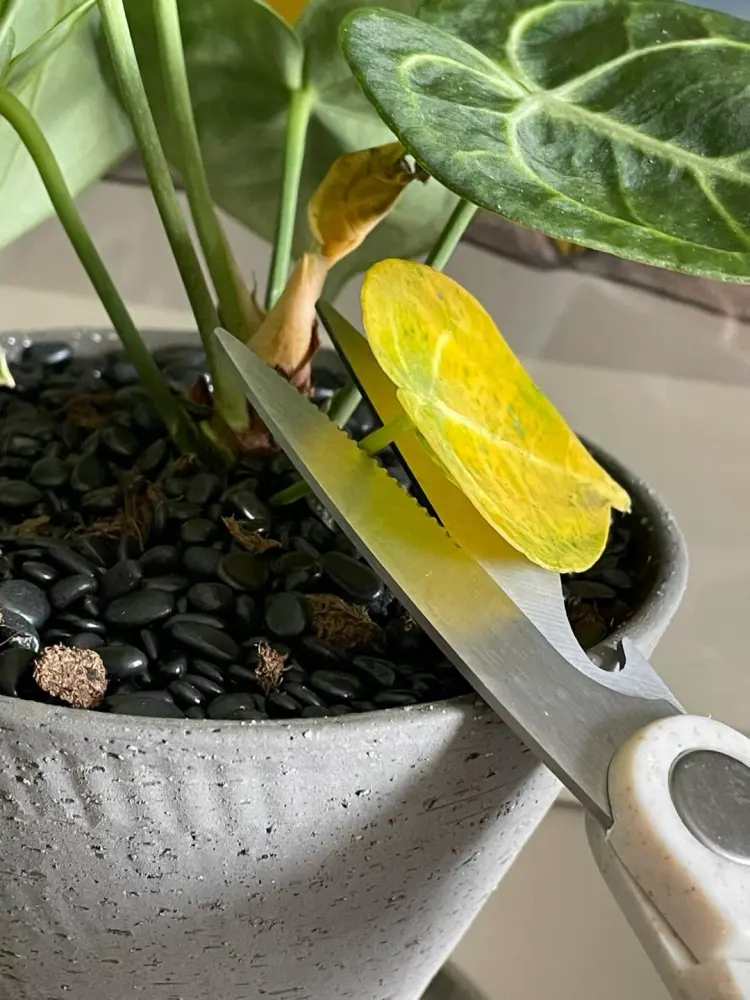
The yellowing is more even and predictable, and the rest of the plant is still actively growing. In cases like this, I usually just remove the leaf for appearance and leave everything else unchanged.
These leaves tend to turn a cleaner, more even yellow, rather than looking patchy, limp, or sickly. I usually cut them off for appearance, but I do not change my whole care routine over one older leaf like this.
What to Check Before You Do Anything
When I first started seeing yellow leaves on my Anthuriums, I made the mistake of reacting too quickly. I would water, repot, move the plant, and sometimes make things worse before I had even figured out what was going on. Now I slow down and check a few basic things first.
The first thing I look at is where the yellow leaf sits on the plant. If it is one of the oldest leaves near the base and the rest of the plant still looks good, I worry much less. If newer leaves are involved, or if several leaves are changing at once, I pay closer attention.
I also check the soil and roots before I assume anything. I usually pull back the top layer of mix or slide the plant out just enough to see what is happening. Firm white roots usually mean the plant is still in decent shape. Dark, mushy roots are a very different story and usually tell me I am dealing with rot, not just cosmetic yellowing.
The leaf itself also gives clues. A bright, even yellow usually feels less alarming to me than a leaf that looks dull, patchy, limp, or half yellow-green. Dry, crispy edges often point to dry air or inconsistent moisture, while soft yellowing makes me think more about roots and watering.
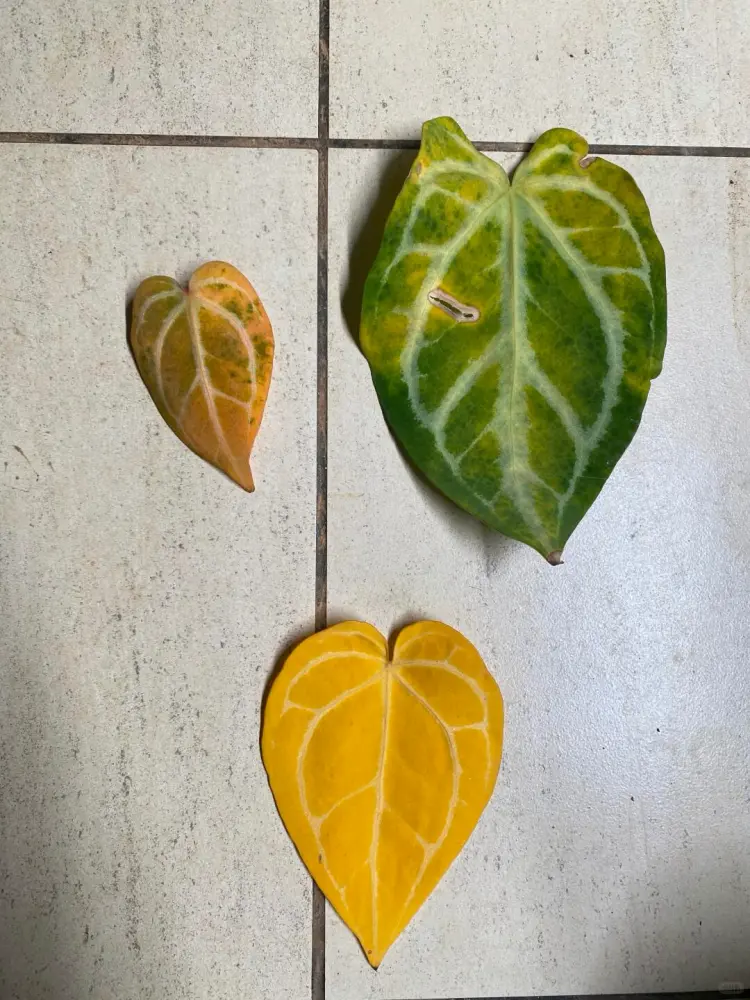
And finally, I look at the plant as a whole. Is it still pushing new leaves? Are they opening normally? Or has everything slowed down? Yellowing on its own does not always mean much. Yellowing plus stalled growth usually tells me I need to take a closer look.
What I Actually Do When Yellow Leaves Show Up
After years of growing Anthuriums, I’ve learned that the best approach to yellow leaves is observation first, action second. Once you’ve figured out why a leaf is yellow, here’s how I handle the different situations in my own home.
Pruning Yellow Leaves
I usually cut off yellow leaves close to the base with clean scissors. Once a leaf has fully turned, it is not going green again, so I would rather let the plant focus on healthier growth. If it is just one older leaf aging out, I do not see it as urgent, but I usually remove it for appearance and to keep the plant tidy.
Adjusting Light Exposure
Bright, indirect light is usually perfect, but I learned the hard way that even a short exposure to strong sun can scorch large leaves (case1). I moved the plant a few feet back from the window or provided sheer curtains to filter the light. Over time, I could see new leaves developing fully without yellowing, even during the summer. Watching how your plant responds after light adjustments is key—sometimes a small shift makes all the difference.
Humidity and Ventilation
Older leaves can fade if humidity is too low or air is stagnant. One plant had half-yellow older leaves and stunted new growth (case4). By moving it to a more ventilated spot and gradually increasing humidity with a small humidifier, I watched it recover over a few months. The old leaves didn’t come back, but the new ones grew strong and healthy. A gentle balance is better than flooding the air with moisture all at once.
Checking Roots and Repotting
When yellowing keeps spreading or growth stalls, I usually check the roots rather than guessing from the leaves alone. If I find rot, I trim away the damaged parts and repot into a chunkier, better-aerated mix. If the roots are not rotten but the mix feels dense, stale, or slow to dry, I may still refresh the soil. In my experience, some plants do not start looking better until the root zone feels better first.
Watering and Nutrient Management
Sometimes the issue is not rot, but roots that are alive without being especially active. In that situation, I try to make the root zone easier to work with: I let the top part of the mix dry slightly, then water thoroughly and let the excess drain away. During active growth, I may also use a weak balanced fertilizer. I do not try to fix everything at once, because stressed Anthuriums usually respond better to small, steady adjustments than to big changes.
A Few Mistakes That Made Yellowing Worse for Me
When I first started growing Anthuriums, I made a lot of mistakes that led to unnecessary yellowing. Over the years, I’ve learned a few things that are worth sharing so you can avoid the same pitfalls.
One of the easiest ways to trigger yellowing is to give an Anthurium more direct summer sun than it can actually handle. I learned that the hard way with one of my larger leaves. Anthuriums may like bright light, but bright indoor light and harsh direct sun are not the same thing.
It is also easy to mix up overwatering and underwatering, because both can lead to drooping, yellowing, and a plant that looks generally unhappy. That is why I check the mix and roots before I decide what to do next.
I’ve also learned not to ignore root signs until multiple leaves have yellowed. On a few occasions, I discovered root rot only after the yellowing had spread across several leaves (case2). Regularly checking roots—even when the plant seems okay—can prevent major problems.
Finally, it’s important to adjust for seasonal light changes, especially in a place like Vancouver. Winter light is much weaker than summer light, so a spot that works in July may be too dim in January. Paying attention to how your plant grows throughout the year helps prevent stress-induced yellowing.
When to Really Worry About Yellow Leaves
After watching a lot of Anthuriums go through different stages at home, I no longer treat every yellow leaf as an emergency. Quite a few of them are simply older leaves being phased out while the rest of the plant carries on just fine. I pay much more attention when yellowing comes with soft roots, weak growth, or leaves that look dull and off rather than cleanly aged.
In real homes, the bigger picture matters more than any single yellow leaf. Light placement, root health, potting mix, and watering rhythm usually tell the real story. Once you get used to looking at those patterns together, it becomes much easier to tell the difference between a leaf that is naturally on its way out and a plant that actually needs help.
FAQ
Still unsure what your Anthurium is trying to tell you?
Yellow leaves are just one clue. If you’re noticing drooping stems, curling, or slow new growth, I’ve gathered the most common Anthurium problems—plus the real-life adjustments that helped my plants thrive.
Go to Problems Hub →