I did not start with a perfect setup for anthurium pollination. I only had one mature anthurium at the time, so if I wanted seeds, self-pollination was my only real option.
The first bloom opened in April. When it started producing pollen, I collected what I could, wrapped it carefully, added desiccant, and stored it in the refrigerator. At that point, I honestly was not sure whether it would still be useful months later, but I wanted to try.
In August, the second bloom opened. By late August, the spadix started showing that sticky, receptive stage, so I took out the stored pollen and applied it across the spadix. Then came the long part: waiting.
It took months before the berries finally matured. By November, I could finally harvest the seeds, clean them, and sow them. After almost eight months of watching this process, I finally understood why growing anthuriums from seed feels so different from a simple cutting or division.
This guide is based on that experience — when to pollinate, how I stored the pollen, how I judged ripe berries, and how I sowed the fresh seeds afterward.
The Timing: Female Phase First, Male Phase Later
Anthurium pollination is mostly about timing. What most of us call the “flower” is actually an inflorescence. The part we usually notice is the spadix — the upright spike that holds many tiny flowers along its surface.
The part that confused me at first was that the spadix does not usually become receptive and release pollen at the same time. It normally enters the female phase first. During this stage, the surface of the spadix may look slightly shiny, sticky, or wet. Some growers describe this as the spadix “sweating,” but I think of it more simply as the receptive stage.
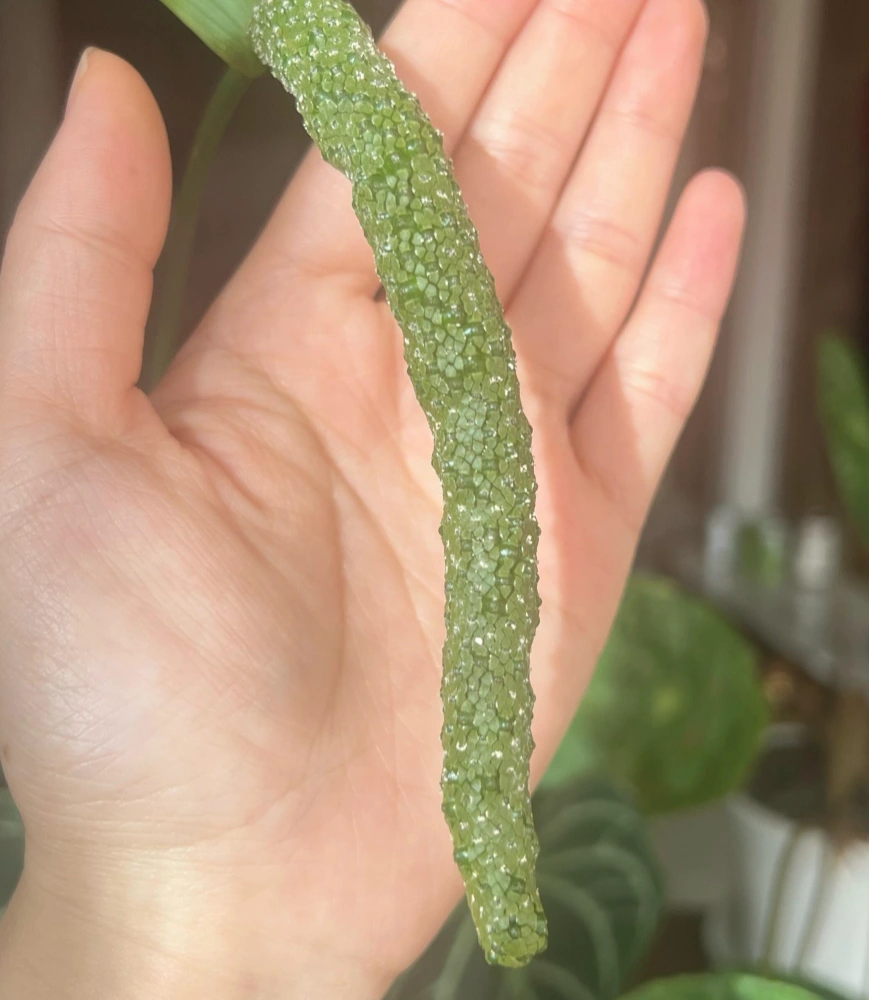
That sticky stage is the moment I want to catch. This is when the spadix is ready to receive pollen. If I have stored pollen, or pollen from another anthurium, I apply it during this window and try to spread it evenly over the receptive area.
Later, the same spadix enters the male phase and starts releasing pollen. By then, it may be too late to use that pollen on the same spadix because the receptive female stage may have already passed.
So my simple rule is:
Pollinate when the spadix is sticky, not when it is already releasing pollen.
How I Collected and Stored Anthurium Pollen
Once the spadix moved into the male phase, I started watching for pollen. At this point, the surface no longer looked sticky and receptive. Instead, small powdery pollen began to appear.
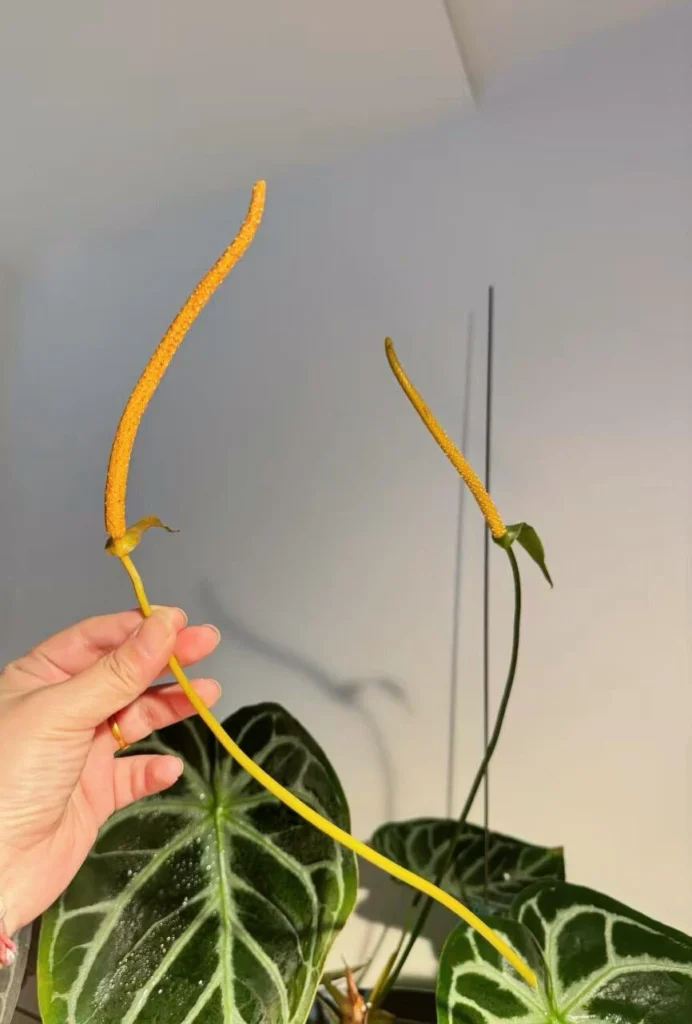
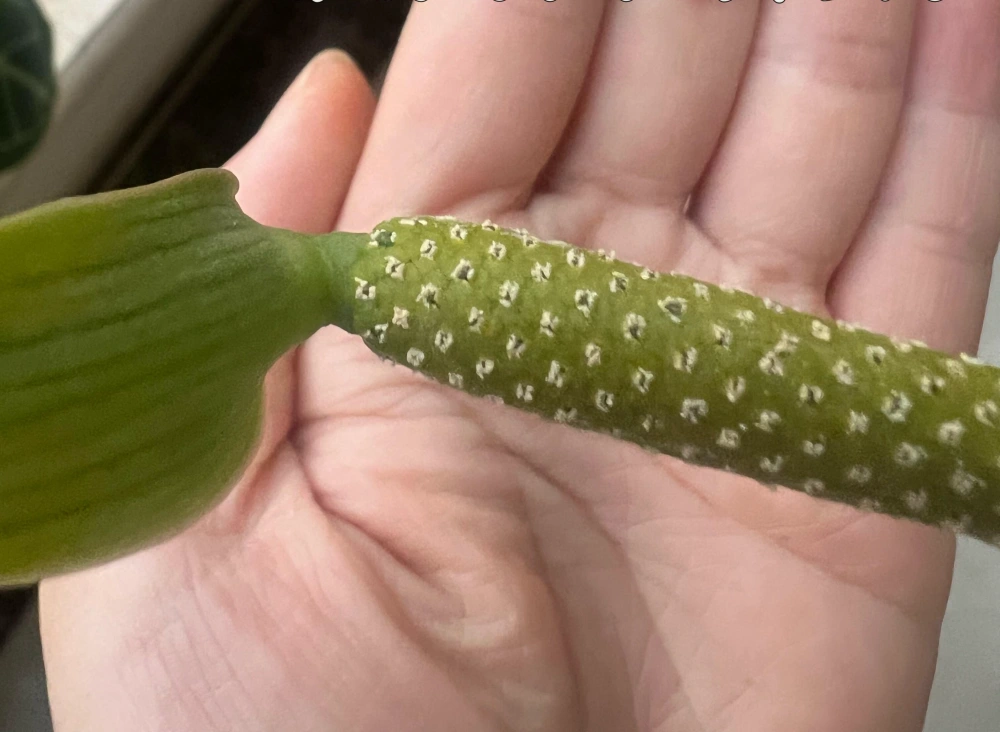
My first bloom produced pollen in April, but I did not have another receptive spadix at the same time. Since I only had one mature anthurium, saving the pollen was the only way to use that bloom later.
I collected the pollen as carefully as I could and kept it dry. Moisture is the thing I wanted to avoid most, because damp pollen is much more likely to clump, spoil, or become useless before the next bloom is ready.
What I did was simple:
- I collected the pollen during the male phase.
- I wrapped it in foil.
- I added desiccant to help keep it dry.
- I stored it in the refrigerator.
- I kept it until the next bloom entered the female phase.
If you have more than one anthurium, I would also label the packet with the plant name and date. It is easy to think you will remember, but after a few weeks or months, pollen packets can become confusing very quickly.
Stored pollen can work, but I would not treat it as guaranteed. Fresh pollen is always safer, and storage conditions matter a lot. In my case, the stored pollen from April was still useful when I pollinated the next bloom in late August, but I would still collect and use pollen as fresh as possible whenever I can.
How I Pollinated the Next Anthurium Bloom
When the second bloom opened in August, I waited for the spadix to enter the female phase. I did not pollinate as soon as the bloom appeared. I watched for the surface to become glossy, sticky, or slightly wet.
By late August, I could see sticky fluid on the spadix. That was the window I had been waiting for.
I took the pollen I had stored from the first bloom and applied it across the spadix. You can use a small brush, a cotton swab, or even a clean fingertip. The main thing is to spread the pollen evenly over the receptive surface instead of only touching one small spot.
If the spadix stays sticky for more than one day, I would repeat the process. Pollinating over two or three days gives you a better chance of catching the receptive period properly.
After that, I left the plant alone as much as possible. I did not repot it, move it around, or suddenly change my watering rhythm. Once pollination is done, the best thing you can do is keep the plant stable and wait.
Did It Work? What I Watched For After Pollination
One thing that surprised me was that the spadix can still release pollen after you pollinate it. That does not automatically mean the pollination failed. The male phase may still happen afterward, even if the female phase has already received pollen.
So I did not judge the result too early. Right after pollination, there was not much to see. The real signs came later.
If the spadix starts turning yellow, shrivels, dries out, and nothing begins to swell, I would usually assume the pollination did not take. But if small berry-like bumps begin to form, stay firm, and slowly become more raised from the spadix, that is a much better sign.
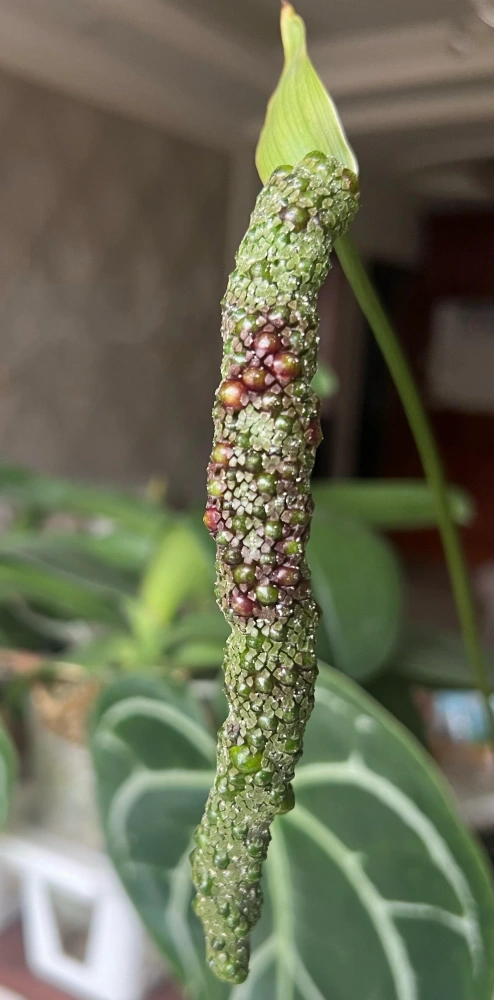
At this stage, I still would not harvest anything. I only treat it as a sign to keep the plant stable and keep waiting. Pollination is quick, but seed development is slow.
How to Tell When Anthurium Berries Are Ripe
Anthurium seeds develop inside small berries along the spadix. Many growers call them “seed pods,” but technically they are berries.
This part can take patience because different anthuriums do not all ripen at the same speed or in the same color. Some berries may turn brighter, some stay more muted, and the timing can vary depending on the plant, temperature, light, and overall strength.
What I look for first is shape and texture. Ripe berries usually look swollen, full, and raised from the spadix. They no longer look flat or tightly tucked into the surface. When they are really ready, they may loosen easily when touched, and some may almost fall away on their own.
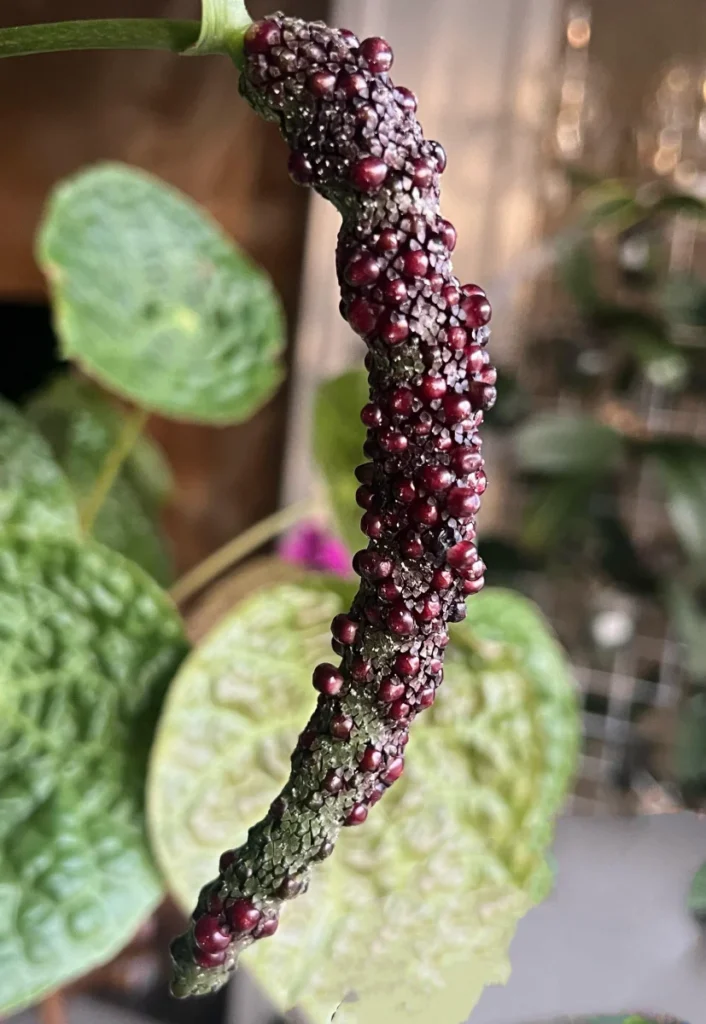
If the berries are still flat, tight, or firmly attached, I would wait longer. Harvesting too early is one of the easiest ways to end up with weak or undeveloped seeds.
Once most of the berries look ripe, I harvest them and clean the seeds soon after. If only part of the spadix is ready, I sometimes leave the unripe section longer. Some growers also cut the spadix and keep it in water for a little while so the remaining berries can continue finishing, but I would still watch it closely and avoid letting it rot.
For me, the best sign is not just color. It is when the berries look full, raised, and ready to detach with very little force.
How I Cleaned and Sowed the Seeds
Once the berries were ripe, I cleaned the seeds before sowing them. Anthurium seeds are not like dry garden seeds that come ready to store in a packet. They sit inside soft berry pulp, and that outer coating needs to be removed first.
I opened the ripe berries and gently rinsed the seeds in water. Some berries had more than one seed inside, so I checked carefully instead of assuming one berry meant one seed. Then I rubbed the seeds lightly in water to remove the soft coating around them.
I do not leave cleaned anthurium seeds sitting around for long. Fresh seeds are worth sowing quickly because they do not store well like dry seeds from many garden plants.
For sowing, I placed the seeds on moist chopped sphagnum moss. I did not bury them deeply. I only made sure they had good contact with the damp moss, then kept them in a clear propagation box to hold humidity.
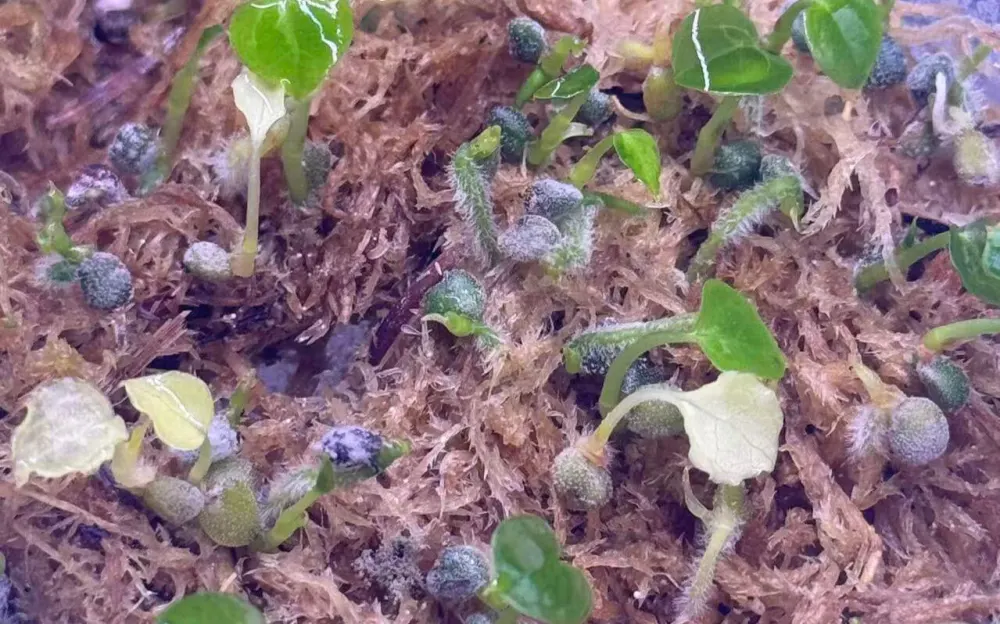
The setup I wanted was simple:
- moist chopped sphagnum moss
- fresh cleaned seeds placed on the surface
- high humidity
- gentle warmth
- bright but not harsh light
- occasional airflow if the box became too wet inside
For fresh seeds, I like starting with chopped sphagnum moss, but once seedlings are larger and rooted, I would eventually move them toward a more airy anthurium potting mix instead of keeping them in a constantly wet setup.
My Timeline From Pollen to Ripe Seeds
This was not a fast process. From the first bloom to ripe berries, the whole timeline took about eight months in my indoor setup.
Here is how it happened for me:
- April: the first bloom opened and later produced pollen.
- April: I collected the pollen, wrapped it in foil, added desiccant, and stored it in the refrigerator.
- August: the second bloom opened.
- Late August: the spadix entered the female phase and started showing sticky fluid.
- Late August: I applied the stored pollen across the receptive spadix.
- November: the berries finally matured enough to harvest and clean the seeds.
So in my case, the stored pollen sat for several months before I used it, and the berries still needed a few more months after pollination to ripen.
I would not use my timeline as an exact rule for every anthurium. Some plants may take longer or shorter depending on the species, temperature, light, plant strength, and how stable the growing conditions are. But it gave me a realistic expectation: anthurium seed propagation is not something you finish in a few weeks. Most of the work is waiting and keeping the plant steady.
What I Learned From My First Anthurium Seeds
The biggest lesson for me was patience. Pollinating the spadix only took a few minutes, but waiting for the berries to swell and ripen took months.
I also learned not to judge the process too early. A pollinated spadix may still release pollen later, and the real sign is not immediate. I had to wait for the berries to stay firm, rise from the spadix, and finally loosen when they were mature.
For me, the most exciting part was not just getting seeds. It was watching the whole cycle happen indoors — pollen stored from one bloom, berries swelling on the next, and fresh seeds finally ready to sow. That slow process made the seedlings feel much more personal than any plant I could have bought.
FAQ
Still figuring out what works for your anthurium?
Light, watering, humidity, soil, and root health all affect how an anthurium grows at home. If you’re still comparing care routines or trying to build a setup that actually works indoors, my main anthurium care page brings the most useful guides together in one place.
Go to Care Hub →