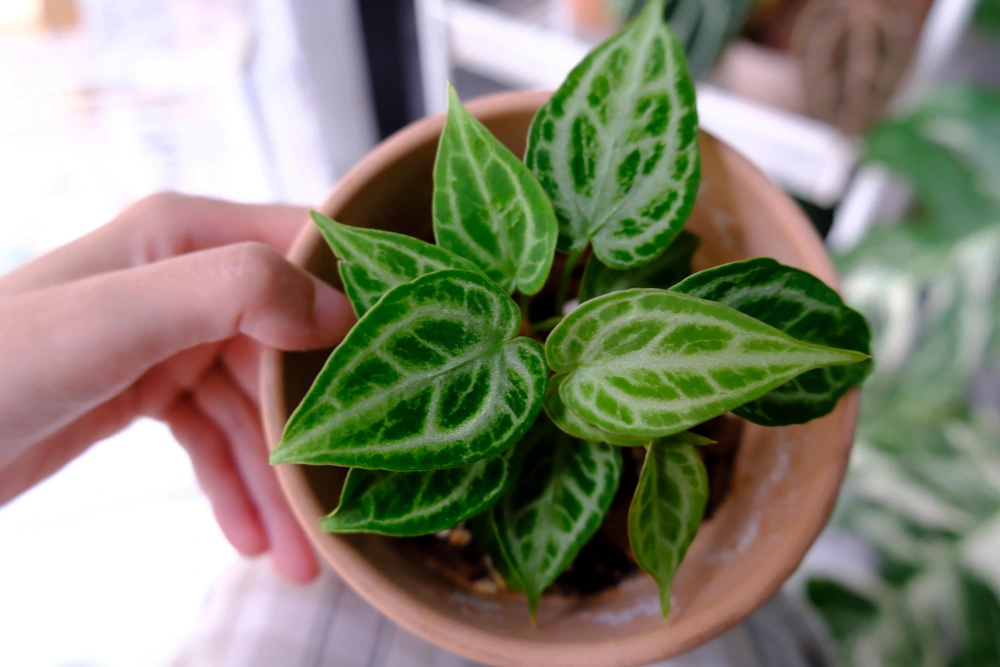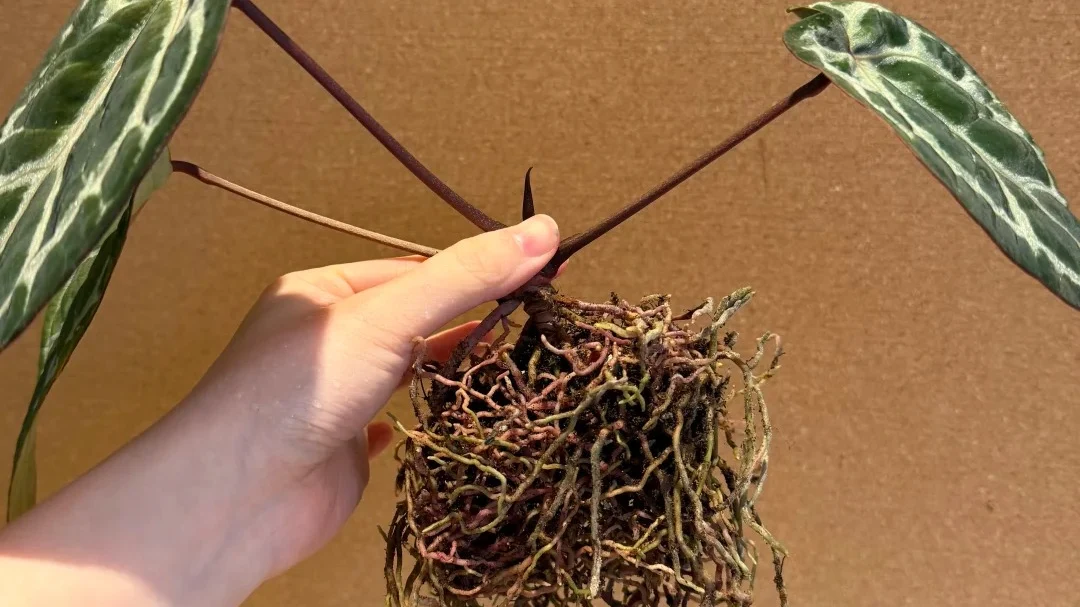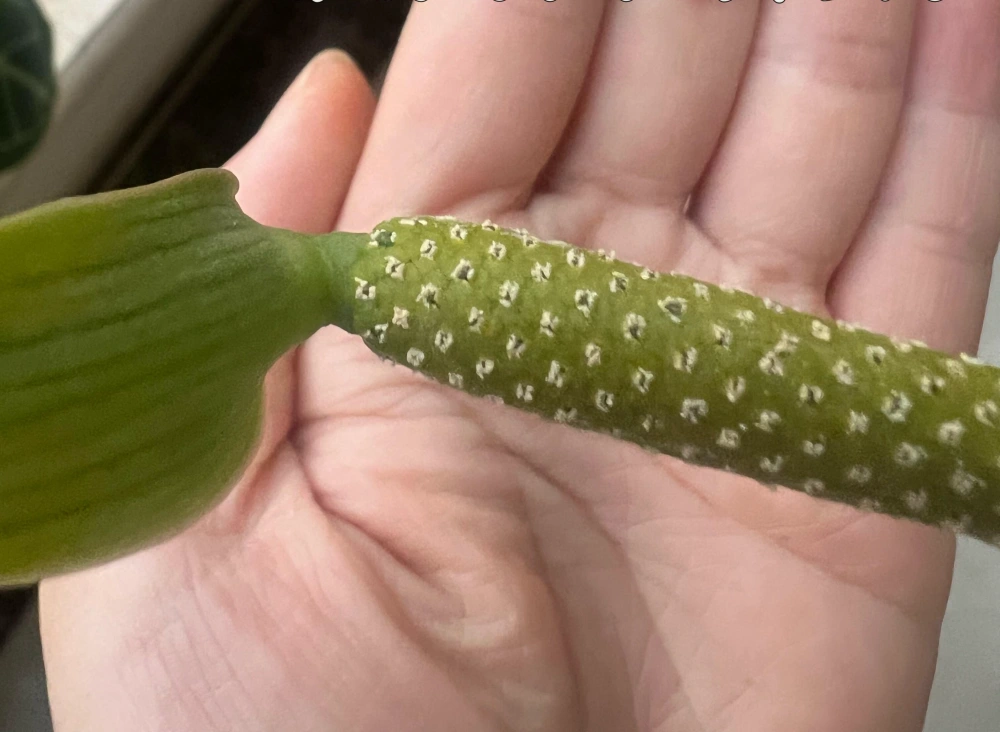
Fall always surprises me a little with aroids. Just when I start thinking the growing season is slowing down, some of my anthuriums begin pushing new leaves again. The large ones move, the small ones move, and suddenly every morning there is something new to check.
This Anthurium ‘Dorayaki’ hybrid was one of those plants. I had repotted it after bringing it home, so I was watching it closely for any sign of stalled growth. I always worry a little after repotting a new anthurium, especially if the roots were disturbed or the plant had just changed environments.
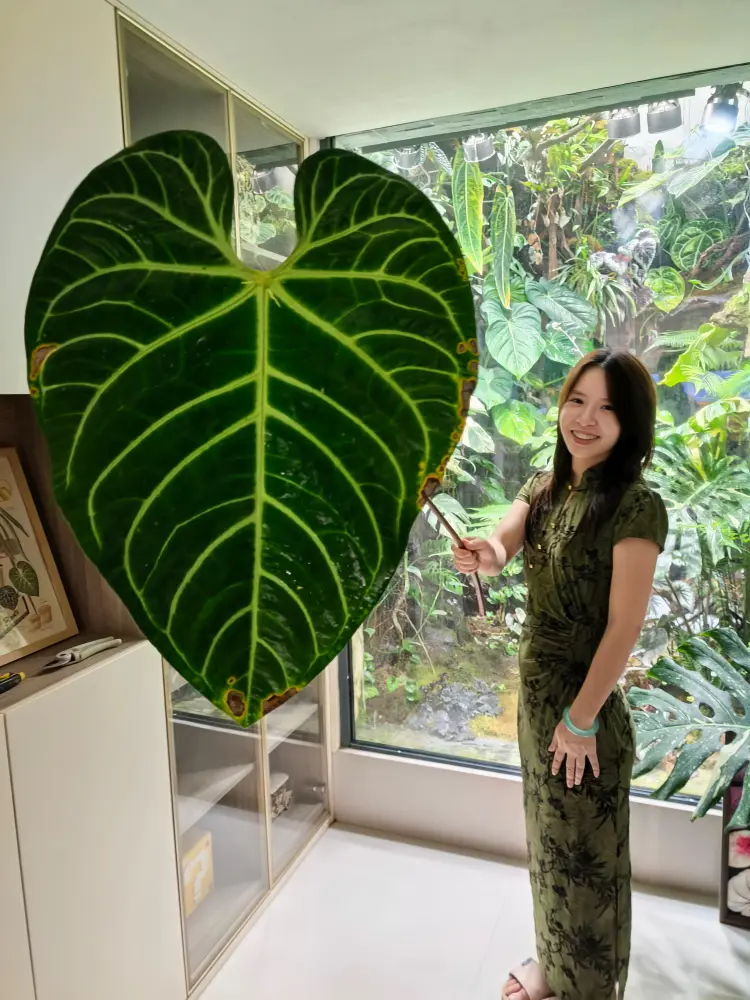
But this one settled faster than I expected. From the first visible new growth to the leaf reaching its current size, it took a little over 20 days. The new leaf sized up much more than I thought it would, and I found myself checking it constantly — in the morning, at night, and sometimes even half-asleep on the way to the bathroom.
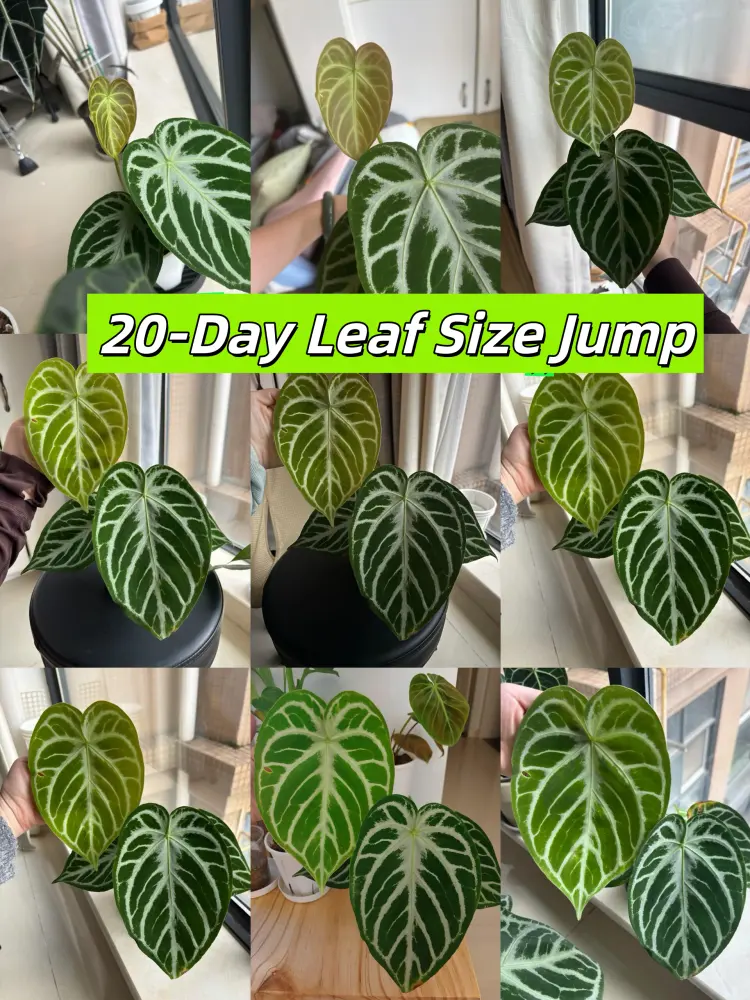
I cannot prove that every detail of my care caused the leaf size jump. I also do not know whether an anthurium leaf’s final size is already mostly decided the moment it emerges. But I do think the conditions during leaf expansion matter. In this case, at least, I feel like I did not disturb the plant while it had the energy to grow.
The Setup That Helped This Dorayaki Hybrid Settle In
I repotted this Anthurium ‘Dorayaki’ hybrid after bringing it home, so the first thing I wanted was stability. I was not trying to push it hard right away. I just wanted the roots to settle into the new pot without the plant getting stuck.
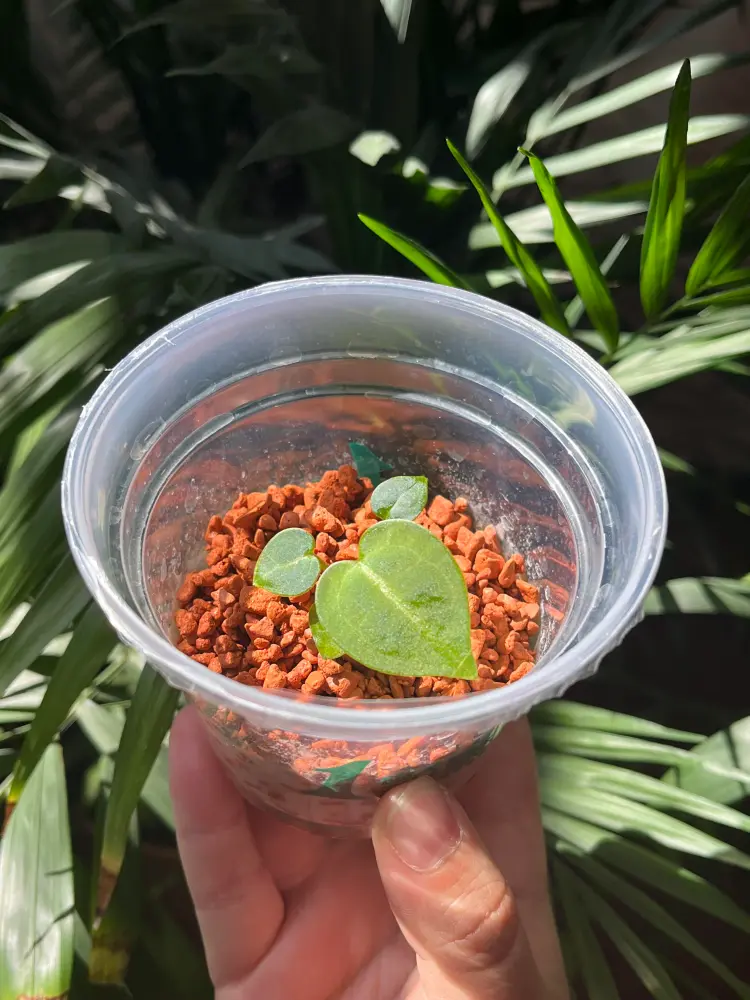
The mix I used was a chunky aroid mix. It held some moisture, but it still had enough air around the roots. That mattered because this plant ended up needing water a little more often than some of my other anthuriums. If the mix had been dense or slow to dry, the same watering rhythm could have caused problems.
I also kept a fan running for steady airflow. For me, airflow is one of the reasons I can water more confidently. It helps the pot breathe, keeps the surface from staying stale, and makes the whole setup feel less stagnant.
The timing helped too. This happened in fall, when many of my aroids started moving again indoors. The plant did not stay stalled for long after repotting, and once I saw it pushing new growth, I tried not to keep changing things.
For this plant, the leaf size jump did not come from one trick. It was more about the whole setup working together: roots settling in, a chunky mix, steady airflow, the right watering rhythm, enough light, and mild feeding while the plant was already ready to grow.
Watering: More Often, but Only Because the Mix Could Handle It
This plant needed water a little more often than some of my other anthuriums. I did not wait until the whole pot was dry. Once the surface looked dry, but the mix about 2–3 cm below still felt lightly moist, I watered it thoroughly.
That rhythm worked for this plant, but I would not use it as a rule for every anthurium. The reason it worked was the setup. The plant was in a chunky, airy aroid mix, and I had a fan running every day. The pot did not stay stale or heavy for too long after watering.
In a denser mix, or in a room without much airflow, the same watering habit could easily become too much. The roots might stay wet instead of active, and that is where stalled growth or root stress can start.
So I was not watering often because “anthuriums love water.” I was watering often because this plant, in this mix, with this airflow, was using water well. That difference matters a lot.
Feeding: Weak and Consistent, Not Heavy
I also fed this plant lightly while the new leaf was developing. I added a very small amount of balanced water-soluble fertilizer to the water, but I kept the dose weaker than the label rate.
For example, if the label rate was around 1 g per liter, I used about 0.5 g per liter or less.
I only did this because the plant was already active. The new leaf was moving, the pot was drying normally, and the roots seemed able to use the water and nutrients. If the plant had weak roots, cold conditions, or a mix that stayed wet for too long, I would not feed this way.
I do think weak, consistent feeding helped support the new leaf, but I would not say fertilizer was the whole reason it sized up. Fertilizer works best when the plant already has the energy to grow.
For me, the rule is simple: weak feeding can support an active anthurium, but it should not be used to force a plant that is already stalled.
Light: The Biggest Change I Made
The biggest change I made was light. At first, this plant was in my living room with normal indirect light. It was not dark, but it was not the brightest spot in the house either.
Once the new leaf started moving, I moved the plant closer to the balcony, where it received much brighter indirect light. I think that made a real difference while the leaf was expanding. The plant seemed to have more energy, and the new leaf kept sizing up instead of opening small and stopping early.
But I also noticed a trade-off. The brighter position may have kept the petiole a little shorter. The leaf became large, but the stem did not stretch much, so the new leaf slightly overlapped with the older leaves.
That is not a serious problem, but it is something I would watch next time. Bright light helped, but more light is not automatically better in every way. With this plant, I may have gained leaf size while losing a little spacing, so next time I might adjust the placement more carefully while the new leaf is expanding.
What I Think Actually Made the Leaf Size Up
I do not think one single thing made this Anthurium ‘Dorayaki’ hybrid size up. It was not just fertilizer, and it was not just brighter light. The plant had already settled after repotting, the mix was airy enough, the watering matched the airflow, and the new leaf developed during a good growing window.
I cannot say for sure whether the final leaf size was already decided when the new leaf first emerged. But I do think the plant had enough support while the leaf was expanding.
The way I see it, I did not “force” the leaf to jump in size. I mostly avoided disturbing the plant while it already had the energy to grow.
My Takeaway From This Dorayaki Leaf
The leaf is almost at its full size now, but it is still soft and tender. I am waiting for it to harden off before I judge the final color, texture, and shape.
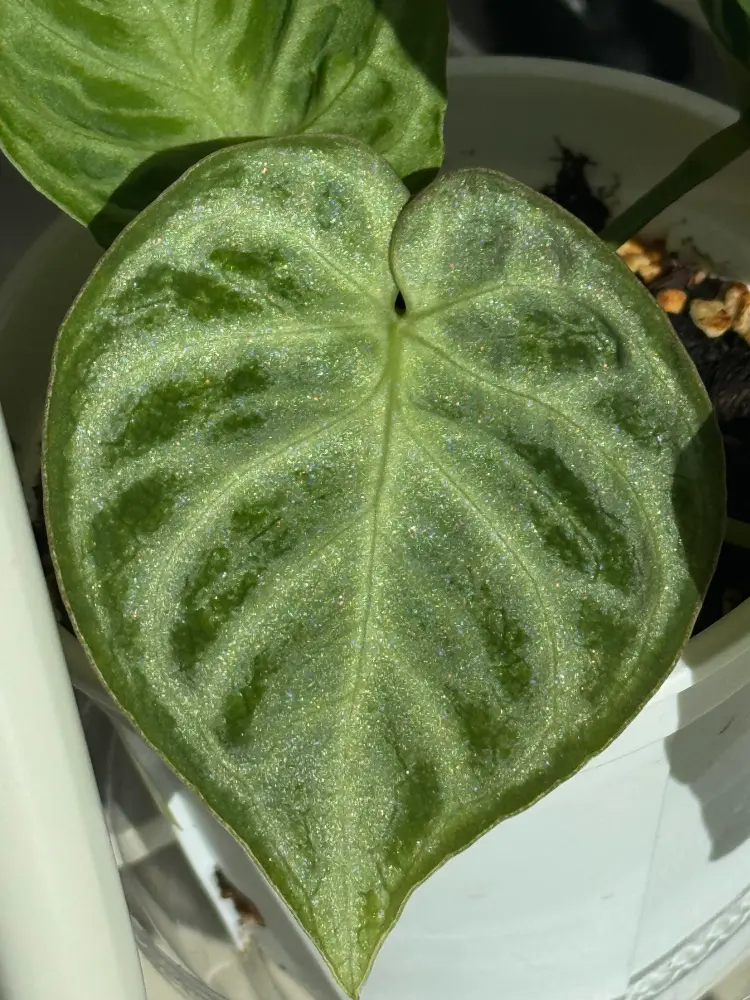
This is honestly one of my favorite parts of growing anthuriums indoors. A new leaf changes so much day by day. One morning it looks folded and small, and then suddenly it starts opening wider, stretching out, and showing the shape you have been waiting for.
This leaf also reminded me that leaf size and texture are not about one single input. The plant had brighter light, a chunky mix, steady airflow, enough moisture, and a stable window while the new leaf was forming.
For this Anthurium ‘Dorayaki’ hybrid, I do not think I forced the leaf to size up. I mostly gave it a stable window to do what it was already ready to do.
FAQ
Still comparing Anthurium varieties?
If you’re trying to figure out which anthuriums are actually worth growing indoors, my Anthurium varieties hub is a better place to compare leaf texture, growth habits, and overall difficulty side by side.
Explore Anthurium Varieties →