Brown leaves used to confuse me more than yellow ones. Brown leaves used to confuse me more than yellow ones. Yellowing at least feels easier to read. Browning can mean a lot of different things. Sometimes it is just a dry edge on an older leaf. Sometimes the whole leaf turns a muddy brown and makes the plant look suddenly unwell. And sometimes what looks alarming at first turns out to be completely normal new growth.
After seeing this happen in a few different ways at home, I stopped assuming every brown leaf meant the same thing. In my experience, browning can come from dry air, harsh light, root stress, pests, or simply the way a new leaf emerges before it hardens off and turns green.
So in this article, I am not trying to give one neat answer to every brown leaf. I want to show the different patterns I have actually seen, because that is usually the most useful place to start. Once you can tell one kind of browning from another, it gets much easier to decide whether the plant needs help or just needs time.
Real Browning Patterns I’ve Actually Seen at Home
Brown leaves on an Anthurium can look similar at a glance, but in real life, they do not always come from the same problem. Some are caused by dry air and harsh light. Some come from pests that are easy to miss at first. And some are not really a problem at all, even if they look alarming in the beginning.
These are three kinds of browning I have personally dealt with, and they taught me to slow down and look more closely before assuming the worst.
Sometimes It Really Is Just One Older Leaf Aging Out
Not every brown Anthurium leaf is tied to stress or pests. Sometimes an older leaf near the base simply starts drying out and browning as it reaches the end of its cycle. If the rest of the plant still looks good and new growth is continuing, I usually do not treat that as a real issue. I may remove the leaf for appearance, but I do not start changing the whole setup over one older leaf like that.
A Brown Leaf That Turned Out to Be Too Much Sun, Dry Air, and a Pot That Was Not Dry Enough
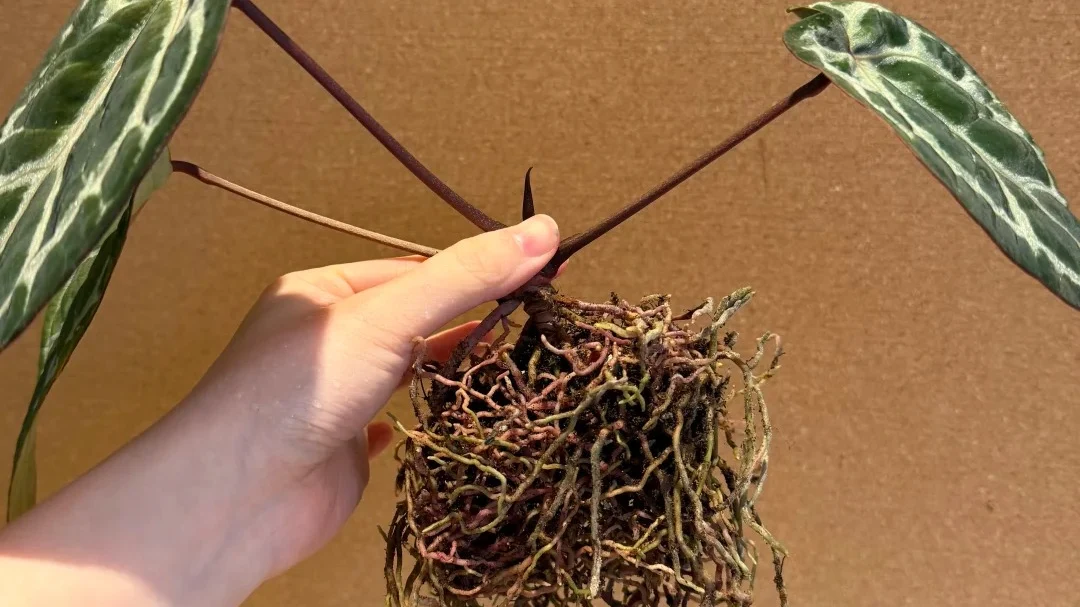
One time, I noticed one of my Anthurium leaves starting to brown and I could not immediately tell whether it was from thirst, root stress, or something else. I checked the roots first and they actually looked healthy, which ruled out the kind of obvious rot I was worried about. But around that time, temperatures had gone up, the air had become drier, and I had placed the plant in a spot with stronger sun than usual.
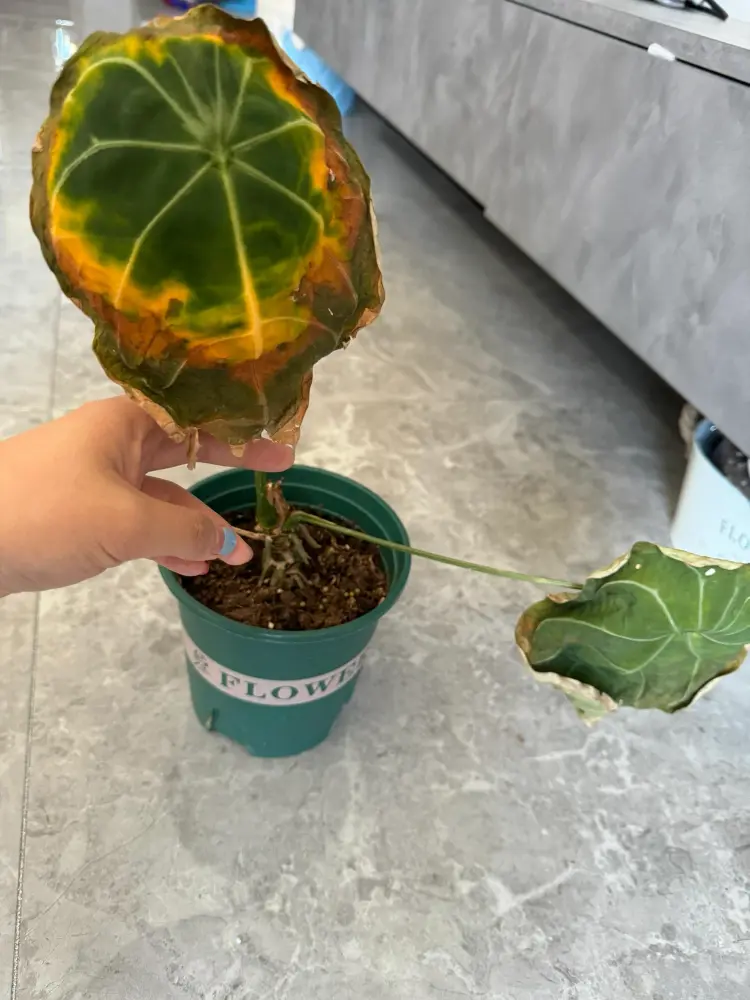
What made it more confusing was that watering seemed to make the browning worse rather than better. That was the point when I stopped guessing and started checking the potting mix more carefully with my finger. If I pushed my finger deep into the mix and it felt dry, then I knew the plant was likely dealing with dryness or uneven moisture. If it still felt damp well below the surface, then I started thinking less about thirst and more about roots sitting too wet or a mix that was staying heavy for too long.
That experience taught me that brown edges do not always mean “water more.” Sometimes the real problem is a plant dealing with heat, dry air, strong light, and a root zone that is no longer drying evenly. In situations like that, I would rather reassess the potting mix than keep adding water blindly. If the mix feels too dense or slow to dry, I usually think about rebuilding it with more air space, using ingredients like perlite and pine bark to make it easier on the roots.
The Leaf Looked Dark Brown From Stress, but Pests Were the Real Problem
I also had a plant that developed a kind of dull, dark brown damage after a period of fluctuating temperature and humidity. At first, I assumed the plant had simply grown badly during a rough patch of weather. The leaf color looked muddy and uneven, and the whole plant just seemed off. But once I looked more closely, the pattern did not feel quite right for a simple environmental issue.
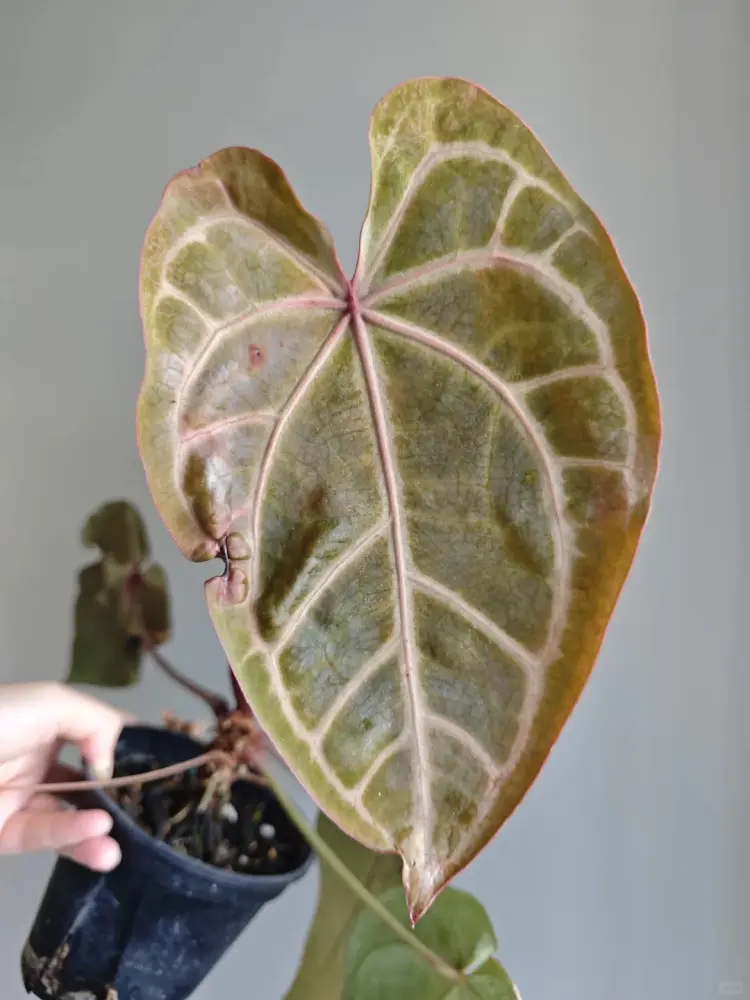
That was when I noticed there were feeding marks from thrips, and when I turned the leaves over, I found spider mites on the back as well. What had looked like generalized stress was actually pest damage layered on top of environmental stress.
Since then, I have become much more careful about checking both the top and underside of the leaf whenever I see unusual brown patches. If the browning looks dirty, irregular, or accompanied by silvery scarring, tiny dots, or a roughened surface, I do not assume it is only about humidity or watering anymore. I start checking for pests right away.
With light infestations, I usually wipe the leaves down first and then follow up with a gentle treatment rather than jumping straight to the harshest option. The main lesson for me was simple: not every brown leaf is about roots or air. Sometimes the real cause is moving around on the leaf itself.
A New Leaf Came Out Brown, and It Turned Green Later
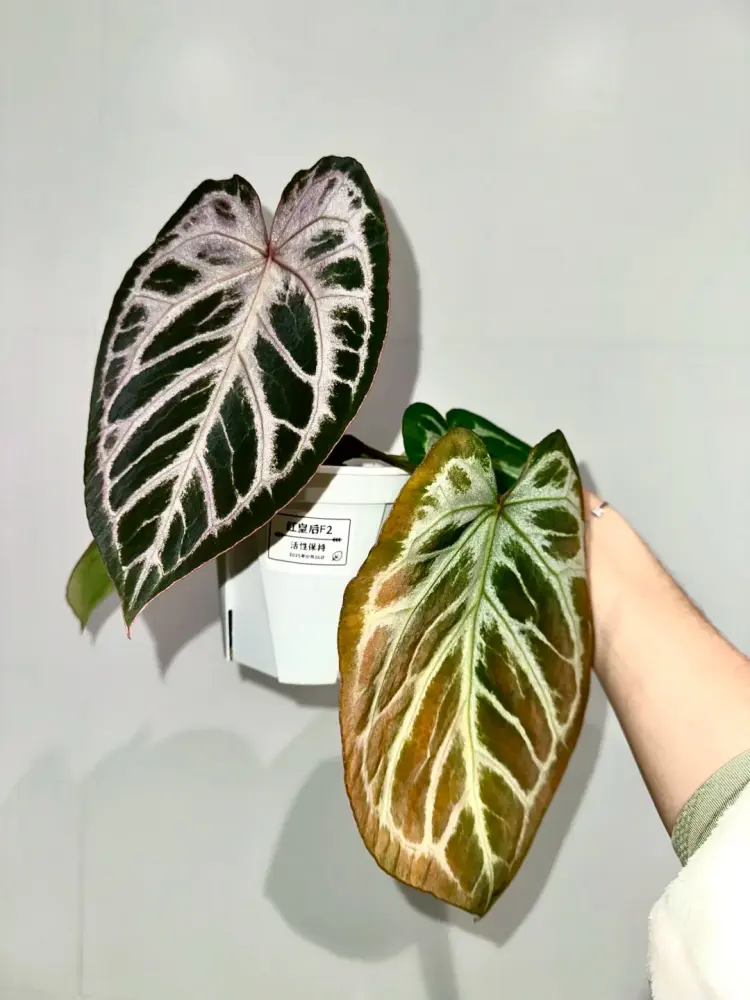
One of the things that confused me most as a newer Anthurium grower was seeing a fresh leaf come out in a brownish, yellowish, orange, or even pink tone. It looked wrong to me at first, almost like the leaf had dried out before it even had a chance to open properly. But later I realized that with some Anthuriums, this can be completely normal.
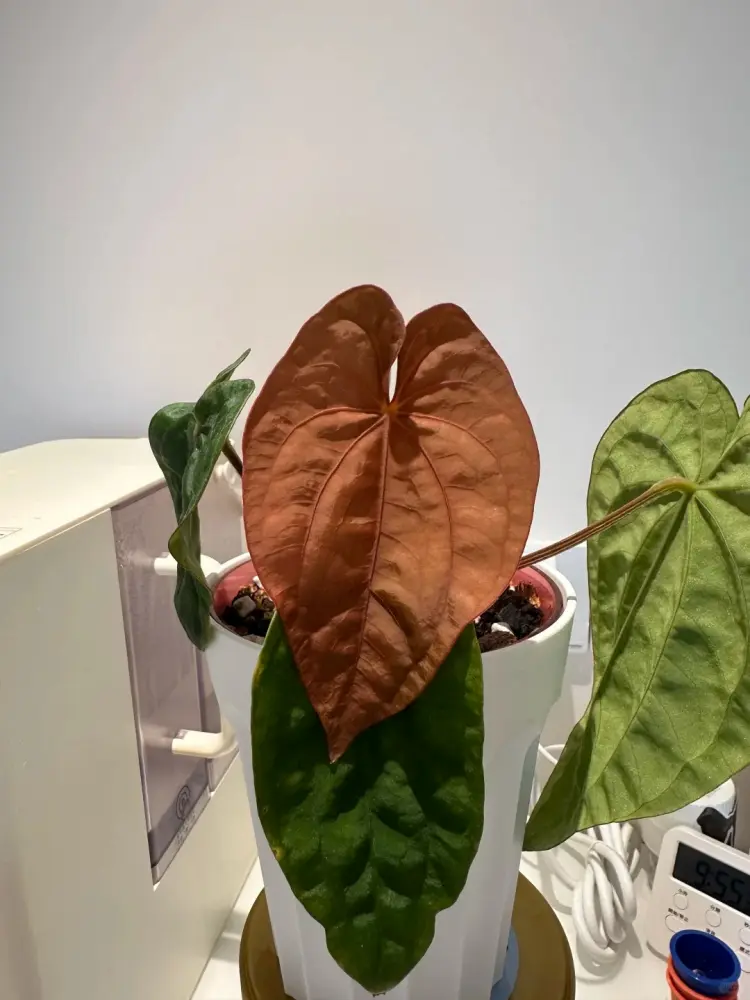
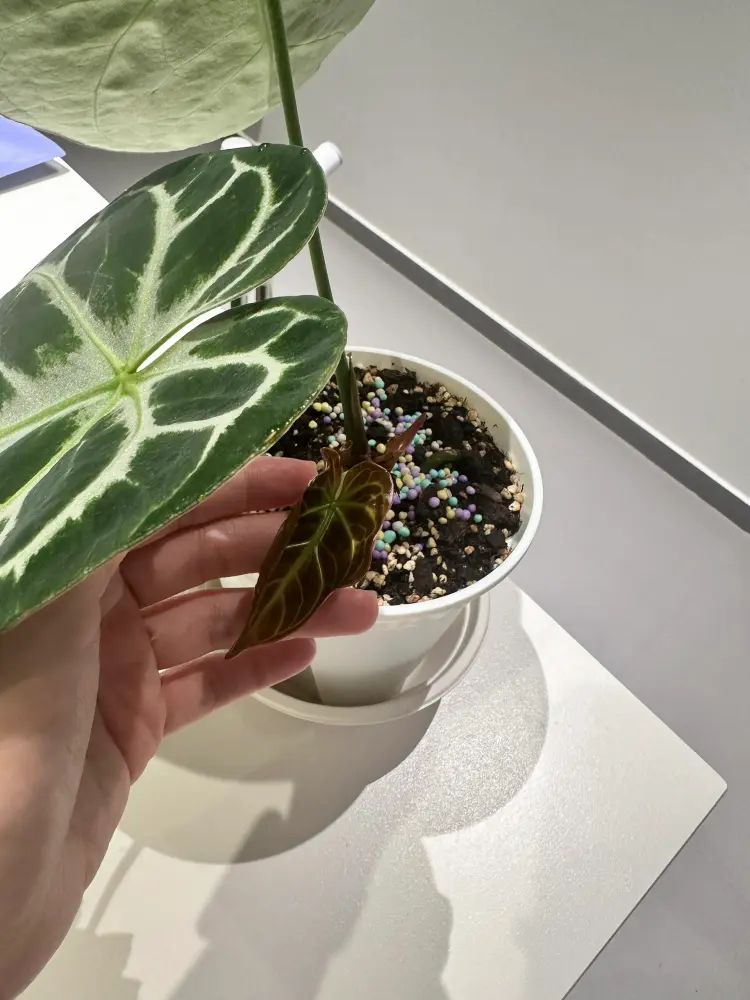
Some new leaves emerge in warm, muted colors before hardening off green. I came to understand this as part of the plant’s protective strategy. Those softer brown, bronze, orange, or pink tones may help reduce attention from insects while the leaf is still tender. Once the leaf matures, the color gradually shifts and settles into green.
Because of that, I no longer panic every time I see a brown-toned new leaf. What matters more is how the leaf develops over time. If it continues expanding, firms up, and gradually changes color, I usually leave it alone. In that situation, patience is often more useful than intervention.
What I Check Before I Assume the Worst
Before I decide brown leaves are a real problem, I usually check a few things in context. I look at which leaf is affected, whether the plant is still producing new growth, what the potting mix feels like below the surface, and whether the damage looks dry, soft, patchy, or pest-like.
If it is just one older leaf near the base, I worry much less. If it is a new leaf, several leaves at once, or browning that spreads quickly, I pay closer attention. I also try not to judge from the leaf alone. In my experience, brown leaves often make more sense once I look at the roots, the mix, and the plant’s recent conditions together.
What I Tend to Do After I Figure Out the Cause
Brown leaves used to make me react too quickly. I would water, trim, move the plant, and sometimes make the situation worse before I had even worked out what the problem actually was. Now I try to slow down first.
If the browning is limited to one older leaf and the rest of the plant still looks healthy, I usually do very little. I may remove the leaf for appearance, but I do not treat it like an emergency. Anthuriums can carry on perfectly well after losing an older leaf.
If the plant still has healthy roots and active growth, I usually start with the setup rather than the scissors. I look at the light, the humidity, the airflow, and how the potting mix is drying. In my experience, a lot of brown leaf problems improve more from small environmental adjustments than from dramatic intervention.
If something looks off beyond the leaf itself, that is when I investigate further. I check the undersides of the leaves for pests, feel deeper into the potting mix instead of judging the surface, and look at whether the roots still seem firm and functional. I have learned that the leaf is often only showing the result of a problem that started somewhere else.
I only intervene more aggressively when the whole plant starts declining — for example, when new growth stalls, multiple leaves begin deteriorating, or the root zone feels clearly wrong. That is usually the point where I consider repotting, treating for pests, or making a more deliberate change to the growing conditions.
So at this point, I do not really ask, “How do I fix this brown leaf?” I ask, “Is this one damaged leaf, or is this plant actually struggling?” That question has helped me make much better decisions over time.
When Brown Leaves Are Just Part of Growing
I do not see every brown Anthurium leaf as something that needs fixing anymore. Some are simply older leaves on their way out. Some are part of how a new leaf emerges before it fully matures. And some are genuine warning signs — but usually only when the rest of the plant starts showing it too.
That is really what I have learned from dealing with browning at home: the leaf matters, but the pattern matters more. One brown leaf is not the same as a plant that has stopped growing, lost root strength, or started declining across multiple leaves.
So before I cut, repot, water, or treat anything, I try to step back and read the whole plant first. In the long run, that has been far more useful than trying to “fix” every brown leaf the moment I see it.
FAQ
Still unsure what your Anthurium is trying to tell you?
Brown leaves are only one signal. If you’re also seeing yellowing, curling, drooping, stalled growth, or root trouble, I’ve put together the most common Anthurium problems I’ve run into indoors — and what actually helped in each case.
Go to Problems Hub →