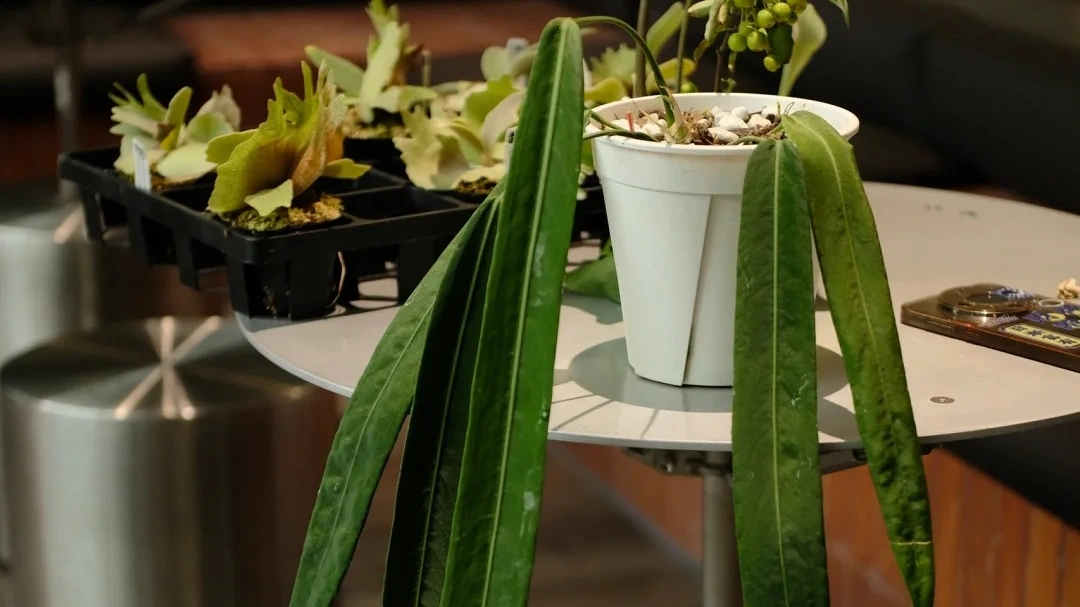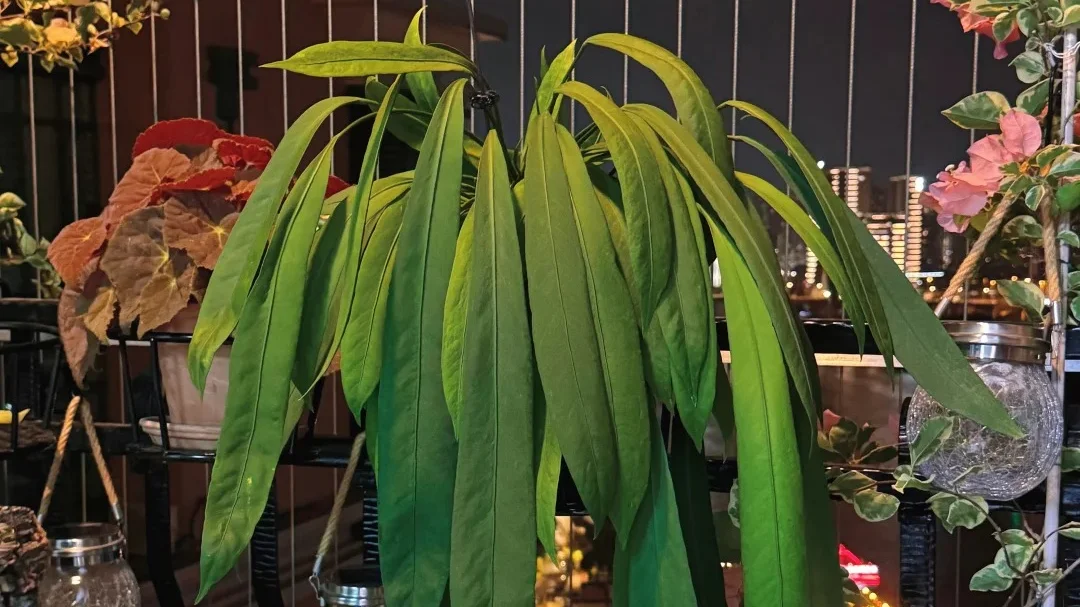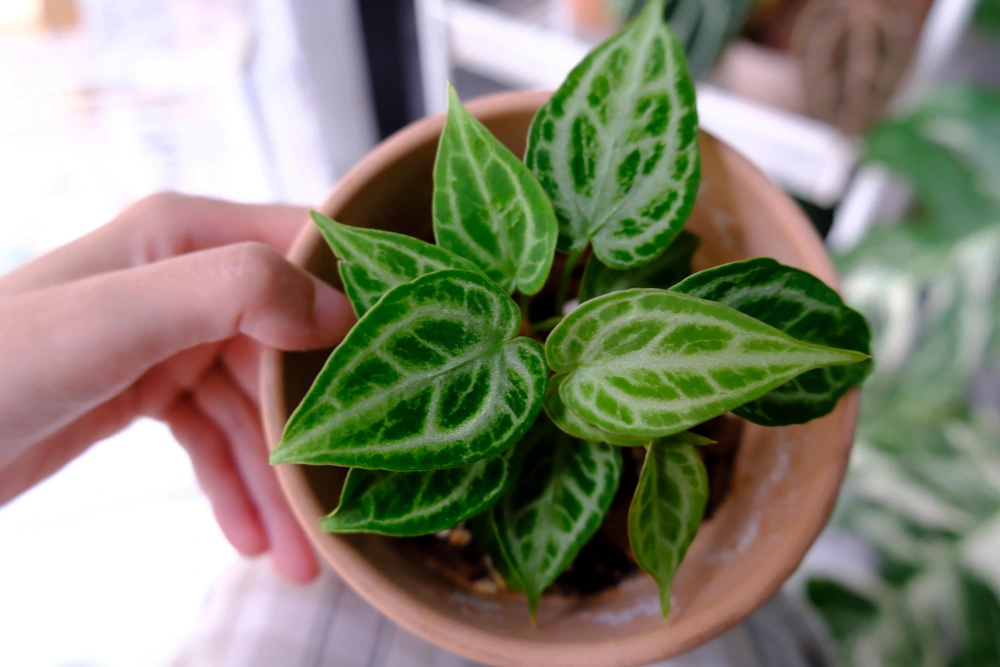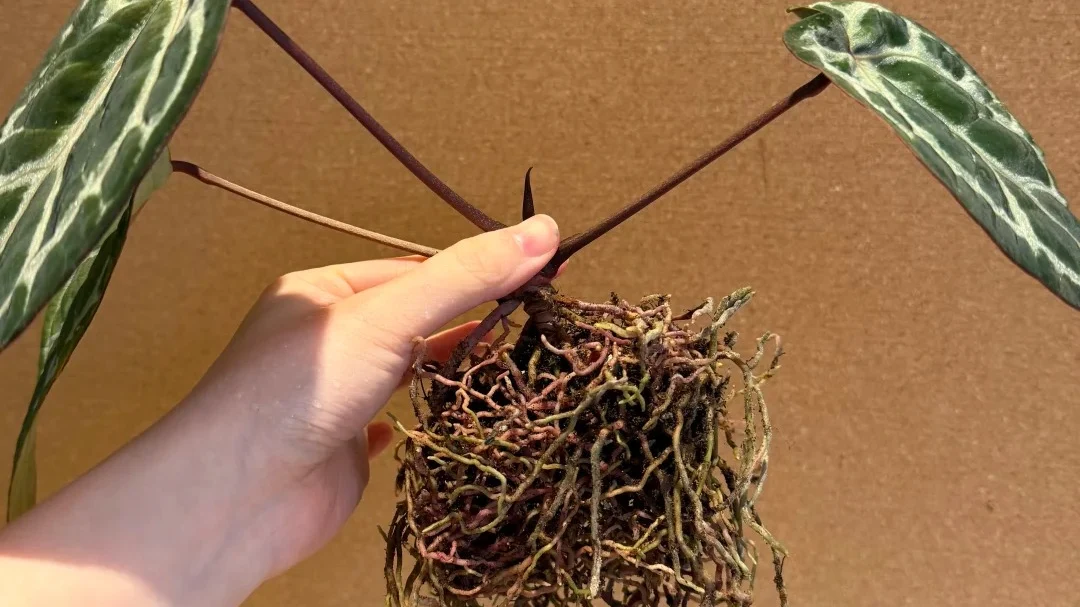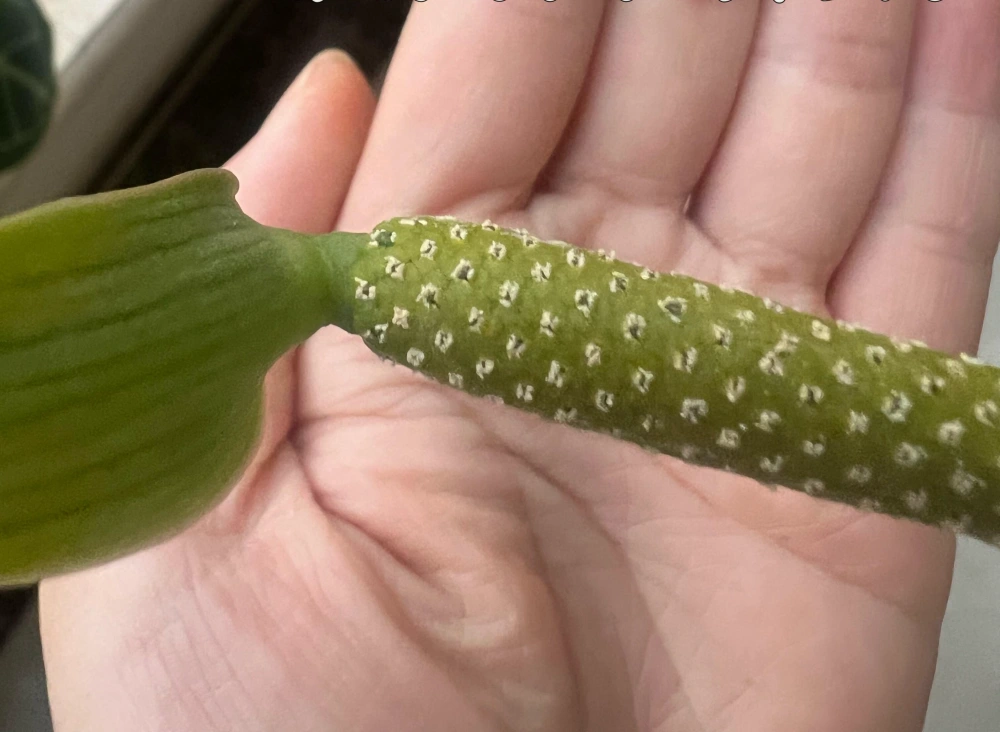
Anthurium pallidiflorum looks like it should be a tough plant. The leaves are long, narrow, and leathery, so it is easy to assume small care mistakes will not show up that quickly.
But indoors, mine still showed stress on the leaves when the setup was not right.
I ran into two problems that confused me at first. One looked like a moisture issue: yellowing tips, strange marks, and a leaf that looked worse after I moved the plant from a damp bathroom setup to a brighter balcony area for a day. The other was even stranger — pale, winding lines on a new leaf that looked almost like something had crawled inside the tissue.
Those two cases taught me not to guess too fast. With strap-leaf anthuriums, I now look at airflow, recent placement changes, and pest patterns before blaming just watering or humidity.
The frustrating part is that damaged pallidiflorum leaves can stay marked for a long time. So I try to stop the cause early and judge recovery by the next leaf, not by whether the old damage disappears.
Case 1 — Yellow Tips and Marks After a Bathroom-to-Balcony Move
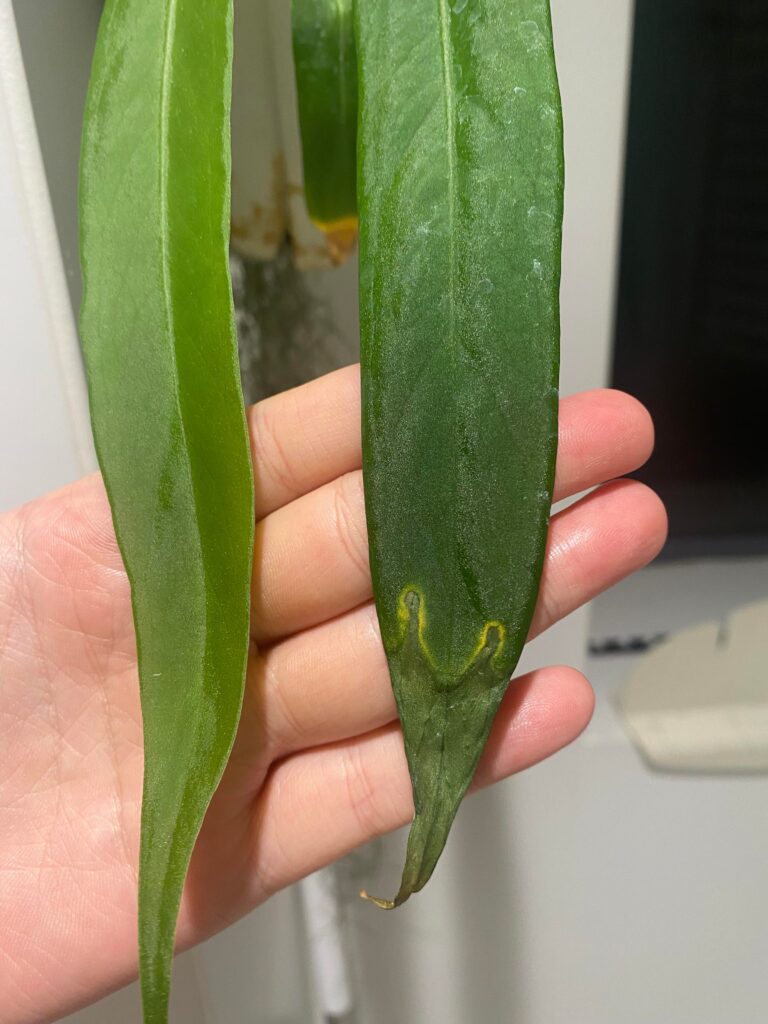
This case confused me at first because the damage did not look like one simple thing. My Anthurium pallidiflorum had been sitting in a bathroom, where the air stayed fairly humid, but the airflow was weak. The older leaves already had some yellowing at the tips, so the plant was probably under stress before I noticed the bigger problem.
Then I moved it to a south-facing balcony area for a day. It was not sitting in direct sun, so I did not expect much trouble. But after that move, the marks became more obvious, and the leaf looked worse.
At first, it was easy to ask the usual question: was it too dry or too wet?
Looking back, I do not think this was a simple underwatering problem. The bigger issue was that the plant had been kept in a damp, stale setup for too long. The humidity was there, but the air was not moving enough. I had also kept the blinds closed because I was worried about humidity dropping, which made the whole area feel even more stagnant.
The brighter balcony position probably added another layer of stress. Even without direct sun, the plant suddenly had more light, more warmth, and more evaporation from the leaf surface. For a plant that was already sitting in weak airflow and damp conditions, that change was too much.
So my read on this case is: not just too dry, not just too wet — more like stale moisture, poor airflow, and a sudden brighter move all happening together.
What I Changed After Realizing the Air Was Too Stale
Once I realized the problem was not just “humidity,” I changed the way I looked at the setup.
I stopped keeping the plant in a closed, damp space just because I was afraid the air would get too dry. High humidity sounds good for Anthurium pallidiflorum, but if the air is not moving, the plant can sit in stale moisture for too long.
The first thing I changed was air exchange. I opened the blinds more often, let the area breathe, and gave the plant gentler airflow instead of keeping it shut in a bathroom-like corner. I did not want strong wind blasting the leaves, but I did want the air around the plant to move.
I also became more careful about sudden moves. A brighter balcony spot may look safe because there is no direct sun, but if the plant has been sitting in still, humid air, even a one-day move to a brighter and warmer place can be a big change.
After that, I stopped judging recovery by the damaged leaf tips. Those marks were already there, and they were not going to turn perfect again. I watched the newer growth instead. If the next leaves came out cleaner and the damage did not continue, that told me the change was helping.
For me, the lesson was simple: high humidity without airflow is not the same as good tropical growing conditions. For Anthurium pallidiflorum, moist air still needs movement.
Case 2 — Strange Crawling Lines on a New Leaf
The second problem looked completely different. A new leaf developed pale, winding lines that looked almost like something had crawled through the leaf tissue. At first, I did not know what to call it.
It did not look like the usual problems I was used to seeing on anthuriums. It was not normal yellowing. It did not look like sun stress. It also did not look like simple mechanical damage from the leaf rubbing against something.
After comparing the pattern, it looked much more like leaf miner damage than a normal care issue. Thrips can also leave silvery scars and damaged patches on new growth, so I would not rule them out completely. But the pale, winding “trail” pattern made me think of leaf miners first.
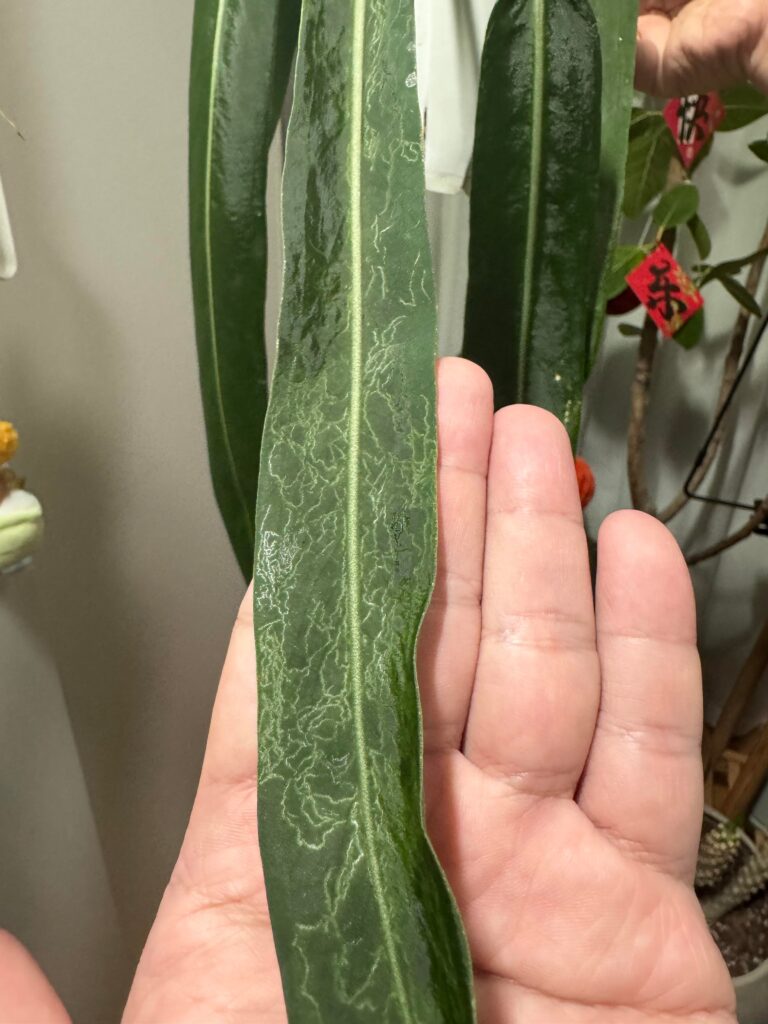
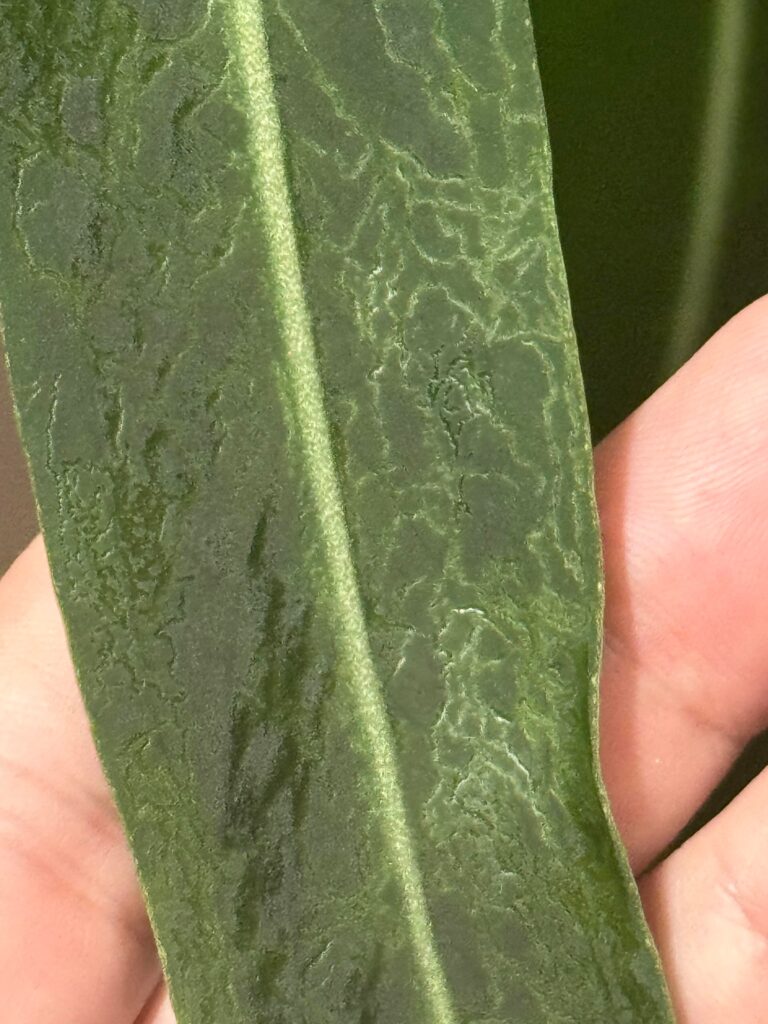
I cannot identify the exact insect with certainty, but I would not treat this kind of mark as a watering problem. The pattern looked pest-related, not like the plant was simply too dry, too wet, or low on nutrients.
I treated the plant with an indoor ornamental plant insect-control product and kept watching the newer leaves. The damaged leaf stayed marked, which is normal. Once a pest trail or scar is inside the leaf tissue, that part of the leaf will not turn clean again.
The important thing was that I did not see the same pattern spreading to the next leaves. For me, that was a better sign than expecting the old strap leaf to recover.
What I Do When I See Pest-Like Trails on Anthurium Leaves
When I see strange trail-like marks on an anthurium leaf, I do not treat it like a normal watering issue. The first thing I do is separate the plant if I can, especially if the mark is on a new leaf or if I am not sure whether the pest is still active.
Then I check the plant more closely. I look at the new leaves, leaf undersides, petioles, and the nearby plants. I am looking for anything that suggests active pests: new winding trails, silvery scarring, tiny black specks, larvae, or fresh damage on the newest growth.
If the pattern looks pest-related, I use an insect-control product that is safe for indoor ornamental plants and follow the label carefully. I do not just spray once and forget about it if the product requires repeat treatment. With pests like thrips or leaf miners, one damaged leaf may not show the whole problem.
I also try not to overreact to the old damaged leaf. If the leaf is still functioning and not declining, I may leave it on the plant. If it looks bad enough to bother me, or if it starts yellowing and declining, I remove it. But I do not expect the damaged tissue to heal. Once a trail or scar is inside the leaf, that mark will stay.
For me, the goal is simple: I am not trying to fix the scarred leaf. I am trying to protect the next leaf. If the newer leaves come out clean and the trail pattern does not continue, that tells me the problem is probably under control.
How I Tell Moisture Stress From Pest Damage
This is the part I wish I had thought through earlier, because not every mark on an Anthurium pallidiflorum leaf means the same thing. Yellow tips, moving stress, pest trails, and old scars can all look worrying at first, but they do not point to the same fix.
| What I See | More Likely Cause | What I Check First |
|---|---|---|
| Yellowing tips on older leaves | Moisture imbalance, root stress, or low airflow | Pot moisture, airflow, and whether only old leaves are affected |
| Marks appearing after a move to brighter light | Environmental stress | Recent light, heat, or placement change |
| Pale winding trails inside the leaf | Leaf miner-type pest damage | New leaves, undersides, and nearby plants |
| Silvery patches with tiny black specks | Possible thrips | Leaf undersides, new growth, and petioles |
| Damage stays on one old leaf but does not spread | Old damage only | Monitor new leaves instead of over-treating |
The biggest difference for me is the pattern. Moisture or airflow stress usually shows up as tips, edges, yellowing, or general decline. Pest damage often has a more specific shape — trails, scarring, specks, or damage that appears on tender new growth.
I also look at whether the problem is still moving. If the next leaf comes out clean, I do not keep chasing an old scar. But if new marks keep appearing, especially on fresh leaves, I treat it as an active problem and check more carefully.
What These Two Cases Changed in My pallidiflorum Care
These two problems changed the way I care for Anthurium pallidiflorum indoors. I no longer treat bathroom humidity as automatically good. If the air is closed, still, and damp, the leaves can suffer even when the humidity looks high.
Now I care more about airflow and stable placement. I still want the plant to have moisture around it, but I do not want it sitting in stale air or being moved suddenly from a closed humid spot to a much brighter area.
The pest trail case changed my thinking too. When I see strange marks on a new leaf, I look at the pattern before blaming watering. Yellow tips push me to check airflow, roots, and moisture balance. Pale winding trails make me check for pest damage.
With Anthurium pallidiflorum, I care less about making a damaged leaf look perfect again and more about making sure the next long leaf grows clean.
FAQ
Still comparing Anthurium varieties?
If you’re trying to figure out which anthuriums are actually worth growing indoors, my Anthurium varieties hub is a better place to compare leaf texture, growth habits, and overall difficulty side by side.
Explore Anthurium Varieties →